All posts by Anarchistan ئەنارکیستان

Kurdistan Anarchists Forum - KAF سەکۆی ئەنارکیستان

Di bin pergala kapîtalîst karesat xwezayî ne?

Di bin pergala kapîtalîst karesat xwezayî ne?

xindnewey be Sorani

Di derbarê erdheja navdar a Lîzbonê ya sala 1755an de, ku li tevahiya Ewropaya Rojava û Bakurê Afrîkayê xist û bi hezaran kes mirin, Rousseau ji Voltaire re nivîsî:

Divê hûn qebûl bikin ku ne xweza ye ku 2000 xaniyên şeş-heft qatî li wir kom kirine, lê heke niştecîhên bajarê mezin li şûna van avahiyên bilind û pir-qatî bi rengekî horizontî, sade û veqetandî bijiyana. Derbarê ziyanan de ti agahî nehatine bidestxistin.”

Li beramberî ziyanên vê erdhejê li Tirkiyê û Sûriyê, erdhejên bihêz ên Japonê bûne sedema ziyanên canî û ziyanên madî yên gelekî kêm, lewra ziyanên mirovî û madî bi erdhejên herêma me re nayên berhevkirin. Weke ku me dît, bajarê Erzîn ê ku nêzî navenda erdhejê ye, zirar nedîtiye û bûye penageha 20 hezar mexdûrên erdhejê. Li gorî qeymeqam û peymankarê înşaetê ev yek ji ber çêkirina avahiyên kêm û ne li gorî pîvanên avakirina erdhejê ye. Ji ber vê yekê ji me re eşkere ye ku

Bi saya pergala çînayetî, wêranî û zirar ne tenê hukmê karesatên xwezayî ye li ser mexdûran, çînên bindest û marjînal, di heman demê de xemsariya kalîteya avahîsaziyê û guhnedana pîvanên berxwedana erdhejê ji bo berjewendiyek mezintir e!

Lêkolînên zanistî jî piştrast kirin ku hin karesatên xwezayî yên wekî lehî, bahoz, ziwabûn û qirêjiya jîngehê ku her sal dibin sedema bi hezaran mirov, encama quretiya sermayedar û pargîdaniyên wan ên mezin in ku di rêyek xelet de ne. bikeve qibleya wê, û piraniya qurbaniyan mezlûm, belengaz û marjînal in!

Ev hemû mexdûr careke din dibin hedefa qazancên şîrketan û rayedarên dewletan.

10 welatên cîhanê ji yên din zêdetir erdhej hene: Japonya, Tirkiye, Îran, Perû, Dewletên Yekbûyî, Îtalya, Fîlîpîn, Meksîka,

Çîn û Endonezya. Gelek sedemên erdhejan hene, lê yên herî gelemperî lihevketina plakan, tevgera magmayê di volkanan de, guherîna germahiyê an zexta avê û bayên xurt in.

Mixabin tişta ku di mejiyê piraniyê de tê dîtin ew e ku tenê aliyekî karesatan bibînin, ew jî vegotina karê Xwedê ye an xezeba Xwedê ye an jî cewherê karesatan e û bi gelemperî zirar û qurbanî dibîne!

Heger em li dîroka welatan binerin, em dibînin ku beriya geşepêdana pîşesazî û berfirehbûna kompani û kargehên mezin ên hilberînê û çalakiyên wan ên quretî, rûdana hin ji van karesatên xwezayî gelek kêm bû.

Tiştê ku diyar e, bi saya pergala sermayedar a pozbilind, felaketên xwezayê kirine çîn û naverok. Her dema ku karesatek xwezayî diqewime, piraniya mexdûran feqîr û marjînal in, ji ber pirbûna nifûsa li erdnîgariyek piçûk û avahiyên bilind, û her weha ji ber kêmkalîteya avahiyên ku di bin standardên endezyariya parastina lehî û erdhejê de ne û şilbûnê ne. û diyardeyên din di plansaziyên avakirina avahiyan de nayên hesibandin.

Ger em li erdhejên Tirkiye û Sûriyê binêrin, rastiya jorîn îsbat dike ku qurbanî bi piranî li malên xizanan bûne, li cihên ku mal û avahiyên mezin ku ji bo berjewendiyê şirket û rayedaran sûd werdigirin, tu eleqeya wan bi avakirinê û berxwedana li dijî wê tune ye. Di avakirina yekîneyên xaniyan de şert û mercên siruştî li ber çavan nehatine girtin.

Me dît ku çawa avahiyên herî nû yên ku di dema kampanyaya hilbijartinê de ji xelkê re hatibûn dayîn, ji yên kevin xerabtir çawa hatin hilweşandin. Ev yek mîna avêtina diranan li çûkan û lêdana wan bû ku bigrin û paşê bikujin. Mixabin ji bo xweşbîniya xelkê feqîr û kedkar ên ku bi kirîna dengên xwe ji bo Erdogan û partiya wî, avahiyên xerab ên ku ji wan re hatine çêkirin bûne gorên komî.

Em bi sedan delîl û daxuyaniyên zelal di medyaya civakî û heta medyaya Tirkiyê de li ser gendeliya desthilatdaran ku di toreke bi hev ve girêdaye li ser karbidestên piçûk, peymankar û şîrketên xaniyan belav bûye, dibînin. Ji ber vê yekê di avakirina xaniyan de rêgezên tenduristiyê û pêdiviyên ewlehiyê yên niştecihan li ber çavan nehat girtin, lê komkirina qezenc û sermayê armanca herî bingehîn bû!

Bi pêşketina teknolojiyê û peydabûna zanyariyên zêdetir ji bo rêgirtin û danîna merc û qalîteya avadaniyê ji bo kontrayan, lê mixabin em dibînin ku hejmara qurbaniyên erdhejê dem bi dem zêde dibe. Mînak, erdheja sala 1999’an zêdetirî 17,000 kesan jiyana xwe ji dest da, lê hejmara miriyan îsal ji 40,0’î zêdetir bûye. Hêjmarên dawî ji me re dibêjin ku jimara miriyan ji 45,0 zêdetir e Zêdeyî 150 hezar kes birîndar bûn û bi hezaran malbat jî koçber bûn.

Li gorî rapor û belgeyên ku heta niha hatine eşkerekirin, hemû hişyariyên destpêkê yên erdhejê yên pispor û zanyarên di warê jeolojî, avhewa û zanistên xwezayî de ji dewleta Tirk û rayedarên payebilind re hatine paşguhkirin. Di demekê de ku berî du salan hişyarî hatibûn dayîn û hê jî xirabtir dihat pêşbînîkirin, zanyar û pisporek bi vîdyo hişyarî û agahî derbarê rûdana karesateke wiha da, lê rêjîma Tirkiyê ti gav ji bo parastina canê xelkê neavêtiye.

Li gorî van tiştên ku li jor hatine gotin, hukûmeta Tirkiye û Sûriyê ji mirina van hemû kesan, bi sedhezaran birîndar û bi milyonan kesên din jî koçber û wêran bûne.

Li gorî agahiyan, hin kesên ji herêmên xizan û dûr di roja sêyemîn de ne

Piştre tîmên alîkarî û rizgarkirinê hatin, ku weke windakirina dema zêrîn tê dîtin ji bo rizgarkirina nîvê jiyanê li bin daran û bermahiyên avahî û xaniyan. Helbet eger mirov sax be jî, ger du hefte li cihekî girtî bê xwarin, vexwe û bê tevger bê girtin dê bimire.

Ya herî xerab jî xemsariya qurbaniyên di bin dar û bermayên erdheja Sûriyê de ye. Heta van demên dawî serokên dewletên Ewropa û Amerîkayê ji Sûriyê zêdetir behsa Tirkiyê dikin û bi Tirkiyê re sempatiyê dikin, weke ku li Sûriyê tiştek nebûye.

Bajarê Efrînê yê dagirkirî ku rejîma Tirk piştî 58 rojan ji agir û hesin di sala 2018’an de dagir kiribû, niha jî deriyên xwe ji dildar û xebatkarên alîkariyê re girtiye.

Li gel cewherê karesatê em sersaxiyê ji malbatên qurbaniyan re dixwazin. Lê em kuştin, birîndarkirin û koçberkirina qurbaniyan wek tawaneke qirkirina armanckirî li ser vê sîstema çîna hov a sermayeyê, desthilatdarên Tirk û Sûriyê bi xwe û kompaniyên wan ên qazanc û xwînmij tawanbar dikin. Em vê xemsariya dewletê û rayedarên pozbilind ên beriya erdhejê û xemsariya wan a ji bo rizgarkirina mexdûrên di bin avahiyên hilweşiyayî de weke şerên xwe yên rasterast dibînin û wan parçeyek ji şerê çînan ku sîstema kapîtalîst li dijî bi milyaran karkeran bi rê ve dibe, dihesibînin.

Foruma Anarşîstên Kurdîy-ziman

18/02/2023

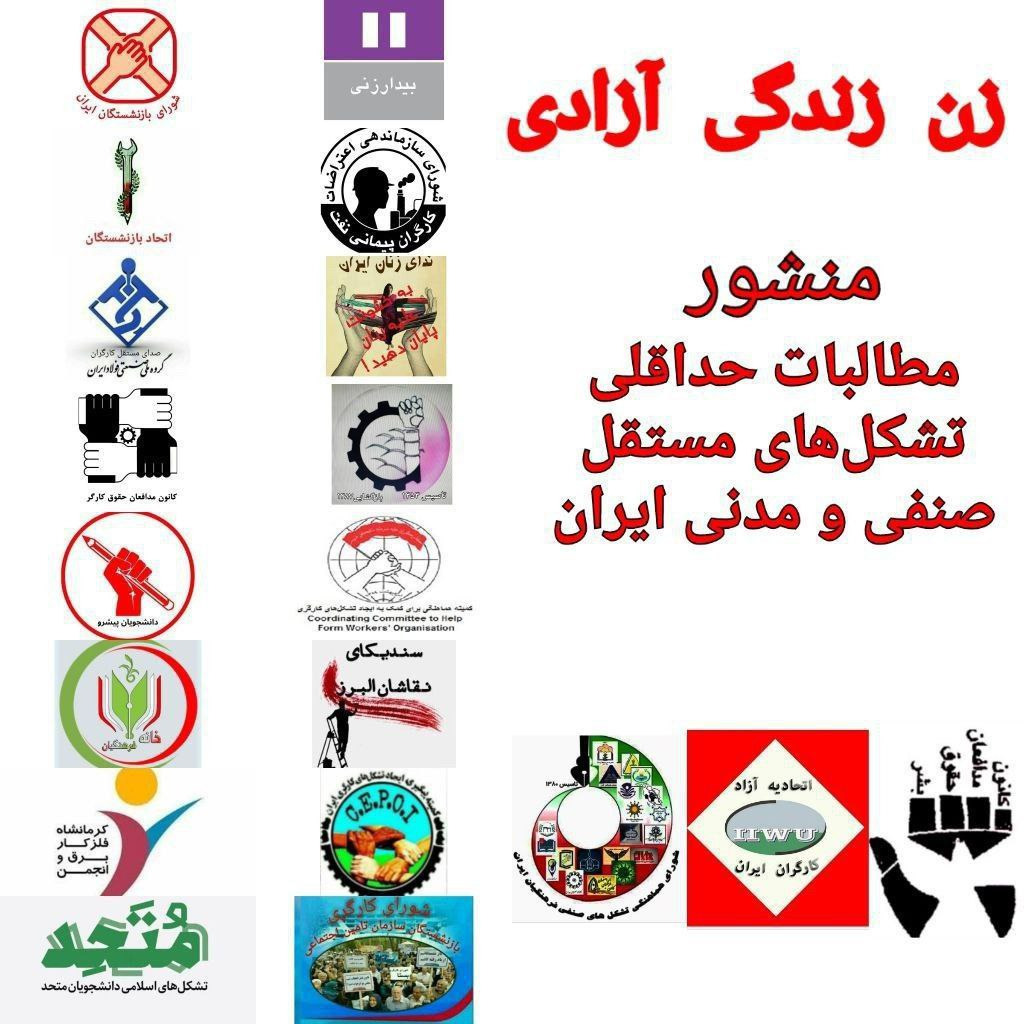
منشور‌ مطالبات حداقلی تشکل‌های مستقل صنفی و‌ مدنی ایران

منشور‌ مطالبات حداقلی تشکل‌های مستقل صنفی و‌ مدنی ایران

ترجمە: انگلسی       ترجمە: فرنسی          ترجمە: آلمانی

مردم شریف و آزاده‌ ایران!

در چهل و چهارمین سالروز انقلاب پنجاه و هفت، شیرازه اقتصادی و سیاسی و اجتماعی کشور به چنان گردابی از بحران و از هم گسیختگی فرو رفته است که هیچ چشم‌انداز روشن و قابل حصولی را نمی‌توان برای پایان دادن به آن در چهارچوب روبنای سیاسی موجود متصور بود. هم ازاین رو است که مردم ستمدیده ایران _ زنان و جوانان آزادیخواه و برابری طلب _ با از جان گذشتگی کم نظیری خیابان‌های شهرها را در سراسر کشور به مرکز مصافی تاریخی و تعیین کننده برای خاتمه دادن به شرایط ضد انسانی موجود تبدیل کرده‌اند و از پنج ماه پیش _ به رغم سرکوب خونین حکومت _ لحظه‌ای آرام نگرفته‌اند.

پرچم اعتراضات بنیادینی که امروز به‌دست زنان، دانشجویان، دانش آموزان، معلمان، کارگران و دادخواهان و هنرمندان، کوئیرها، نویسندگان و عموم مردم ستمدیده ایران در جای جای کشور از کردستان تا سیستان و بلوچستان برافراشته شده و کم سابقه‌ترین حمایت‌های بین‌المللی را به خود جلب کرده، اعتراضی است علیه زن ستیزی و تبعیض جنسیتی، ناامنی پایان ناپذیر اقتصادی، بردگی نیروی کار، فقر و فلاکت و ستم طبقاتی، ستم ملی و مذهبی، و انقلابی است علیه هر شکلی از استبداد مذهبی و غیر مذهبی که در طول بیش از یک قرن گذشته، بر ما _ عموم مردم ایران _ تحمیل شده است.

این اعتراضات ِ زیر و رو کننده، برآمده از متن جنبش‌های بزرگ و مدرن اجتماعی و خیزش نسل شکست ناپذیری است که مصمم‌اند بر تاریخ یکصد سال عقب‌ماندگی و در حاشیه ماندن آرمان بر پایی جامعه ای مدرن و مرفه و آزاد در ایران، نقطه پایانی بگذارند.

پس از دو انقلاب بزرگ در تاریخ معاصر ایران، اینک جنبش‌های بزرگ اجتماعی ِ پیشرو_ جنبش کارگری، جنبش معلمان و بازنشستگان، جنبش برابری خواهانه زنان و دانشجویان و جوانان و جنبش علیه اعدام و.‌‌.. _ در ابعادی توده‌ای و از پایین در موقعیت تاثیر گذاری تاریخی و تعیین‌کننده‌ای در شکل‌دهی به ساختار سیاسی و اقتصادی و اجتماعی کشور قرار گرفته‌اند.

از همین رو، این جنبش برآن است تا برای همیشه به شکل‌گیری هرگونه قدرت از بالا پایان دهد و سر آغاز انقلابی اجتماعی و مدرن و انسانی برای رهائی مردم از همه اشکال ستم و تبعیض و استثمار و استبداد و دیکتاتوری باشد.

ما تشکلها و نهادهای صنفی و مدنی امضا کننده این منشور با تمرکز بر اتحاد و به هم پیوستگی جنبش‌های اجتماعی و مطالباتی و تمرکز بر مبارزه برای پایان دادن به وضعیت ضد انسانی و ویرانگر موجود، تحقق خواست‌های حداقلی زیر را به مثابه اولین فرامین و نتیجه‌ی اعتراضات بنیادین مردم ایران، یگانه راه پی افکنی ساختمان جامعه‌ای نوین و مدرن و انسانی در کشور می‌دانیم و از همه انسان‌های شریف که دل درگرو آزادی و برابری و رهائی دارند می‌خواهیم از کارخانه تا دانشگاه و مدارس و محلات تا صحنه جهانی پرچم این مطالبات حداقلی را بر بلندای قله رفیع آزادیخواهی بر افراشته دارند.

۱. آزادی فوری و بی‌قید و شرط همه زندانیان سیاسی، منع جرم انگاری فعالیت سیاسی و صنفی و مدنی و محاکمه علنی آمرین و عاملین سرکوب اعتراضات مردمی.

۲. آزادی بی‌قید و شرط عقیده، بیان و اندیشه، مطبوعات، تحزب، تشکل‌های محلی و سراسری صنفی و مردمی، اجتماعات، اعتصاب، راهپیمایی، شبکه‌های اجتماعی و رسانه‌های صوتی و تصویری.

۳. لغو فوری صدور و اجرای هر نوع مجازات مرگ، اعدام، قصاص و ممنوعیت هر قسم شکنجه روحی و جسمی.

۴. اعلام بلادرنگ برابری کامل حقوق زنان با مردان در تمامی عرصه‌های سیاسی، اقتصادی، اجتماعی و فرهنگی و خانوادگی، امحا و لغو بی قید و شرط قوانین و فرم‌های تبعیض آمیز علیه تعلقات و گرایش‌های جنسی و جنسیتی، به رسمیت شناختن جامعه‌ی رنگین کمانیِ “ال‌جی‌بی‌تی‌کیوآی‌ای‌پلاس”، جرم زدایی از همه تعلقات و گرایشات جنسیتی‌ و پایبندی بدون قید و شرط به تمامی حقوق زنان بر بدن و سرنوشت خود و جلوگیری از اعمال کنترل‌ مردسالارانه.

۵. مذهب امر خصوصی افراد است و نباید در مقدرات و قوانین سیاسی و اقتصادی و اجتماعی و فرهنگی کشور دخالت و حضور داشته باشد.

۶. تامین ایمنی کار، امنیت شغلی و افزایش فوری حقوق کارگران، معلمان، کارمندان و همه زحمتکشان شاغل و بازنشسته با حضور و دخالت و توافق نماینده‌های منتخب تشکل‌های مستقل و سراسری آنان.

۷. امحا قوانین و هر گونه نگرش مبتنی بر تبعیض و ستم ملی و مذهبی و ایجاد زیر ساخت‌های مناسب حمایتی و توزیع عادلانه و برابر امکانات دولتی برای رشد فرهنگ و هنر در همه مناطق کشور و فراهم کردن تسهیلات لازم و برابر برای یادگیری و آموزش همه زبان‌های رایج در جامعه.

۸. بر چیده شدن ارگان‌های سرکوب، محدود کردن اختیارات دولت و دخالت مستقیم و دائمی مردم در اداره امور کشور از طریق شوراهای محلی و سراسری. عزل هر مقام دولتی و غیر دولتی توسط انتخاب کنندگان در هر زمانی باید جزو حقوق بنیادین انتخاب کنندگان باشد‌.

۹. مصادره اموال همه اشخاص حقیقی و حقوقی و نهادهای دولتی و شبه دولتی و خصوصی که با غارت مستقیم و یا رانت حکومتی، اموال و ثروت‌های اجتماعی مردم ایران را به یغما برده‌اند. ثروت حاصل از این مصادره‌ها، باید به فوریت صرف مدرن سازی و بازسازی آموزش و پرورش، صندوق‌های بازنشستگی، محیط زیست و نیازهای مناطق و اقشاری از مردم ایران شود که در دو حکومت جمهوری اسلامی و رژیم سلطنتی، محروم و از امکانات کم‌تری برخوردار بوده‌اند.

۱۰. پایان دادن به تخریب‌های زیست محیطی، اجرای سیاست‌های بنیادین برای احیای زیرساخت‌های زیست محیطی که در طول یکصد سال گذشته تخریب شده‌اند و مشاع و عمومی کردن آن بخش‌هایی از طبیعت (همچون مراتع، سواحل، جنگل‌ها و کوهپایه‌ها) که در قالب خصوصی سازی حق عمومی مردم نسبت به آن‌ها سلب شده است.

۱۱. ممنوعیت کار کودکان و تامین زندگی و آموزش آنان جدای از موقعیت اقتصادی و اجتماعی خانواده. ایجاد رفاه همگانی از طریق بیمه بیکاری و تامین اجتماعی قدرتمند برای همه افراد دارای سن قانونی آماده به‌کار و یا فاقد توانایی کار. رایگان سازی آموزش و پرورش و بهداشت و درمان برای همه مردم.

۱۲. عادی سازی روابط خارجی در بالاترین سطوح با همه کشورهای جهان بر مبنای روابطی عادلانه و احترام متقابل، ممنوعیت دستیابی به سلاح اتمی و تلاش برای صلح جهانی.

 از نظر ما مطالبات حداقلی فوق با توجه به وجود ثروت‌های زیر زمینی بالقوه و بالفعل در کشور و وجود مردمی آگاه و توانمند و نسلی از جوانان و نوجوانانی که دارای انگیزه فراوان برای برخورداری از یک زندگی شاد و آزاد و مرفه هستند، به فوریت قابل تحقق و اجراست.

مطالبات مطروحه در این منشور، محورهای کلی مطالبات ما امضا کنندگان را لحاظ و بدیهی‌ست در تداوم مبارزه و همبستگی خود به صورت ریز و دقیق‌تری به آنها خواهیم پرداخت.

شورای هماهنگی تشکل‌های صنفی فرهنگیان ایران

اتحادیه آزاد کارگران ایران

اتحادیه تشکل‌های دانشجویی دانشجویان متحد

کانون مدافعان حقوق بشر

سندیکای کارگران شرکت نیشکر‌هفت تپه

شورای سازماندهی اعتراضات کارگران پیمانی نفت

خانه فرهنگیان ایران( خافا)

بیدارزنی

ندای زنان ایران

صدای مستقل کارگران گروه ملی فولاد اهواز

کانون مدافعان حقوق کارگر

انجمن صنفی کارگران برق و فلز کرمانشاه

کمیته هماهنگی برای کمک به ایجاد تشکل‌های کارگری

اتحاد بازنشستگان

شورای بازنشستگان ایران

تشکل دانشجویان پیشرو

شورای دانش آموزان آزاد اندیش ایران

سندیکای نقاشان استان البرز

کمیته پیگیری ایجاد تشکل های کارگری ایران

شورای بازنشستگان سازمان تامین اجتماعی(بستا)

کانال تلگرام شورای هماهنگی تشکل های صنفی فرهنگیان ایران

Déclaration des revendications minima des organisations indépendantes syndicales et civiles d’Iran

Femme, Vie, Liberté

Déclaration des revendications minima des organisations indépendantes syndicales et civiles d’Iran

Peuple juste et épris de liberté d’Iran,

Au quarante-quatrième anniversaire de la révolution de 1979, les fondements économique, politique et social du pays sont dans un tourbillon de crises et de décomposition de telle sorte qu’aucune perspective n’est envisageable dans le cadre de la superstructure politique actuelle. C’est pourquoi depuis cinq mois le peuple opprimé d’Iran – femmes, jeunes épris de liberté et d’égalité – ont transformé les rues des villes de tout le pays en une arène historique et décisive du combat pour mettre fin à la situation inhumaine actuelle, et cela en mettant en danger leur vie à cause de la répression sanglante de l’État.

Les femmes, étudiants, enseignants, ouvriers, ceux qui demandent justice (familles et proches des prisonniers politiques ou des morts dans les manifestations), artistes, queers, écrivains et tout le peuple opprimé du pays, du Kurdistan au Sistan et Baloutchistan, ont levé le drapeau des protestations fondamentales contre la misogynie, l’exclusion sexiste, l’interminable insécurité économique, l’esclavage de la force du travail, la pauvreté, l’oppression de classe et l’oppression nationaliste et religieuse. Tels sont les maux de notre société que le despotisme religieux ou non-religieux nous imposent depuis plus d’un siècle. Les femmes et hommes qui luttent en Iran ont un soutien international sans précédent.

Les protestations profondes actuelles viennent des grands mouvements sociaux modernes et du soulèvement d’une génération qui n’a plus peur et veut mettre fin à un siècle d’arriération et relever le défi de construire une société moderne de bien-être et de liberté.

Après deux grandes révolutions dans l’histoire contemporaine d’Iran, les grands mouvements sociaux pionniers – mouvement ouvrier, mouvement des enseignants et retraités, mouvement égalitaire des femmes, étudiantes et jeunes, mouvement contre la peine de mort… – veulent changer la structure politique, économique et sociale du pays en intervenant en masse et depuis en bas.

C’est pourquoi ce mouvement veut mettre fin, une fois pour toute, à l’existence d’un pouvoir d’en haut et commencer une révolution sociale, moderne et humaine pour l’émancipation du peuple de toute forme d’oppression, d’exclusion, d’exploitation et de dictature.

Nous, les organisations syndicales et civiles signataires de la présente déclaration, nous concentrons sur l’unité et la construction de liens entre mouvements sociaux et revendicatifs, et sur la lutte contre la situation inhumaine et destructrice actuelle. Nous considérons que l’aboutissement des revendications de base sont les premières exigences des protestations de fond du peuple d’Iran. Elles préparent les fondements de l’établissement d’une société nouvelle, moderne et humaine. Nous demandons à tous les êtres humains justes qui ont un cœur battant pour la liberté, l’égalité et l’émancipation de lever l’étendard de ces revendications de l’usine à l’université, des écoles aux quartiers, et partout dans le monde.

1 – Libération immédiate et sans condition de tous les prisonniers politiques, interdiction de criminalisation des activités politiques, syndicales et civiles, jugement public des commanditaires et agents des répressions des protestations populaires ;

2 – Liberté sans condition d’opinion, d’expression, de pensée, de presse, d’organisation, de groupes locaux et nationaux syndicaux et populaires, de rassemblement, de grève, de manifestation, de réseaux sociaux et de médias audiovisuels ;

3 – Abolition immédiate de la peine de mort, de la loi du talion et interdiction de toute sorte de torture physique et psychologique ;

4 – Etablissement immédiat de l’égalité des droits entre les femmes et les hommes dans tous les domaines politique, économique, social, culturel, familial. Abolition immédiate de toutes les lois et formes d’exclusion contre les appartenances sexuelles et reconnaissance de la communauté LGBTQ+. Décriminalisation de toutes les tendances et appartenances sexuelles et respect sans condition de tous les droits des femmes pour contrôler leur corps et leur destinée, interdiction du contrôle patriarcal ;

5 – Non-intervention de la religion dans les lois politiques, économiques, sociales et culturelles : la religion est une affaire personnelle ;

6 – Renforcement de la sécurité des lieux de travail et de l’emploi. Hausse immédiate des salaires des ouvriers, enseignants, fonctionnaires et de tous les travailleurs actifs et retraités, par la présence, l’intervention et l’accord des représentants élus d’organisations indépendantes et nationales ;

7 – Suppression des lois basées sur l’exclusion, l’oppression nationale, religieuse, et création des institutions adéquates pour soutenir et distribuer justement et égalitairement les moyens publics pour le progrès culturel et artistiques dans toutes les régions du pays, et mise en place des moyens nécessaires et identiques pour tous, pour l’apprentissage et l’éducation de toutes les langues existantes dans le pays ;

8 – Suppression des organes de répression, limitation des prérogatives de l’État et intervention directe et permanente de tous dans l’administration des affaires du pays par les conseils de quartier et nationaux. Révocabilité de tout responsable gouvernemental ou autre à tout moment, ce qui doit être un droit de base de tous les électeurs ;

9 – Confiscation des fortunes de toutes les personnes morales ou physiques, des organes étatiques, semi-étatiques et privés qui pillent directement ou par la rente gouvernementale les biens et richesses sociales du peuple d’Iran. Le montant des confiscations doit être utilisé immédiatement pour la modernisation et refondation de l’éducation nationale, des caisses de retraites, de l’écologie et des besoins des populations des régions d’Iran qui ont beaucoup souffert sous les deux régimes islamique et monarchique ;

10 – Fin des destructions écologistes, application des politiques fondamentales pour la reconstruction des structures écologiques détruites depuis un siècle et restitution à la propriété publique de toutes les parties de la nature qui ont été privatisées, entre autres les pâturages, les plages, les forêts et les montagnes ;

11 – Interdiction du travail des enfants et garantie pour leur vie quotidienne et pour leur éducation, indépendamment de la situation économique et sociale de leurs familles. Création d’assurances chômage et d’une sécurité sociale fortes pour toutes les personnes en capacité de travailler ou non. Gratuité de l’éducation et du système de santé pour toutes et tous ;

12 – Normalisation des relations extérieures au plus haut niveau avec tous les pays du monde, basée sur des relations justes et le respect réciproque. Interdiction des armes atomiques et efforts pour la paix mondiale.

Nous pensons que les revendications de base ci-dessus sont réalisables immédiatement, étant donné les ressources réelles et potentielles du pays, une population consciencieuse et capables, des jeunes et adolescents qui ont la conviction de pouvoir avoir une vie décente, gaie et libre.

Ces revendications sont les axes généraux des signataires. Il est évident que la poursuite de la lutte et de la solidarité nous permettrons d’apporter plus de précisions.

Conseil de coordination des associations syndicales des enseignants d’Iran

Union libre des ouvriers d’Iran

Union des associations étudiantes unitaires

Association des défenseurs des droits de l’homme

Syndicat des ouvriers de la canne à sucre Haft – Tapeh

Conseil d’organisation des protestations des ouvriers pétroliers non – contractuels

Maison des enseignants d’Iran

Éveil féminin

Voix des femmes d’Iran

Voix indépendante des ouvriers métallurgistes du groupe national de l’aciérie d’Ahvaz

Association de défenseurs des droits ouvriers

Association syndicale des ouvriers électriciens et métallurgiste de Kermanchah

Comité de coordination pour l’aide à la constitution des syndicats ouvriers

Union des retraités

Conseil des retraités d’Iran

Association des étudiants progressistes

Conseil des élèves libres-penseurs d’Iran

Syndicat des ouvriers peintres en bâtiment de la province de l’Alborz

Comité de soutien à la fondation de syndicats ouvriers d’Iran

Conseil des retraités de la Sécurité sociale

Date de publication en persan : Le 15/02/2023

Manifesto of Basic Demands by Independent Trade and Civil Organizations of Iran

WOMEN, LIFE, FREEDOM
Manifesto of Basic Demands by Independent Trade and Civil Organizations of Iran
February 15, 2023
Honorable and free people of Iran!
On the 44th anniversary of the revolution of 1979 in Iran, the economic, political, and social foundations of the country have plunged into a vortex of crisis and disintegration. Yet no clear and attainable vision to end this crisis within the framework of the existing political system seems at reach. It is for this reason that the oppressed people of Iran, including women and youth who seek freedom and equality, have turned the streets all over the country into the center of a historic and decisive struggle to end the inhumane conditions of the status-quo. Despite the regime’s bloody suppression, they have not rested for a moment since five months ago.
Today women, students, teachers, workers, those seeking justice, artists, queers, writers, and all oppressed people of Iran in every part of the country from Kurdistan to Sistan and Baluchistan and with unprecedented international support – have raised the flag of these fundamental protests. It represents a protest against misogyny, gender discrimination, endless economic insecurity, labor slavery, poverty, misery, class oppression, as well as oppression based on nationality and religion. It is a revolution against all forms of religious or non-religious tyranny that has been imposed on the Iranian people throughout the last century.
These rummaging protests arise in the context of large and modern social movements and the emergence of an invincible generation. They are determined to put an end to a century-long history of backwardness and being at the margins and to fight for a modern, prosperous, and free society in Iran.
After the two great revolutions in Iran’s contemporary history, the leading social movements – including the labor, teachers’, pensioners’, women’s, students’, and the movement of the youth for equality and freedom, the movement against the death penalty, etc. – have now gained a historical and decisive influence in shaping the political, economic, and social structures of the country from the bottom-up and in mass dimensions.
Thus, this movement aims to permanently end the formation of any power from above and be the beginning of a modern, humane social revolution that frees people from all forms of oppression, discrimination, exploitation, tyranny and dictatorship.
While focusing on the unity and interconnectedness of social movements as well as on struggling against the current inhumane and destructive situation, we the unions, civil organizations and institutions that have signed this charter  see the following basic demands as the first orders and as a result of the Iranian people’s massive protests and also as the foundation for building a new, modern, and humane society in the country. We call upon all those who value freedom, equality, and emancipation to raise the call for these basic demands in factories, universities, schools, neighborhoods, and the streets as well as on the global scene. Together, we can achieve the lofty goal of freedom.
1. The immediate and unconditional release of all political prisoners, an end to the prosecution of political, union, and civil activities, and the public trial of those responsible for suppressing mass protests.
2. Unconditional freedom of opinion, expression, and thought, press, political parties, local and national unions and mass organizations, gatherings, strikes, rallies, social networks, and audio and video media.
3. The immediate abolition of all types of the death penalty, execution, and other death retributions, as well as prohibition of any type of mental and physical torture.
4. Immediate declaration of equal rights for men and women on all political, economic, social, cultural, and family levels; unconditional abolition of laws and forms leading to discrimination against sexual and gender identities and tendencies, recognition of the rainbow society of “LGBTQIA+”, decriminalization of all gender-based subscriptions and tendencies and unconditional adherence to women’s right over their bodies and destiny and preventing patriarchal control.
5. Religion be recognized as a private matter of individuals and should not be involved in the political, economic, social, and cultural decrees and laws of the country.
6. The guarantee of safety at work, job security, and an immediate increase in the salaries of workers, teachers, employees, and all working and retired individuals, which should be determined through involvement and agreement of the elected representatives of their independent and national organizations.
7. The laws and attitudes based on national and religious discrimination and oppression must be abolished. The government should create proper support infrastructures and ensure fair and equal distribution of its facilities and resources to promote culture and art in all regions of the country. Furthermore, it should provide necessary and equal facilities for learning and teaching all common languages spoken in society.
8. Dismantling the organs of repression, limiting the powers of the government, and direct and permanent involvement of the people in the administration of the country’s affairs through local and national councils. The dismissal of any government and non-government official by the voters at any time should be among the fundamental rights of the voters.
9. Confiscation of the property of all individuals, legal entities, government, semi-government and private institutions that have obtained the property and social wealth belonging to the Iranian people through direct looting or government contracts. The wealth obtained from these confiscations should be immediately used for modernizing and reconstructing education, pension funds, the environment, and meeting the needs of those regions and segments of the Iranian people who were deprived of equal opportunities and facilities during the two regimes of the Islamic Republic and the monarchy.
10. Ending environmental destruction, implementing fundamental policies to restore the environmental infrastructure that has been destroyed over the past hundred years, and preventing the privatization of public resources (such as pastures, beaches, forests, and foothills), which denies the people their rights to access and use them.
11. Prohibit child labor and ensure that all children have access to education and a life free from economic or social hardship, regardless of their family’s status. Establish public welfare programs that provide unemployment insurance and strong social security for all working-age people, as well as free education and healthcare for everyone.
12. Normalization of foreign relations at the highest levels with all countries of the world based on fair relations and mutual respect, banning the acquisition of nuclear weapons and striving for world peace.
From our point of view, the basic demands mentioned above could be realized immediately, considering the existence of potential and actual underground wealth in the country and the existence of an informed and capable people and a generation of young people who have a lot of motivation to enjoy a happy, free and prosperous life.
The demands outlined in this charter include the general axes of the needs of the signatories, and obviously, we will work them out in more detail through our struggle and solidarity.
Signatories:
– Coordinating Council of Trade Union Organizations of Iranian Teachers
– Free Union of Iranian Workers
– United Students Union of Student Organizations
– Center for Human Rights Defenders
– Syndicate of Workers of Haft Tappeh Cane Sugar Company
– Council for Organizing Protests
– The Council for Organization of Contractual Oil Workers Protests
– Iran Cultural House (Khafa)
– The Voice of Iranian Women
– The Independent Voice of The Workers of Ahvaz National Steel Group
– Labor Rights Defenders Center
– Kermanshah Electrical and Metal Trade Institution
– Coordinating Committee to Help Found Labor Organizations
– Pensioners United
– Council of Pensioners of Iran
– Progressive Students Organization
– Council of Freethinking Students of Iran
– Painters Syndicate of Alborz Province
– Committee to Follow Up on the Establishment of Labor Organizations in Iran
– Council of Pensioners of Social Security Organization (BASTA)

Manifest der Mindestforderungen unabhängiger gewerkschaftlicher und zivilgesellschaftlicher Organisationen im Iran

Frau*, Leben, Freiheit

Manifest der Mindestforderungen unabhängiger gewerkschaftlicher und zivilgesellschaftlicher Organisationen im Iran

  1. Februar 2023

Seid gegrüßt, ehrenwerte und freie Menschen Irans!

Am 44. Jahrestag der Revolution von 1979  im Iran befinden sich die wirtschaftlichen, politischen und sozialen Grundfesten der Gesellschaft in einer beispiellosen Spirale aus Krisen und Zerfall. Zugleich ist eine klare und umsetzbare Vision zu deren Beendigung innerhalb des bestehenden politischen Systems nicht in Sicht. Aus diesem Grund haben die unterdrückten Menschen im Iran – darunter Frauen* und Jugendliche, die nach Freiheit und Gleichberechtigung streben – die Straßen des ganzen Landes in Zentren eines historischen und entscheidenden Kampfes verwandelt, um diese unmenschlichen Zustände zu beenden. Trotz der blutigen Niederschlagung durch das Regime kämpfen sie seit 5 Monaten (seit dem 16. September 2022) ohne Atempause weiter.

Heute repräsentiert die Flagge dieser Proteste, die von Frauen*, Student*innen, Lehrer*innen, Arbeiter*innen, nach Gerechtigkeit Suchenden, Künstler*innen, Queers, Schriftsteller*innen und allen unterdrückten Menschen des Irans von Kurdistan bis Sistan und Belutschistan gehisst wird und eine beispiellose internationale Unterstützung erfährt, einen fundamentalen Widerstand. Dieser Widerstand richtet sich gegen Frauenfeindlichkeit, Genderdiskriminierung, tiefe wirtschaftliche Unsicherheit, Arbeitssklaverei, Armut, Elend, Klassenunterdrückung sowie rassistische und religiöse Diskriminierung. Es ist eine Revolution gegen jede Form religiöser und nicht-religiöser Tyrannei, die den Menschen im Iran im letzten Jahrhundert aufgezwungen wurde.

Die Proteste finden im Kontext großer und moderner sozialer Bewegungen sowie dem Aufstieg einer unbesiegbaren Generation statt, die entschlossen ist, einer jahrhundertelangen Geschichte der Rückständigkeit und Marginalisierung ein Ende zu setzen und für eine moderne, wohlhabende und freie Gesellschaft im Iran zu kämpfen.

Nach den beiden großen Revolutionen in der jüngeren Geschichte Irans haben die führenden sozialen Bewegungen – darunter die Arbeiter*innen-, Lehrer*innen- und Rentner*innenbewegung, die Frauen*, Student*innen- und Jugendbewegung, die nach Gleichberechtigung streben, sowie die Bewegung gegen die Todesstrafe – nun einen historischen und entscheidenden Einfluss auf die Gestaltung der politischen, wirtschaftlichen und sozialen Strukturen des Landes von der Basis aus gewonnen.

Die Bewegung zielt also darauf ab, die Bildung jeglicher Macht von oben dauerhaft zu beenden und den Beginn einer modernen, humanen und sozialen Revolution zu markieren, die die Menschen von allen Formen der Unterdrückung, Diskriminierung, Ausbeutung, Tyrannei und Diktatur befreit.

Wir, die unabhängigen Gewerkschaften, zivilgesellschaftlichen Organisationen und Einrichtungen, die dieses Manifest unterschrieben haben, verstehen die folgenden Mindestforderungen als erste Handlungsaufträge, als Ergebnis der massiven Proteste der Menschen im Iran und als Grundlage für den Aufbau einer neuen, modernen und menschlichen Gesellschaft. Dabei konzentrieren wir uns auf die Einheit und Vernetzung der sozialen Bewegungen sowie auf den Kampf gegen die gegenwärtige unmenschliche und zerstörerische Situation im Iran. Wir rufen alle, denen Freiheit, Gleichberechtigung und Emanzipation wichtig sind, dazu auf, diese Mindestforderungen in Fabriken, Universitäten, Schulen, Nachbarschaften, auf der Straße und auf der internationalen Bühne zu erheben. Gemeinsam können wir das Ziel der Freiheit erreichen:

  1. Die sofortige und bedingungslose Freilassung aller politischen Gefangenen sowie die Beendigung der Kriminalisierung politischer, gewerkschaftlicher und zivilgesellschaftlicher Aktivitäten. Außerdem der öffentliche Prozess gegen diejenigen, die für die Unterdrückung der Massenproteste verantwortlich sind.
  2. Uneingeschränkte Meinungs-, Gedanken-, Presse- und Parteienfreiheit, Freiheit bei der Gründung lokaler und landesweiter Gewerkschaften sowie Massenorganisationen, Versammlungs-, Demonstrations- und Streikfreiheit sowie Freiheit im Bereich sozialer Netzwerke und audiovisueller Medien.
  3. Die sofortige Abschaffung aller Arten von Todesstrafe, Hinrichtung und Vergeltung sowie das Verbot jeder Art von psychischer und physischer Folter.
  4. Die sofortige Erklärung der Gleichberechtigung von Männern und Frauen* auf allen politischen, wirtschaftlichen, sozialen, kulturellen und familiären Ebenen

Die bedingungslose Abschaffung diskriminierender Gesetze gegen die Vielfalt sexueller und geschlechtlicher Identitäten und Orientierungen, die Anerkennung der Regenbogengesellschaft von “LGBTQIA+”, die Entkriminalisierung aller geschlechtlichen Zugehörigkeiten und Orientierungen sowie die bedingungslose Einhaltung der Rechte der Frauen* über ihren Körper und ihr Schicksal. Außerdem die Einhaltung von Selbstbestimmung und die Verhinderung patriarchaler Kontrollmechanismen.

  1. Religion wird als Privatsache des Einzelnen anerkannt und sollte nicht in die politischen, wirtschaftlichen, sozialen und kulturellen Verordnungen und Gesetze des Landes einbezogen werden.
  2. Die Gewährleistung von Arbeitsschutz, Arbeitsplatzsicherheit und einer sofortigen Erhöhung der Gehälter von Arbeiter*innen, Lehrer*innen, Angestellten, allen Erwerbstätigen und Rentner*innen. Diese sollen in Anwesenheit, unter Beteiligung und mit Zustimmung der gewählten Vertreter*innen ihrer unabhängigen und landesweiten Organisationen festgelegt werden.
  3. Die Abschaffung aller Gesetze und Haltungen, die auf rassistischer und religiöser Diskriminierung und Unterdrückung beruhen. Es müssen zudem unterstützende Infrastrukturen und Einrichtungen entstehen, die eine gerechte Verteilung von Ressourcen zur Förderung von Kunst und Kultur in allen Regionen Irans sicherstellen. Dies gilt auch für notwendige Einrichtungen, die das Erlernen und Lehren aller in der Gesellschaft gesprochenen Sprachen ermöglichen.
  4. Die Abschaffung aller staatlichen Repressionsorgane, die  Einschränkung jeglicher Staatsmacht und eine direkte und ständige Beteiligung der Menschen im Iran an der Verwaltung der Angelegenheiten im Land durch lokale und landesweite Räte. Zu den Grundrechten der Wähler*innen gehört es, alle staatlichen und nichtstaatlichen Amtsträger*innen jederzeit abberufen und entlassen zu können.
  5. Die Konfiszierung des Eigentums aller natürlichen und juristischen Personen sowie staatlichen, halbstaatlichen und privaten Institutionen, die sich das Eigentum und den gesellschaftlichen Reichtum der Menschen im Iran durch direkte Plünderung oder staatliche Aufträge angeeignet haben. Der aus diesen Konfiszierungen gewonnene Reichtum soll unverzüglich für die Modernisierung und den Wiederaufbau des Bildungswesens, der Rentenkassen, der Umwelt und für die Sicherstellung der Bedürfnisse jener Regionen und Menschen im Iran verwendet werden, denen während der beiden Regime der Islamischen Republik und der Monarchie ihre gleichberechtigten Chancen und Zugänge zu Einrichtungen geraubt wurden.
  6. Die Beendigung der Umweltzerstörung und die Umsetzung grundlegender politischer Maßnahmen zur Wiederherstellung der in den letzten hundert Jahren zerstörten Umweltinfrastruktur. Darüber hinaus die Verhinderung der Privatisierung öffentlicher Ressourcen (wie Weiden, Strände, Wälder und Vorgebirge), durch die der Bevölkerung bisher das Recht auf Zugang zu und Nutzung von diesen Ressourcen verweigert wurde.
  7. Das Verbot von Kinderarbeit und die Sicherstellung, dass alle Kinder, unabhängig vom wirtschaftlichen und sozialen Status ihrer Familie, Zugang zu Bildung haben. Zudem sollen öffentliche Wohlfahrtsprogramme eingerichtet werden, die eine Arbeitslosenversicherung und eine starke soziale Absicherung für alle Menschen im arbeitsfähigen Alter sowie kostenlose Bildung und Gesundheitsversorgung für alle ermöglichen.
  8. Normalisierung der Außenbeziehungen auf höchster Ebene mit allen Ländern der Welt auf Grundlage fairer Beziehungen und gegenseitigen Respekts, des Verbots, Atomwaffen zu erwerben und des Strebens nach Weltfrieden.

Unserer Ansicht nach können die oben genannten Mindestanforderungen aufgrund des Ressourcenreichtums im Land, der Existenz sachkundiger und fähiger Menschen im Iran sowie einer Generation von jungen Menschen und Jugendlichen, die motiviert sind, ein glückliches, freies und wohlhabendes Leben zu genießen, sofort umgesetzt werden.

Die in dieser Charta zum Ausdruck gebrachten Forderungen berücksichtigen die grundlegenden Fundamente der Forderungen der Unterzeichner*innen, und wir werden sie selbstverständlich präziser und detaillierter ausgestalten, indem wir unseren Kampf und unsere Solidarität fortsetzen.

Unterzeichnende:

– Koordinierungsrat der Gewerkschaftsorganisationen der iranischen Lehrer*innen

– Unabhängige Iranische Arbeiter*innengewerkschaft

– Union der Studentenorganisationen der Vereinigten Studenten

– Zentrum für Menschenrechtsverteidiger*innen

– Syndikat der Arbeiter*innen der Haft Tappeh Cane Sugar Company

– Rat für die Organisation der Proteste von Öl-Vertragsarbeiter*innen

– Iranisches Kulturhaus (Khafa)

– Der Ruf der iranischen Frauen

– Die unabhängige Stimme der Arbeiter der Ahvaz National Steel Group

– Zentrum der Verteidiger der Arbeitnehmer*innenrechte

– Gewerkschaft der Elektro- und Metallarbeiter*innen von Kermanshah

– Koordinierungsausschuss zur Unterstützung des Aufbaus von Arbeitnehmer*innenorganisationen

– Gewerkschaft der Rentner*innen

– Rat der Rentner*innen von Iran

– Organisation fortschrittlicher Student*innen

– Rat der freidenkenden Student*innen von Iran

– Malersyndikat der Provinz Alborz

– Ausschuss zur Überwachung der Gründung von Arbeitnehmer*innenorganisationen im Iran

– Rat der Rentner*innen der Organisation für soziale Sicherheit (BASTA)

نە شا و نە ڕابەری، بڕوخێت سیستەمی سەروەری

نە شا و نە ڕابەری، بڕوخێت سیستەمی سەروەری

ڕاپەڕینی چەوساوان لە ئێران یەک ڕاپەڕینە، دابەشکردنی بەسەر ئێتنییەکان هەنگاوێکی دژەشۆڕشانەیە!

بۆ ئەوەی ڕاپەڕینی چەوساوان لە ئێران وەک ڕاپەڕینی چەوساوان لە سوریە (٢٠١٢) نەگۆڕدرێت بە جەنگی میلیشیایی ئایینەکان و ئێتنییەکان، پێویستە لە مێژووی خەبات و بەرەنگاری ئەزموون وەربگرین.

ئێستا کە دە ساڵ بەسەر جەخماخەی ڕاپەڕینی چەوساوانی سووریە تێپەڕیوە، مێژوو بۆ ئێمە سەلماندوە، گوۆڕینی ڕاپەڕینی جەماوەریی و کۆمەڵایەتیی بە جەنگی میلیشیایی و بۆڕبۆڕێنی ڕامیاریی ڕەوتە ڕامیارییەکان، زەمینەی بەهێزبوونەوەی دژەشۆڕش لەباردەکات و ڕاپەڕین دەگۆڕێت بە گەمەی ڕامیاریی دەزگە سیخوڕییەکانی زلهێزان و کۆمپنانییە جیهانخۆرەکان و بەرپاکردنی حەمامی خوێن لە ڕێگەی جەنگی میلیشیاکان وەک دەسکەلای دەوڵەتانی ناوچەکە.

بەداخەوە لە ڕاپەڕینی چەوساوانی تونس تاکو سوریە و یەمەن دژەشۆڕش توانی بە بەرزکردنەوە و پیرۆزکردنی ئاڵای دەوڵەت و چەکدارکردنی ڕاپەڕیوان ڕاپەڕینەکان بگۆڕێت بە ئامرازی جێبەجێکردنی نەخشەی زلهێزەکان و کۆمپانییەکان، جەنگی دە ساڵەی نێوخۆیی سوریە و یەمەن زیندووترین نموونەن، کە بوون بە گەورەترین بازاری چەکفرۆشی.

هەرچەندە ئێران لە کۆمەڵێک هەرێمی ئێتنیی و ئایین جیاواز پێکهاتوە و خۆنیشاندان و ناڕەزایەتییەکانی پێشوو بە جۆرێک بەسەر ئەو بوونە ڕامیاریی و کولتوورییانە بەش بووبوون، بەڵام ئەم جارە بەپێچەوانەی پێشوو، وەک ڕاپەڕینی ١٩٧٩ چەوساوانی ئێران وەک یەک جەستە ڕاپەڕینەوە. ئەوە ئەرێنییترین و دڵخۆشکەرترین وەرچەخان و هەڵکشانی تێکۆشانی چەوساوانی ئێرانە، ئەزموون وەرگرتنە لە مێژووی چوار دەهەی ڕابوردوو، نیشانەی خۆهوشیاریی چەوساوانی ئێرانە.

بەڵام وێرای هەموو دڵخۆشییەک بەو ئاستە لە خۆهوشیاریی چەوساوان، هێشتا نابێت یەک چرکە لە مەترسیی پلانەکانی دژەشۆڕش (حکومەت تاکو شاخوازان و ناسیونالیستەکان و سەلەفییە سوننەکان) خافڵ ببین. ئەگەر بە وردیی کاردانەوە و هەڵوێستەکان لە نێوخۆ و دەرەوەی ئێران سەنج بدەین، بەداخەوە، لێرە و لەوێ هەوەڵەکانی دژەشۆڕش دەبیندرێن، هەرچەندە سەرەتایین، بەڵام هەموو شتێک بە سەرەتایەک بەڕێدەکەوێت، گۆڕینی ڕاپەڕینی چەوساوانی سوریە بە جەنگی میلیشیایی دە ساڵە و وێرانکردنی شارەکان و گوندەکان و گۆڕینی ڕاپەڕینەکە بە حەمامی خوێن بۆ چەوساوان، لە یەک تەقە و لە هەوڵێکی سەرەتاییەوە دەستیپێکرد، کە تەقەکردنێک بوو لەنێو خۆنیشاندانێکی هێمنانەی پاش نوێژی هەیینییەک.

لە ماوەی چەند هەفتەی ڕابوردوو لە دەرەوەی ئێران شاخوازان بەردەوام بە ئاڵای دەوڵەتەوە بۆ گۆڕینی ناڕەزایەتییەکان هەوڵدەدەن و حکومەتیش لەنێوخۆ بە پەلاماردانی بنکەکانی ئۆپۆزسیۆنی چەکدار لە دەرەوەی ئێران (لە هەرێمی کوردستان/عیراق) و هەر ئاوا پەیڕەوکردنی دوو ئاست لە سەرکوتکردن لە بلووجستان و کوردستان توندتر بەراورد بە شارەکانی دیکە، هەوڵیدا هەم میلیشیای حزبە چەکدارە کوردەکان بۆ وەڵامدانەوەی چەکدارانە ڕاکێشبکات و هەم لەنێوان ڕاپەڕیوانی هەرێمـەکانی بلووجستان و کوردستان و ئازەرباینجان و خوزستان لەتەک نێوەندی فارسیزماننشین گومان و دووبەرەکیی درووستبکات. هەڵبەتە هاوکاتی هەوڵەکانی حکومەت، حکومەتانی پاکستان و تورکیە و حکومەتەکانی کەنداوی عەرەبیی لە ماوەی چەند دەهەی ڕابوردوو دەستەکانی خۆیان لەنێو ئەو هەرێمانە کە هەڵاواردنی ئایینی و نەتەوەییهەیە، ئامادەکردوون و هەرئێستا خەریکی دنەدانی دووبەرەکیی هەن. لە گشت ئەوانەش کاراتر و خراپتر دوو دیاردەن، کە لە ماوەی ئەم چەند ڕۆژە دەرکەوتوون: یەکەم تەقەکردن و چەکدارکردنی ڕاپەڕین بەتایبەت لە هەرێمەکانی دەرەوەی ناوەند. دوەم ئێتنییکردنی خۆنیشاندانەکانی هاوپشتیی لە دەرەوەی ئێران بەتایبەت لە ئۆروپا، کە خۆنیشاندانی هاوپشتیی بەس بۆ ڕاپەڕینی هەرێمێک دەکەن و ئەوەش سەرەتای پارچەپارچەکردنی ڕاپەڕین و درووستکردنی دووبەرەکییە بە هاندانی نەتەوەچییەتی و سەلەفیەتی ئایینیی.

ئێمە وێرای دژایەتی و ڕسواکردنی ئەو هەوڵانە و هەوڵدان بۆ بەرگرتن لە هەر هەوڵ و بۆچوون و بانگەوازێکی دژەشۆڕشانە، بە گوێرەی ئەزموونگیریی خۆمان لە مێژووی ڕاپەڕینەکان و بە دیاریکراویی ڕاپەڕینی ١٩٧٩ چەوساوان لە ئێران و ڕاپەڕینی ١٩٩١ چەوساوان لە عیراق و خۆنیشاندان و ڕاپەڕینەکانی دواتر، ئەو سەرنجانەی خۆمان وەک پێشنیار و پشتیوانی بە هاوڕێیان و هاوچینانی خۆمان لە هەموو هەرێمەکانی ئێران پێشکەش دەکەین، تاقە ئامانجی ئێمە بەرگرتنە لە هەوڵی ئەو دەستە و لایەنانەی کە خەریکن ڕاپەڕینی یەکگرتوانەی ئەم جارەی چەوساوانی ئێران بە پارچە پارچەی ناسیونالیستیی و بە جەنگی میلیشیایی دەگۆڕن.

پێویستە ئەوەش بڵێین، کە خۆشبەختانە تاکو ئەوێندەرێ ئێمە ئاگاداری چالاکییەکانی نێوخۆی شار و هەرێمەکانی ئێران هەین، بەگشتیی ئاستی خۆهوشیاریی ڕاپەڕیوان لە ئاستی بەرپرسیاریی مێژوویی شۆڕشگەرانە هەیە و مەترسییەکان تاکو ئێستا کەم هەژموون بوون. بەڵام لەتەک ئەوەش نابێت ئێمە ( وەک پشتیوانیکەرانی هاوچینانی ڕاپەڕیو لە ئێران) کەمتەرخەمانە دابنیشین و جموجووڵ و هەوڵی ڕەوت و میلیشیا دەسەڵاتخوازەکان (لە ناسیونالیست و سەلەفی و شاخواز تاکو چەپی حزبگەرا) نادیدە بگرین، چونکە ئەوانە هەردەم دەستەی ئامادەکراو و شانەی خۆمەڵاسدەری زلهێزەکان و کۆمپانییەکان بوون بۆ کۆنتڕۆلکردن و بەلاڕێدابردنی هەر خۆنیشاندان و ڕاپەڕینێک؛ دژەشۆڕش هەموو کاتێک لە هەموو شوێنێک لە ڕێگەی ڕەوت و حزب و ملیلیشا دەسەڵاتخوازەکان توانیویەتی و دەتوانێت بە قۆستنەوەی خۆشباوەڕیی چەوساوانی ناهوشیار بەسەر شەپۆل و هەڵکشانەکانی (شۆڕشی کۆمەڵایەتیی) زاڵ ببێت و تێکیبشکێنێت.

لە بەرانبەر ئەو هەوڵانەی دژەشۆڕش، پشتیوانی ئازادیخوازان و ڕەوت و بزووتنەوە دژەسەروەرکان لە ئاستی جیهانیی و لە هەموو هەرێمەکانی جیهان بۆ چەوساوانی ڕاپەڕیو لە ئێران، دەتوانێت بەهێزکەری هاوسەنگیی هێز بۆ بەرەی شۆڕش و هەر ئاوا کاراترین وەڵامدانەوە و بەرەنگاریکردنی شۆڕشگەرانە بێت دژی هەوڵەکانی دەوڵەت و سەرمایەداران، کە هەر ئێستا خەریکی ئامادەکردنی سیناریۆی خۆیانن بۆ کۆنتڕۆڵکردنی کۆمەڵی ئێرانی پاش ڕووخانی حکومەتی ئێستا.

نا بۆ دەوڵەت و حکومەت، نا بۆ چەک و میلیشیا، نا بۆ حزبایەتی، نا بۆ ناسیونالیزم، نا بۆ سەلەفیزم

بەڵێ بۆ هاوپشتی جیهانیی، بەڵێ بۆ ڕاپەڕینی کۆمەڵایەتیی، بەڵێ بۆ خۆبەڕێوەبەریی کۆمەڵایەتیی خۆجێی هەموو هەرێمەکانی ئێران، بەڵێ بۆ فێدرالیزمی نادەوڵتیی

سەکۆی ئەنارکیستانی کوردییزمان

١٤ی ئۆکتۆبەری ٢٠٢٢

https://linktr.ee/anarkistan

نه بە شاه و نه بە رهبری، فروپاشی نظام سروری

قیام ستمدیدگان در ایران یک قیام است، تقسیم کردن آن بە قیام‌های قومیتی یک اقدام ضد انقلابی است!

برای اینکه قیام ستمدیدگان در ایران به جنگ نظامی مذهبی و قومیتی مانند قیام ستمدیدگان سوریه ( 2012 ) تبدیل نگردد، لازم است از تاریخ مبارزات و قیام‌های قبل تجربە بگیریم .

اکنون که ده سال از قیام ستمدیدگان سوری می گذرد، تاریخ ثابت کرده است که تبدیل خیزش توده ای و اجتماعی به جنگ نظامی و آشفتگی سیاسی جنبش های سیاسی، شرایط را برای برپاکردن حمام های خون برای قیام کنندگان از طرف ضد انقلاب از طریق جنگ شبه نظامیان به وجود می آورد، کر دستبند حکومت‌های نطقه هستند.

متاسفانه از قیام ستمدیدگان تونس گرفته تا سوریه و یمن، ضد انقلاب توانسته است قیام ها را به ابزاری برای اجرای نقشه های قدرت ها و شرکت ها تبدیل کند.

اگرچه ایران متشکل از مناطق مختلف قومی و مذهبی است و تظاهرات و اعتراضات قبلی به نوعی بین این نهادهای سیاسی و فرهنگی تقسیم شده بود، اما این بار بر خلاف گذشته، مانند قیام 1357، ستمدیدگان ایران یک تنه به پا خاستند . این مثبت‌ترین و دلگرم‌کننده‌ترین چرخش و خیزش مبارزات ستمدیدگان ایرانی است و نشان از خودآگاهی ستمدیدگان ایرانی است.

اما با وجود این همه شادی بە بالارفتن سطح خودآگاهی ستمدیدگان، نباید خطر طرح های ضدانقلابی ( از حکومت گرفته تا سلطنت طلبان ، ملی گرایان و سلفی های سنی ) نادیدە گرفت. اگر به واکنش‌ها و نگرش‌ها در داخل و خارج از ایران دقت کنیم، متأسفانه جنبش‌های ضدانقلابی این‌جا و آنجا وجود دارد، هرچند مقدماتی است، اما همه چیز با آغازی پیش می‌رود. تیراندازی و مثل تلاش اولیه نظامیان در قیام ستمدیدگان سوریە، کە با یک تیراندازی در تظاهرات مسالمت آمیز بعد از نماز جمعه بود .

در هفته‌های اخیر، معترضان خارج از ایران مدام تلاش کرده‌اند تا اعتراضات را با پرچم دولتی تغییر دهند، در حالی که حکومت به پایگاه‌های مخالفان مسلح در خارج از ایران ( در منطقه کردستان / عراق ) حمله کرده و دو سطحی کردن سرکوب را در بلوچستان و کردستان در شهرهای دیگر دنبال کرده است. او سعی کرد شبه نظامیان حزب مسلح کرد را به یک واکنش مسلحانه بکشاند و بین قیام های بلوچستان، کردستان، آذربایجان و خوزستان و مرکز فارسی زبان شکاف و تفرقه ایجاد کند .البته در کنار تلاش‌های حکومت، حکومت‌های پاکستان، ترکیه و حکومت‌های خلیج‌فارس در چند دهه گذشته دست خود را در مناطق تبعیض‌های « مذهبی و قومی » آماده کرده‌اند و همچنان در تلاش برای جلوگیری از تفرقه هستند. مؤثرتر و بدتر از همه اینها دو پدیده ای است که در روزهای اخیر پدیدار شده است : اول تیراندازی و مسلح کردن قیام به ویژه در مناطق خارج از مرکز . دوم ، قومی‌سازی تظاهرات همبستگی در خارج از ایران، به‌ویژه در اروپا، که تنها در راستای همبستگی با قیام یک منطقه است که با تشویق ناسیونالیسم و ​​سلفی‌گرایی مذهبی، آغازی بر چندپارگی قیام و ایجاد تفرقه است.

ما با توجه به تجربه ای که در تاریخ قیام ها به ویژه قیام 1357 ستمدیدگان ایران و قیام 1991 ستمدیدگان عراق داریم، ما علاوە با مخالف بودن و محکوم کردن آن تلاش ها ، سعی می کنیم از هرگونه تلاش، نظر و فراخوان ضد انقلابی جلوگیری کنیم . نظرات ما به عنوان پیشنهاد و حمایت رفقاە و هم طبقاینمان در تمام مناطق ایران است و تنها هدف ما جلوگیری از تلاش گروه ها و احزاب است که می کوشند این قیام متحد ستمدیدگان ایران را به ناسیونالیسم چندپاره و جنگ شبه نظامی تبدیل کنند.

خوشبختانه تا آنجایی که ما از فعالیت های داخل شهرها و مناطق ایران مطلع هستیم، سطح خودهوشیاری ستمدیدگان در سطح مسئولیت تاریخی انقلابی است و تهدیدها تاکنون کمتر بوده است . با این حال، ما ( به عنوان حامیان شورشیان هم طبقە در ایران ) نباید عقب بنشینیم و تحرکات و تلاش‌های جنبش‌ها و شبه‌نظامیان اقتدارگرا ( از ناسیونالیست‌ها، سلفی‌ها، شاە خواهان گرفته تا احزاب چپ گرا ) را نادیده بگیریم . ضد -انقلاب همواره توانسته است با بهره گیری از خوش بینی ستمدیدگان ناخودآگاه از طریق جنبش ها، احزاب و شبه نظامیان خودکامه بر امواج انقلاب اجتماعی فائق آمده و آنها را شکست دهد .

در مقابل آن تلاش های ضدانقلابی ، حمایت آزادیخواهان و جنبش های ضد حاکمیتی در سطح جهانی و در تمام مناطق جهان از قیام ستمدیدگان در ایران می تواند توازن قواە را برای جبهه انقلاب بر علیە سرمایه داران تقویت کند. که از هم اکنون آن‌ها سناریوی خود را برای کنترل جامعه ایران پس از سقوط حکومت کنونی آماده می کنند .

نه به دولت و حکومت، نه به سلاح و میلیشیات، نه به احزب ، نه به ناسیونالیسم، نه به سلفی گری

آری به همبستگی جهانی، آری به خیزش اجتماعی، آری به خودگردانی اجتماعی محلی تمام مناطق ایران، آری به فدرالیسم غیردولتی.

فوروم آنارشیست‌های کردی – زبان

١٤ اکتبر ٢٠٢٢

https://linktr.ee/anarkistan

Ni roi ni chef, à bas le système autoritaire

Le soulèvement des opprimés en Iran est un seul soulèvement, le diviser en groupes ethniques est une action contre-révolutionnaire!

Afin d’empêcher le soulèvement des opprimés en Iran de se transformer en une guerre de milices religieuses et ethniques, comme le soulèvement des opprimés en Syrie (2012), nous devons tirer des leçons de l’histoire et de l’expérience des conflits de classe passés.

Maintenant que dix ans se sont écoulés depuis la résurgence des opprimés en Syrie, l’histoire a prouvé que transformer le soulèvement social de masse en une guerre de milices et en un cirque pour les partis politiques, créera les conditions de renforcement de la contre-révolution. Il transformera le soulèvement en un jeu politique pour les agences de renseignements des puissants et des companies multinationales afin de créer un bain de sang grâce à la guerre de miliciens avec le soutien des États Laquais régionaux.
Malheureusement, la contre-révolution a réussi à transformer les soulèvements des opprimés de la Tunisie à la Syrie et au Yémen, en outils pour mettre en œuvre les plans des puissants et des sociétés multinationales. Les examples vivants de cette réalité sont les conflits internes en Syrie et au Yémen qui ont créé un marché pour la vente d’armes de guerre.

Bien que l’Iran soit composé d’un certain nombre de régions ethniques et religieuses différentes, les manifestations et les soulèvements précédents ont été divisés en quelque sorte entre ces entités politiques et culturelles, mais cette fois, contrairement à auparavant, mais comme le soulèvement de 1979, les opprimés de l’Iran se sont soulevés comme un seul corps . C’est le tournant le plus positif et le plus encourageant de la réémergence de la lutte des opprimés iraniens. C’est un signe des leçons tirer des luttes passées et de la prise de conscience de soi des opprimés iraniens.
Mais malgré toute la joie à ce niveau de conscience de soi des opprimés, nous ne devons pas oublier une seconde le danger des manœuvres contre-révolutionnaires (du gouvernement aux monarchistes, nationalistes et salafistes sunnites). Si nous examinons attentivement les réactions et les attitudes à l’intérieur et à l’extérieur de l’Iran, malheureusement, il y a des manœuvres contre-révolutionnaires ici et là, bien qu’ils soient préliminaires, mais tout commence avec un début. Transformer le soulèvement en Syrie en un bain de sang en dix ans de guerres de milices a commencé par un seul coup de fusil et un incident banal, qui a été une fusillade lors d’une manifestation pacifique après les prières du vendredi.
Ces dernières semaines, des monarchistes en dehors de l’Iran sous la bannière de l’État ont constamment tenté de changer la nature des manifestations, tandis qu’à l’intérieur, le gouvernement a attaqué des bases d’opposition armées en dehors de l’Iran (dans la région du Kurdistan / Irak) et a poursuivi deux niveaux de répression au Baloutchistan et au Kurdistan assez durement par rapport aux régions persanes pour créer de la confusion, des suspicions et des divisions entre les manifestants. L’État a également tenté de traîner les milices du parti armé kurde à une réponse armée et de créer des soupçons et une division entre les soulèvements au Baloutchistan, au Kurdistan, en Azerbaïdjan et au Khuzestan avec le centre persanophone. Bien sûr, avec les efforts du gouvernement iranien, les gouvernements du Pakistan, de la Turquie et du Golfe ont au cours des dernières décennies semé de la discrimination religieuse et ethnique dans ces régions et tentent maintenant de provoquer des divisions. Plus efficace et pire que tous ces phénomènes sont deux événements qui ont émergé ces derniers jours: d’abord, les tirs d’armes à feu et l’armement du soulèvement, en particulier dans les régions à l’extérieur du centre. Deuxièmement, l’ethnicisation des manifestations de solidarité en dehors de l’Iran, en particulier en Europe, qui ne sont qu’en solidarité avec le soulèvement d’une région, ce qui est le début de la fragmentation du soulèvement et de la création de divisions en encourageant le nationalisme et le salafisme religieux.

Nous nous opposons et condamnons ces tentatives et essayons d’empêcher toutes actions, opinions et déclarations contre-révolutionnaires. Selon notre expérience de l’histoire des soulèvements, surtout le soulèvement de 1979 des opprimés en Iran et le soulèvement de 1991 en Irak, nous présentons nos opinions, nos suggestions et notre soutien à nos amis et camarades dans toutes les régions de l’Iran. Notre seul objectif est d’empêcher les efforts de ces groupes et partis qui tentent de transformer ce soulèvement uni des opprimés de l’Iran en nationaliste fragmenté et en une guerre de milices.
Heureusement, à notre connaissance, les activités dans les villes et régions iraniennes, le niveau de conscience des insurgés sont au niveau de leur responsabilité historique révolutionnaire et les risques des divisions ont été moins dominants jusqu’à présent. Cependant, nous (en tant que supporters de nos camarades insurgés en Iran) ne devons pas nous asseoir et ignorer les activités et les efforts des manipulations étatistes et des milices (des nationalistes, des salafistes, des shakhaistes aux gauchistes) pour contrôler et induire en erreur toutes les protestations et les soulèvements. L’anti-révolution a toujours été en mesure de surmonter et de vaincre les vagues de la révolution sociale en profitant de l’optimisme et de la naïveté des opprimés par les mouvements autoritaires, les partis et les groupes armés.

Face à ces efforts contre-révolutionnaires, le soutien des combattants de la liberté et des mouvements anti-autoritaires au niveau mondial et dans toutes les régions du monde au soulèvement des opprimés en Iran peut renforcer l’équilibre des forces au profit de la révolution contre les capitalistes qui préparent déjà leur scénario pour contrôler la société iranienne après la chute du gouvernement actuel.
Non à l’État et au gouvernement, non au milices, non à la partisanerie, non au nationalisme, non au salafisme
Oui à la solidarité mondiale, oui au soulèvement social, oui à l’autogestion sociale locale de toutes les régions iraniennes, oui au fédéralisme non étatique!

Forum anarchiste de langue kurde

14 octobre 2022


https://linktr.ee/anarkistan

Ni rey ni liderazgo. Abajo el sistema autoritario

El levantamiento de lxs oprimidxs en Irán es un solo levantamiento. ¡Dividirlo en grupos étnicos es una acción contrarrevolucionaria!

Para evitar que el levantamiento de lxs oprimidxs en Irán se convierta en una guerra de milicias religiosas y étnicas, como el levantamiento de lxs oprimidxs en Siria (2012), debemos sacar lecciones de la historia y la experiencia de los conflictos de clase del pasado.

Ahora que han pasado diez años desde el resurgimiento de lxs oprimidxs en Siria, la historia ha demostrado que convertir el levantamiento social y de masas en una guerra de milicias y en un circo político para los partidos políticos, creará las condiciones para el refuerzo de la contrarrevolución. Convertirá el levantamiento en un juego político para que las agencias de inteligencia de varias súper-potencias y las empresas multinacionales creen un baño de sangre a través de la guerra de milicias con el apoyo de los Estados títeres regionales.

Desgraciadamente, la contrarrevolución ha conseguido convertir los levantamientos de lxs oprimidxs, desde Túnez hasta Siria y Yemen, en herramientas para aplicar los planes de las súper-potencias y las empresas multinacionales. El ejemplo vivo de esta realidad son los conflictos internos en Siria y en Yemen que han creado un mercado para el comercio de armas.

Aunque Irán está formado por una serie de regiones étnicas y religiosas diferentes, las manifestaciones y protestas anteriores estaban de alguna manera divididas entre estas entidades políticas y culturales, pero esta vez, a diferencia de antes, pero al igual que el levantamiento de 1979, lxs oprimidxs de Irán han levantado como un solo cuerpo . Éste es el punto de inflexión más positivo y alentador del resurgimiento de la lucha de lxs oprimidxs iraníes. Es una señal del aprendizaje de las lecciones de las luchas pasadas y del aumento de la autoconciencia de lxs oprimidxs iraníes.

Pero a pesar de toda la alegría por este nivel de autoconciencia de lxs oprimidxs, no debemos olvidar ni por un segundo el peligro de las maniobras contrarrevolucionarias (desde el gobierno hasta lxs monárquicxs, lxs nacionalistas y lxs salafistas suníes). Si observamos de cerca las reacciones y actitudes dentro y fuera de Irán, desgraciadamente, hay movimientos contrarrevolucionarios aquí y allá, aunque sean preliminares, pero todo tiene un principio. Convertir el levantamiento en Siria en un baño de sangre a través de diez años de guerras de milicias comenzó con un solo disparo y un incidente banal, que fue un tiroteo durante una manifestación pacífica después de las oraciones del viernes .

En las últimas semanas, lxs monárquicxs de fuera de Irán, bajo la bandera del Estado, han intentado constantemente cambiar la naturaleza de las protestas, mientras que en casa el gobierno ha atacado bases armadas de la oposición fuera de Irán (en la región del Kurdistán / Irak) y ha aplicado dos niveles de represión en Baluchistán y Kurdistán con bastante dureza en comparación con las regiones de habla persa para crear confusiones, sospechas y divisiones entre lxs manifestantxs. El Estado ha intentado también arrastrar a las milicias del partido armado kurdo a una respuesta armada y crear sospechas y división entre los levantamientos de Baluchistán, Kurdistán, Azerbaiyán y Juzestán con el centro de habla persa. Por supuesto, junto con los esfuerzos del gobierno iraní, los gobiernos de Pakistán, Turquía y el Golfo han contribuido en las últimas décadas a avivar la discriminación religiosa y étnica en esas regiones y ahora intentan provocar divisiones. Más eficaces y peores que todo esto son dos fenómenos que han surgido en los últimos días: primero, las armas de fuego y el armamento de lxs sublevadxs, especialmente en las regiones fuera del centro; segundo, la etnización de las manifestaciones de solidaridad fuera de Irán, especialmente en Europa, que sólo se solidarizan con el levantamiento de una región, lo cual es el comienzo de la fragmentación del levantamiento y la creación de divisiones al fomentar el nacionalismo y el salafismo religioso .

Nos oponemos y condenamos esos intentos y tratamos de impedir cualquier intento, opinión y declaración contrarrevolucionaria. De acuerdo con nuestra experiencia de la historia de los levantamientos, especialmente el levantamiento de lxs oprimidxs en Irán en 1979 y el levantamiento de lxs oprimidxs en Irak en 1991, presentamos nuestros puntos de vista, sugerencias y apoyo a nuestros amigxs y compañerxs en todas las regiones de Irán. Nuestro único objetivo es impedir los esfuerzos de aquellos grupos y partidos que intentan convertir este levantamiento unido de lxs oprimidxs de Irán en un nacionalismo fragmentado y en una guerra de milicias.

Afortunadamente, por lo que sabemos, las actividades dentro de las ciudades y regiones iraníes, el nivel de conciencia de lxs insurgentes está al nivel de su responsabilidad histórica revolucionaria y los riesgos de divisiones han sido menos dominantes hasta ahora . Sin embargo, nosotrxs (como partidarixs de nuestrxs compañerxs insurgentes en Irán) no debemos quedarnos de brazos cruzados e ignorar los movimientos y esfuerzos de los movimientos autoritarios y de las milicias (desde los nacionalistas, salafistas, shakhaistas hasta los izquierdistas) para controlar y desviar todas las protestas o levantamientos. La antirrevolución siempre ha sido capaz de superar y derrotar las oleadas de revolución social aprovechando el optimismo de lxs oprimidxs inconscientes a través de los movimientos autoritarios, los partidos y los grupos armados.

Frente a estos esfuerzos contrarrevolucionarios, el apoyo de lxs luchadorxs por la libertad y de los movimientos antiautoritarios a nivel global y en todas las regiones del mundo al levantamiento de los oprimidos en Irán puede reforzar la balanza de fuerzas en beneficio del polo revolucionario frente a lxs capitalistas, que ya están preparando su escenario para controlar la sociedad iraní tras la caída del actual gobierno .

No al Estado y al gobierno, no a la milicia, no al partidismo, no al nacionalismo, no al salafismo

Sí a la solidaridad global, sí al levantamiento social, sí a la autogestión social local de todas las regiones iraníes, sí al federalismo no estatal

Foro Anarquista de habla Kurda

14 de octubre de 2022

https://linktr.ee/anarkistan

“Neither the king nor the leadership, down with the authoritarian system”

The uprising of the oppressed in Iran is one uprising, dividing it into ethnic groups is a counter-revolutionary action!

In order to prevent the uprising of the oppressed in Iran to turn into a religious and ethnic militia war, like the uprising of the oppressed in Syria ( 2012 ), we must draw lessons from the history and the experience of the past class conflicts.

Now that ten years have passed since the resurgence of the Oppressed in Syria, history has proved that turning the mass and the social uprising into a militia warfare and into a political circus for political parties, will create the conditions for the renforcement of the counter-revolution. It will turn the uprising into a political game for various super power’s intelligence agencies and multinational companies to create a bloodbath through militia warfare with the support of regional stooge states.

Unfortunately, the counter-revolution has managed to turn the uprisings of the oppressed from Tunisia to Syria and Yemen, into tools to implement the plans of the super powers and the multinational companies. The living example of this reality is the internal conflicts in Syria and in Yemen that have created a market for gun trades.
Although Iran is made up of a number of different ethnic and religious regions, the previous demonstrations and protests were somehow divided among these political and cultural entities, but this time, unlike before, but like the 1979 uprising, the oppressed of Iran rose as one body . This is the most positive and encouraging turning point of the re-emergence of the struggle of the Iranian oppressed. It is a sign of learning lessons from the past struggles and the rising of self-consciousness of the Iranian oppressed .

But despite all the joy at this level of self-consciousness of the oppressed, we must not forget for a second the danger of the counter-revolutionary manœuvres ( from the government to the monarchists, nationalists and Sunni Salafis ). If we look closely at the reactions and attitudes inside and outside Iran, unfortunately, there are counter-revolutionary movements here and there, although they are preliminary, but everything goes with a beginning. Turning the uprising in Syria into a bloodbath through ten years of militia wars began with a single shot and a banal incident, which was a shooting during a peaceful demonstration after Friday prayers .

In recent weeks, monarchists outside Iran under the state’s banner have constantly tried to change the nature of the protests, while at home the government has attacked armed opposition bases outside Iran (in the Kurdistan Region / Iraq) and pursued two levels of repression in Balochistan and Kurdistan rather harshly in comparison to the Persian speaking regions to create confusions, suspicions and divisions among the protesters. The state has tried also to drag Kurdish armed party militias to an armed response and to create suspicion and division between the uprisings in Balochistan, Kurdistan, Azerbaijan and Khuzestan with the Persian-speaking center. Of course, along with the Iranian government’s efforts, the governments of Pakistan, Turkey and the Gulf have in the past decades hands in flaring religious and ethnic discrimination in those regions and are now trying to provoke divisions . More effective and worse than all these are two phenomena that have emerged in recent days : First, gun fires and arming the uprising, especially in the regions outside the center. Second, ethnicization of demonstrations of solidarity outside Iran, especially in Europe, which are only in solidarity with the uprising of one region, which is the beginning of fragmenting the uprising and creating divisions by encouraging nationalism and religious Salafism .

We oppose and condemn those attempts and try to prevent any counter-revolutionary attempts, opinions and statements. According to our experience of the history of uprisings, especially the 1979 uprising of the oppressed in Iran and the 1991 uprising of the oppressed in Iraq, we present our views, suggestions and support to our friends and comrades in all regions of Iran. Our only goal is to prevent the efforts of those groups and parties that are trying to turn this united uprising of Iran’s oppressed into fragmented nationalistic and into a militia warfare .

Fortunately, as far as we know, the activities inside Iranian cities and regions, the level of consciousness of the insurgents is at the level of their revolutionary historical responsibility and the risks of divisions have been less dominant so far . However, we ( as supporters of our fellow insurgents in Iran ) must not sit back and ignore the movements and efforts of the authoritarian movements and militia (from nationalists, Salafis, Shakhaists to the leftists) to control and mislead all protests or uprisings. Anti–revolution has always been able to overcome and defeat the waves of social revolution by taking advantage of the optimism of the unconscious oppressed through the authoritarian movements, parties and armed groups.

In the face of these counter-revolutionary efforts , the support of freedom fighters and anti-authoritarian movements at a global level and in all regions of the world for the uprising of the oppressed in Iran can strengthen the balance of powers to the benefit of the revolutionary pole against the capitalists, who are already preparing their scenario to control the Iranian society after the fall of the current government .

No to the state and government, no to militia, no to partisanship, no to nationalism, no to Salafism
Yes to global solidarity, yes to social uprising, yes to local social autogestion of all Iranian regions, yes to non-state federalism

Kurdish-speaking Anarchist forum
October 14, 2022

https://linktr.ee/anarkistan