رسالة إلى الخليفة البغدادي

رسالة إلى الخليفة البغدادي

مازن كم الماز

أيها الخليفة , أولا أدين لك ببعض الاعترافات الصغيرة , أولها أني لو كنت أتقن صناعة القنابل , أو لو كان من الممكن أن نقف وجها لوجه , لكان يفترض أن تكون رسالتي إليك مختلفة , و أن أقوم بتوصليها إليك مباشرة .. لكني مضطر هنا لأن أستعيض عن تلك الوسائل الحوارية التي تشكل الأصل في العلاقة بيننا بهذه الرسالة , الآن على الأقل .. هناك حقيقة هي أننا نشبه بعضنا بعض الشيء أيها البغدادي , نشبه بعضنا لدرجة أن تناقضنا لا حل له إلا بالموت .. طالما كان الفاشيون و الأناركيون أعداءا ألداء , خصوما لا سبيل لحل خصومتهم إلا بموت أحدهم .. هكذا نحن يا بغدادي .. أنا أيضا قد أقتل مثلك لأسباب تافهة , أو أني مستعد للقتل لأسباب تافهة , لكني لا أحتاج أي إله لكي أختبئ خلفه .. سأشرح لك : بالنسبة لك كل شيء مباح , أنا أيضا أرى هذا , لكن هناك فرق ما بيننا , فبالنسبة لك , و لكل السلطويين , كل شيء مباح في سبيل السلطة , بالنسبة لي كل شيء مباح في سبيل الحرية .. هناك مفاجأة أخرى ايها الخليفة , هي أنك كافر , مثلي , أنت فقط تخشى أن تجاهر بكفرك , أن تعترف بكفرك , فتخفيه حتى عن نفسك , خلف إله ما .. أنت تعرف أنه غير موجود , أكثر مني ربما , لو كنت تثق بشيء من الكلام الذي تقوله عنه , لما ترددت لحظة في أن تكون أول “الاستشهاديين” , هذا على الأقل , لو كنت تثق بكلمة مما تردده عن “الجنة” و “النار” , عن عالم البرزخ و عن التراجيديا المرعبة التي تخيلها نبيك و حاول إخافتنا بها أو أراد أن يصف بها مأساتنا ليجعل منها مجرد كذبة , لكنك تعرف جيدا , سواء صارحت نفسك بذلك أم لا , أنه لا حوريات هناك , و لا أنهار لبن أو عسل , و أيضا لا جحيم , و أن كل ما تفعله هو من أجل ذهب هذه الدنيا , هذه الأرض , و من أجل لبنها و عسلها و حورياتها , أنت تعرف هذا جيدا , كل أفعالك تؤكد ذلك , كلها يا بغدادي .. حتى الصبية الذين يموتون , ينتحرون , بناءا على أوامرك , لا يفعلون ذلك لأنهم يصدقون ما تعدهم , لهم أسبابهم الأخرى , الوجيهة جدا , حورياتك ليست السبب , إنهم ليسوا بهذا الغباء , معظمهم على الأقل … كلانا يعرف أنه تحت تلك العمامة السوداء يوجد شيطان صغير , و لهذا أحب ما تفعله أحيانا يا بغدادي , مشكلتي معك أنك شيطان يحاول أن يمثل دور الملاك , أو بالأصح : ملاك غبي يحاول أن يمثل دور الشيطان .. أنا و الشيطان أصدقاء قدامى , البشر و الشياطين أصدقاء قدامى , الغريب هنا يا بغدادي , أننا لن نعرف من يلعن من ؟ هل إلهك هو الذي يلعن الشيطان , أم أن الشيطان هو لعنة كل الآلهة , و هكذا نحن أيضا أيها البغدادي , ملعونون , لكننا في نفس الوقت , لعنة كل الآلهة و السادة ….. يجب أن أعترف : أحب ما هو كفر فيك , كل أفعالك الكافرة الجاحدة بالآلهة و السادة و الأنبياء و الأخلاق و القوانين الخ الخ , لكني أمقت لدرجة الغثيان إيمانك الساذج الغبي بحاجتك لرب ما كي تمارس طقوس عبادة الشيطان داخلك , و الأهم من هذا , أكره لدرجة الرغبة في القتل , ذلك الإله الغبي الذي تتقمصه كسيد جديد فوق هذه العباد , كخصي جديد يسود على بعض الخصيان , كأعمى يزعم أنه يرى الطريق أو النور ليرشد إليها بعض العميان .. أيها الخليفة , أريد أن أسر لك بسر ليس بالخطير , هو أنك لا تعرف القراءة , لا تجيد القراءة , لكني مع ذلك سأواصل سرد الحكاية .. لا أريد أن تفوتك المتعة , حتى لو كنت لا تجيد القراءة , فدورك فيها أكبر و أخطر بما لا يقاس من أدوارنا , نعم يا بغدادي , أنت البطل اليوم , بطل الحكاية , فاستمع .. أيها البغدادي , بفضلك أنت , يقترب يوم جد خطير , بفضلك أنت , يقترب ذلك اليوم الذي ستهدم فيه الكعبة و يحرق القرآن و تدمر فيه المساجد في كل “ديار الإسلام” , و تصور أيها الخليفة , تصور فقط من سيفعل كل ذلك : إنهم فقراء المسلمين أنفسهم , ربما أولادك أيضا سيكونون بينهم … أعدادا لا حصر لها من بشر ولدوا مسلمين , فقراء , مضطهدين , مقهورين , عبيد , كانوا حتى اليوم يؤمنون بإلهك و بنبيك و صحابته و أمهات المؤمنين , كانوا حتى اليوم , حتى جئت يا بغدادي , راضين بقدرهم و خاضعين لسادتهم مستسلمين لمصيرهم , حتى جئت لتنير لهم طريقهم فعلا , لتعطيهم أبلغ الدروس في حقيقة السلطة و حقيقة الإسلام , لتكشف لهم عن حقيقة عبوديتهم و تضعهم أمام السؤال الأزلي , كيف يحرروا أنفسهم , كيف يصبحوا أحرارا .. أنت يا بغدادي من يجعل ذلك اليوم أقرب مما تظن و نظن و يظنه الجميع .. الموت البطيء الذي تحكم به أنظمة الاستغلال و الاضطهاد “الناعمة” , التي تختبئ خلف أقنعة “جميلة” أو أقل قبحا , و آليات تدجين و إخضاع أكثر تعقيدا , تجعل من الصعب على الفقراء أن يتملصوا من شباكها التي توقع بهم , تفترسهم منذ ولادتهم , حتى لحظاتهم الأخيرة على هذه الأرض .. أنت و أمثالك يا بغدادي , تمزقون تلك الأقنعة , و بدلا من الموت البطيء بالملل و الإحساس بالتفاهة و عبثية الحياة أو الصراع المضني الفارغ فيها و ارتفاع الضغط و السكر و غير ذلك من أمراض القهر و الاستبداد , الذي يستسلم له غالبية الفقراء و المضطهدين بصمت و خنوع , تأتي أنت بسيفك و سواطير زبانيتك لتفهم الناس حقيقة كل شيء , حقيقة ما تعنيه العبودية , و معنى الحرية , و أيضا معنى الحياة , لتضعهم أمام أصعب و أهم درس في حياتهم : إذا أرادوا أن يعيشوا بشرا , أو فقط أن يرفعوا رؤوسهم , لا بديل عن الخلاص منك و من زبانيتك , من كل السادة و الآلهة .. أيها البغدادي , صحيح أنك لا تعرف القراءة , لكن استمع , فأنا سأواصل حكايتي .. في ذلك اليوم سيقوم فقراء مسيحيون بحرق الفاتيكان , و فقراء روس بحرق الكرملين , و فقراء أميركان بيض و سود و صفر بحرق البيت الأبيض , سيحرق بريطانيون و إيرلنديون و هنود و بنغال مقر البرلمان البريطاني , قصر الإليزيه , كل الكنائس و المساجد و الكنس و المعابد في العالم , مقرات الأحزاب الحاكمة و المعارضة , البرلمانات , و تماثيل كل السادة الذي كانوا و الذين ما زالوا , تماثيل كل الأبطال القوميين , و كبار الفاتحين عبر التاريخ , كل الدساتير , و القوانين , كل الكتب المقدسة , تصور أيها البغدادي , كل شيء ساهم أو يساهم في تبرير اضطهاد الإنسان للإنسان , في استعباد الإنسان للإنسان , سيزول عن وجه الأرض , سيحرق , يحطم , و يلقى بعيدا , ثم ينسى , في يوم واحد , في ساعة واحدة , على يد بشر كانوا حتى ذلك اليوم أفقر و أتعس الكائنات التي عاشت و تعيش على هذه الأرض .. أتعرف ايها الخليفة , الذي لا يجيد القراءة , أن نبيك مات و هو يبول في ثيابه الداخلية خوفا من يأجوج و مأجوج , الحجاج أيضا مات ممسوسا , أتعرف ايها البغدادي من هم يأجوج و مأجوج ؟ من هؤلاء القوم الذين مات أسلافك و هم يعيشون كابوس هجومهم الأخير الكاسح على كل شيء ؟ أيها الخليفة , إن ألد أعداء أي نظام , أي سيد , ليسوا خصومه في الخارج , مهما بلغت قوتهم , إن ألد أعداء أي سلطة , و أي سلطان , هم رعايا ذلك السيد , و عبيده .. كل من كان مريضا بالسلطة , كنبيك , و كل من مارسها , كخلفاء نبيك و جلاديهم , يعرفون هذا جيدا .. في اللحظة التي يتوقف فيها العبيد عن تصديق الخرافات التي رددها محمد , و شيوخه من بعده , و ترددها أنت اليوم , على مسامع العبيد , في اليوم الذي يرفضون فيه عبوديتهم , يتمردون , ينتفضون , ليعيشوا أحرارا دون سيد , سيختفي محمدك , و ستختفي أنت معه , و معكم سائر السادة , دون أي أثر .. كان محمد و الحجاج يعرفان ذلك جيدا , تلك المعرفة و ذلك الرعب جزء لا يتجزأ من متلازمة السلطة الغاشمة , من مرض السادة الفتاك القاتل الذي لا دواء له يا بغدادي .. فإياك أن تتردد , أن ترتعش يدك و أنت تقطع رؤوس الخارجين عليك , ستصبح مسخرتهم و سيصبحون جميعا شعيطات ( اسم قبيلة تمردت على داعش فقامت داعش باستئصال شبه كامل لتلك القبيلة ) .. تلك الوجوه المتعبة التي تراها في كل مكان , أينما نظرت , تلك الهمهمات غير المفهومة , تلك النظرات الغامضة , عبيدك أيها الخليفة هم العدو , هم الخطر , هم من سيقضي عليك , أو على خلفائك ذات يوم , لعله قريب , هم من سيهدم كل ما تقدس , كعبتك و قصورك و سجونك و قصور حراسك , سيسحقون صولجانك , و سيقطعون رأسك , أو رأس خليفتك , ليجعلوا منه لعبة لأطفالهم , فإياك أن تغمض عينيك يا بغدادي , احذر يا بغدادي , فالعدو يقاسمك بيتك , إنه حتى في غرفة نومك , و في أحلامك أو كوابيسك : يأجوج و ماجوج على باب دارك فكيف تنام أيها الخليفة .. لا تأخذك لومة لائم في إلهك , أنت الإسلام الحقيقي يا بغدادي , أنت حقيقته يا بغدادي , الآخرون يحرفون ما قاله محمد ليصبح قابلا للحياة , و ليجعلوا منه مجرد خادم في بلاط ملك ما , أنت وحدك الذي تريد أن تخدم إله محمد فعلا , صحيح أنك تحوله شيئا فشيئا إلى خادم في بلاطك أنت , لكنك اليوم أصدق الجميع , أصدق منهم جميعا , و أنا أشهد لك بذلك , أنت الإسلام أيها البغدادي , كما جاء به محمد , أنت جنون القتل الذي تملك محمد عندما أنكره الجميع , أنت الوحش الذي استحوذ على محمد , الوحش المهووس بالسلطة , الذي لا يشبع , فيقتل و يسرق و يسبي و يستمر بالقتل , حتى يقتل , فاسمع يا بغدادي , اقتل و لا تتردد , و اقتل و اقتل .. افعل كما فعل ستالين و نيرون و هتلر و بوش و كثيرون قبلك , ستالين هو الذي كشف للفقراء حقيقة الماركسية , حقيقة الهراء السلطوي الذي دبجه ماركس , و هتلر كان الذي عرى بمذبحته الكبرى حقيقة عقلانية الحداثة البرجوازية , و جاء بعده بوش الأب ثم الابن ليكشفا بكل وضوح حقيقة انتصار النيوليبرالية و حقيقة سوقها و اقتصادها الخ الخ , أنتم تكشفون الوجه الحقيقي للسلطة , تمزقون تلك الأقنعة التي تغيرها السلطة دون أن تتغير هي أبدا : منظومة استعباد إنسان لإنسان , لاستلاب الإنسان الفرد , بعيدا عن نفسه , و مسخه إلى برغي في ماكينة قهره و اضطهاده .. ليست المشكلة في إسلامك تحديدا , أو في الستالينية يا بغدادي , أو في الفاشية , أو الليبرالية أو النيوليبرالية الخ الخ , هي كلها خرافات , أقنعة , تخفي الكذبة الكبرى , الكذبة الأكبر : السلطة و الملكية الخاصة , لكن الأكيد لأنه لا حرية مع أكاذيبك و أكاذيب غيرك , لا عدالة و لا مساواة , و لا وجود للإنسان أصلا .. بفضلك يا بغدادي يقترب ذلك اليوم , الذي ستنجلي فيه حقيقتكم جميعا , للمضطهدين , بأفضل مما يمكن لملايين المقالات أن تفعل , إنك , كما فعل ستالين و هتلر من قبلك , تعلم الفقراء معنى الحياة : إما أن تنهض و تقاتل دفاعا عن حياتك أو تحيا عبدا , كالموتى , أو أسوأ من الموتى … و لأنك لا تجيد القراءة أيها الخليفة , فإنك ستقتل و تقتل , و ستمجد إلهك و نبيك و صحابته و زوجاته و عترته على جماجم الفقراء , حافرا بذلك قبرك و قبرهم جميعا .. مع كل نقطة دم يسفكها حراسك و جلاديك أيها الخليفة يقترب ذلك اليوم , الذي ستنتهي أنت فيه و معك كل اضطهاد و قمع و خرافة و قهر من على هذه الأرض , مع كل صفعة للفقراء , مع كل شعور بالألم , مع كل لحظة ذل , يقترب ذلك اليوم .. هذه المرة لن نفعل كما فعل القرامطة الأوائل , لن نهدم كعبة لنبني أخرى , أو كما فعل لوثر و كالفن , لن نهدم الفاتيكان لنبني فاتيكانا آخر , لن نستبدل خرافة بخرافة , سيدا بسيد آخر , كذبة بكذبة , كلا أيها البغدادي , هذه المرة سنهدم معكم كل شيء ينتمي للقهر و الاضطهاد من حياتنا , من عالمنا , مرة واحدة و إلى الأبد .. أنت لا تفهم .. لا تحاول أن تفهم أيها البغدادي , اتل قرآنك و امض في طريقك , لا تنتظر , علينا أيضا ألا ننتظر , علينا أيضا أن نبدأ , أن نتعلم من دروسك الثمينة , مع بقية العبيد , أن نستعد لذلك اليوم الأخير في حياة القهر و الخرافة على هذه الأرض .. علينا أن نتعلم صنع القنابل , كيف نحرق كل شيء .. امض يا بغدادي , أمامك و أمامنا الكثير

مازن كم الماز
أناركي

ارشیف الکاتب
http://www.ahewar.org/m.asp?i=1385

http://www.ahewar.org/debat/show.art.asp?aid=431268

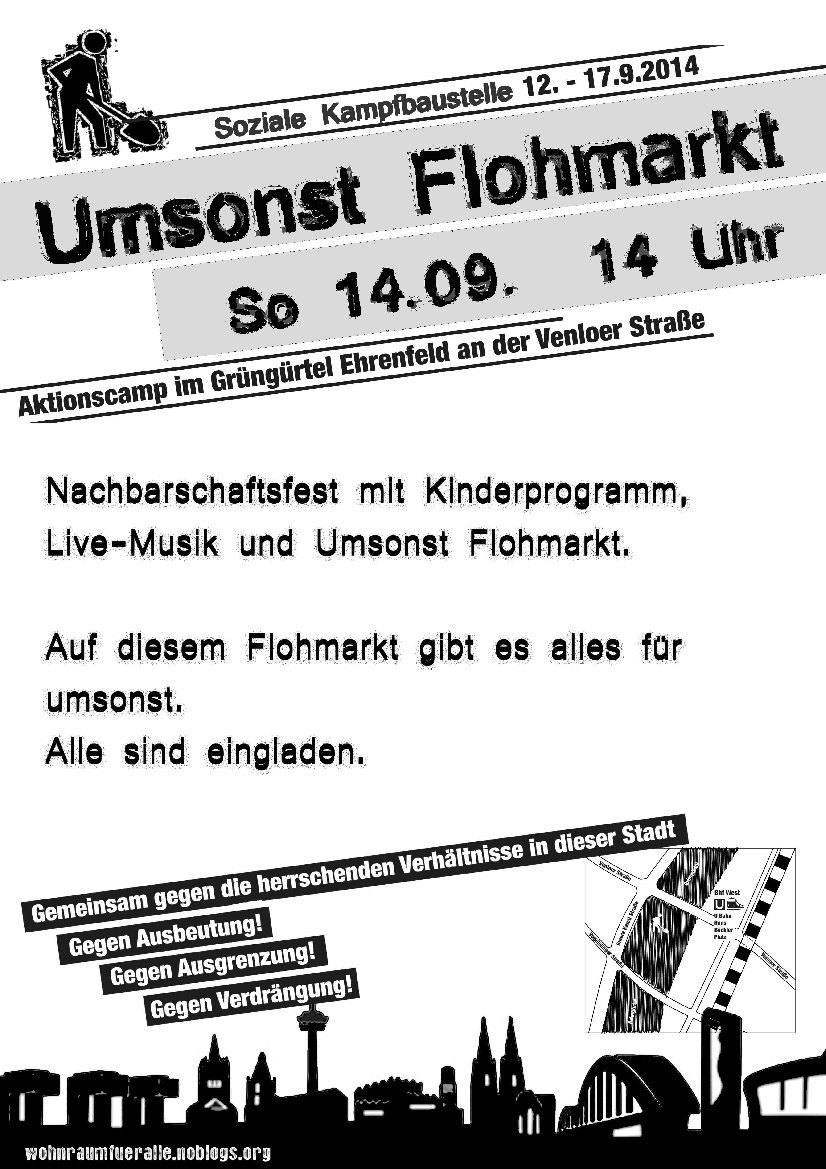
Soziale Kampfbaustelle Köln 12.-17.9.2014

Soziale Kampfbaustelle Köln 12.-17.9.2014

ئوردووی خەباتی کۆمەڵایەتیی لە شاری کۆڵن/ ئاڵمانیا ١٢-١٧ی سێپتەمبەری ٢٠١٤

اردوی مبارزەای اجتماعی در شهر کلن آلمان ١٢-١٧. سیپتمبر ٢٠١٤

مخیم النضال الاجتماعي في مدینة کولن ألمانیا ١٢-١٧ ایلول ٢٠١٤

Sonntag 14.9.

12 Uhr Organisatorisches Plenum soziale Kampfbaustelle

14 Uhr Nachbarschaftsfest mit Umsonst-Flohmarkt und Kinderprogramm

15 Uhr Vorbereitungstreffen: Unterstützungsaktion für die neu gegründete Gewerkschaft zu Arbeitsbedingungen im Knast

16 Uhr Info-Treffen der sozialen Kampfbaustelle

18 Uhr A offene Diskussion zusammen mit der Gruppe “Kein Mensch ist Illegal” zum Thema: Krieg, Rassismus und Solidarität

18 Uhr B Vorbereitungstreffen für eine “Umsonstladen-Aktion” zu den Arbeitsbedingungen in der Textilindustrie

Montag 15.9.

9 Uhr Start Jobcenter-Aktionstag Treffpunkt auf dem Camp

20 Uhr offene Diskussion “Wem gehört die Stadt?”- Entmietung, Verdrängung und Widerstand in Köln

Dienstag 16.9.

13 Uhr Überraschungs-Aktion Startpunkt: auf dem Camp

Mittwoch 17.9.

11 Uhr Aktion zu Arbeitsbedingungen im Knast – Startpunkt: auf dem Camp

14 Uhr Abbau des Camps

Es gibt jeden Abend um 19 Uhr ein offenes Abendessen für alle!

http://wohnraumfueralle.noblogs.org/2014/08/20/soziale-kampfbaustelle-koeln-12-17-9-2014

http://de.indeed.com/Jobs?q=Sozial&l=K%C3%B6ln&matchtype=b&network=s&device=c&devicemodel=&creative=31036055532&keyword=%2Bsozial%20%2Bk%C3%B6ln&placement=&param1=&param2=&random=12251947762660947854&aceid=&adposition=1t3&gclid=CMLspq773sACFUjHtAodtW0ASg

http://wohnraumfueralle.noblogs.org/2014/08/20/soziale-kampfbaustelle-koeln-12-17-9-2014/

http://www.paltalk.com/g2/paltalk/1347958751 /

 Aktion F  Aktiom K Aktion KLAktion DSKB_plakat-gratis-flohmarkt

لا تقتل لليو تولستوي

لا تقتل لليو تولستوي

ترجمة: مازن كم الماز

تقديم من المترجم : رغم عدم اتفاقي مع الكثير من أفكار تولستوي الواردة في المقال لكنه يحمل افكارا مهمة للثوريين و الأناركيين في هذه الفترة بالتحديد , و أيضا وثيقة مهمة لتيار أناركي يكاد يكون مجهولا بالكامل للثوريين و المهتمين العرب

لا تقتل

ليس التلميذ فوق سيده , لكن كل واحد عندما يكون كاملا سيصبح مثل سيده

من يعش بالسيف يموت به

لذلك , فإن كل ما فعلوه بكم , يجب أن يفعل بهم

من الإنجيل


عندما يعدم الملوك بعد محاكمتهم , كما جرى لتشارلز الأول ( ملك انكلترا , أعدم عام 1649 على يد كرمويل) , لويس السادس عشر , و ماكسيميليان من المكسيك ( ملك المكسيك , أعدمه الثوار الجمهوريون عام 1867) , أو عندما يقتلون في مؤامرات البلاط , كما جرى مع بيتر الثالث , بول , و سلاطين و شاهينشاهات و خانات عدة – لا يتحدث عنهم أحد , لكن عندما لا يقتلون بعد محاكمتهم و لا في مؤامرة بلاط – كما جرى لهنري الرابع في فرنسا ( ملك فرنسي , اغتاله كاثوليكي متعصب عام 1610 ) , الكسندر الثاني ( قيصر روسي , 1818 – 1881 اغتاله أعضاء في منظمة النارودنايا فوليا أو إرادة الشعب اليسارية الإرهابية ) , امبراطور النمسا , آخر شاه فارسي , و مؤخرا همبرت ( ملك إيطاليا , اغتيل عام 1900 على يد الأناركي الإيطالي غايتانو بريتشي انتقاما لضحايا مجرزة ميلان 1898 التي قضى فيها قرابة 400 عامل على يد قوات الملك ) – يستفز هذا القتل دهشة و غضب الملوك والأباطرة و أتباعهم , كما لو أنهم لم يرتكبوا هم أنفسهم أية جرائم قتل , أو لم يستفيدوا منها , و لم يحرضوا عليها . بينما في الواقع أن أكثر هؤلاء الملوك المقتولين اعتدالا ( الكسندر الثاني أو همبرت مثلا ) , دون أن نتحدث عن جرائمهم في بلدانهم نفسها , كانوا محرضين , متواطئين و مشاركين في قتل عشرات آلاف البشر الذين قضوا في ميادين المعارك , أما الملوك و الأباطرة الأكثر قسوة فهم مسؤولون عن قتل مئات الالاف و حتى الملايين . ترفض تعاليم المسيح قانون “العين بالعين و السن بالسن” , لكن أولئك الذين تمسكوا دائما بذلك القانون و ما زالوا , و الذين يطبقوه بدرجة فظيعة – بالمطالبة ليس فقط بعين مقابل عين , بل يأمرون بذبح الآلاف دون سبب , كما يفعلون عندما يعلنون الحرب – هؤلاء لا يملكون الحق للغضب عندما يطبق نفس القانون عليهم على نطاق أضيق محدود و أقل خطرا مما فعلوه هم أنفسهم , بحيث أنه بالكاد يقتل ملك أو امبراطور مقابل كل مائة ألف أو حتى مليون ممن يقضون بأوامر و موافقة الملوك و الأباطرة . ليس فقط أنه لا يجب أن يشعر الملوك و الأباطرة بالسخط على قتل أشخاص مثل الكسندر الثاني و همبرت , بل عليهم أن يندهشوا لأن هذه الجرائم نادرة , أخذا بعين الاعتبار المثال المستمر و العام للقتل الذي يستمرون بتقديمه للبشرية . إن الجمهور منوم بحيث أنه يرى ما يجري أمام أعينه لكنه لا يفهم معناه . يرون ما يخصصه الملوك و الأباطرة و الرؤوساء من اهتمام دائم لجيوشهم النظامية , يرون المسيرات , الاستعراضات و المناورات التي يقوم بها الحكام , و التي يباهون بها بعضهم البعض , حيث يحتشد الناس ليشاهدوا إخوانهم يرتدون ملابسهم الزاهية الحمقاء , و قد تحولوا إلى آلات تسير على وقع الطبول و الأبواق , يصرخون صرخة رجل واحد , و يقومون بنفس الحركة في نفس اللحظة – لكنهم لا يفهمون ما يعنيه هذا كله . إن معنى هذا التمرين واضح و بسيط جدا : فهذا كله ليس إلا تحضيرا للقتل . إنه استغباء للبشر لتحويلهم إلى أدوات مناسبة للقتل . و أولئك الذين يفعلون ذلك , الذين يقودونه و يفخرون به أيضا , هم الملوك و الأباطرة و الرؤوساء . هؤلاء هم نفس الأشخاص – المنشغلون دائما بشكل خاص بتنظيم أعمال القتل , و الذين جعلوا القتل مهنة لهم , الذين يرتدون البزات العسكرية و يحملون إلى جانبهم تلك الأسلحة القاتلة ( السيوف ) – هم الذين يصابون بالذعر و الغضب عندما يقتل أحدهم . إن قتل الملوك , و قتل همبرت بالذات , هو شيء مريع . لكن ليس بسبب قسوته . فالأفعال التي وقعت بأمر من الملوك و الأباطرة – ليس فقط الأحداث الماضية مثل مجزرة سانت بارثولومو ( مجزرة وقعت في فرنسا عام 1572 قتل فيها آلاف البروتستانت على يد المتعصبين الكاثوليك بتحريض من العائلة الحاكمة ) , و القمع الرهيب لانتفاضات الفلاحين , و انقلاب باريس الأخير , بل الإعدامات التي نفذتها الحكومة مؤخرا و قتل السجناء في الحجز الانفرادي , و كتائب التأديب , و الشنق , و قطع الرؤوس , و الإعدام رميا بالرصاص و القتل في الحروب – كل هذا أكثر قسوة بما لا يقاس مقارنة بجرائم القتل التي ينفذها الأناركيون . و ليس هذا القتل مريعا لأنه غير مستحق . إذا لم يكن الكسندر الثاني أو همبرت يستحقان القتل , فإن آلاف الروس الذين قضوا في بلافينا ( حصار بلافينا من قبل العثمانيين 1877 , قتل و جرح فيه آلاف الجنود الروس ) , أو الإيطاليين الذين قتلوا في الحبشة هم أيضا لا يستحقونه أكثر من الكسندر أو همبرت . هذه الجرائم رهيبة , ليس لأنها قاسية أو غير مستحقة , بل بسبب عدم معقولية مرتكبيها . إذا كانت حالات قتل الملوك تقع تحت تأثير مشاعر الغضب الشخصية التي تستفزها معاناة شعب مقهور , على يد من يعتبرون أن الكسندر الثاني أو كارنوت ( رئيس فرنسا , اغتيل عام 1894 على يد أناركي إيطالي ) أو همبرت مسؤولين عنها , أو أنهم يتصرفون انطلاقا من مشاعر الانتقام – فعندها – مهما كان سلوك مرتكبيها لا أخلاقيا – فإنها على الأقل واضحة ( أو مفهومة ) , لكن كيف أن مجموعة من البشر ( الأناركيين كما قيل لنا ) كأولئك الذين أرسلوا بيرتشي ( قاتل الملك الإيطالي همبرت ) , و الذين يهددون الآن امبراطور آخر بنفس المصير – كيف أنهم لم يستطيعوا أن يبتكروا وسيلة أفضل لتحسين أحوال البشرية من قتل أولئك الذين لن يفيد القضاء عليهم إلا بقطع رأس الوحش الأسطوري الذي سيظهر مكانه رأس جديد بمجرد قطع الأول ؟ لقد نظم الملوك و الأباطرة أنفسهم منذ وقت طويل في نظام يشبه مخزن البندقية : ما أن تنطلق رصاصة حتى تحل مكانها طلقة أخرى . مات الملك , عاش الملك . فما هي الفائدة إذن من قتلهم ؟ فقط انطلاقا من الرؤية الأكثر سطحية , يمكن لقتل هؤلاء الأشخاص أن يبدو وسيلة لإنقاذ الشعوب من القهر و من الحروب المدمرة لحياة البشر . يكفي المرء أن يتذكر أن قهرا مشابها و حروبا شبيهة طالما وقعت أيا كان الشخص الذي يرأس الحكومة – نيقولا أو الكسندر , فريديريك أو ويلهلم , نابليون أو لويس , بالمرستون أو غلادستون , ماكينيلي أو أي شخص آخر – لكي نفهم أن هذا القهر و تلك الحروب التي تعاني منها الشعوب ليست من صنع شخص بعينه . إن بؤس الشعوب ليس نتيجة لأشخاص محددين بالذات , بل نتيجة نظام معين للمجتمعات يتم بموجبه ربط الناس معا بحيث يجدون أنفسهم جميعا تحت سيطرة قلة من البشر , أو غالبا تحت سيطرة شخص واحد : شخص مصاب بالانحراف نتيجة موقعه غير الطبيعي كمتحكم بمصير و حياة الملايين , ليكون دائما في حالة مرضية , حيث يعاني دائما من هوس تمجيد شخصه , التي يخفيها موقعه الاستثنائي عن الإدراك العام . بغض النظر عن أن هؤلاء الأشخاص يحاطون منذ طفولتهم المبكرة و حتى القبر بأعظم ترف مناقض للمنطق , و أن جوا من الكذب و النفاق يرافقهم دائما , فإن كل تعليمهم و كل أعمالهم تتمحور حول موضوع واحد : تعلم جرائم القتل السابقة , و أفضل الوسائل الحالية للقتل , و أفضل التحضيرات للقتل في المستقبل . يتعلمون منذ نعومة أظفارهم القتل بكل أشكاله الممكنة . و يحملون معهم دائما الأسلحة الفتاكة – السيوف , و يرتدون بزات مختلفة , يحضرون الاستعراضات و المسيرات و المناورات , يتزاورون , يتبادلون الأوامر و ينصبون بعضهم البعض لقيادة الأفواج العسكرية – بينما لا يقول لهم أي شخص بصراحة ما الذي يفعلونه أو أن انشغالهم بالتحضيرات للقتل هو أمر مقزز و إجرامي , لا يسمعون من كل الجهات إلا الموافقة و الحماسة لكل ما يفعلوه . و في كل مرة يخرجون فيها , في كل موكب و استعراض , يحتشد جمع غفير لتحيتهم بحماسة , بحيث يبدو لهم و كأن كل الشعب يقر سلوكهم . كل الصحف التي تصلهم , و التي تبدو لهم معبرة عن مشاعر الشعب بأكمله , أو على الأقل أحسن ممثليه , تمجد بكل خنوع كل كلمة و كل عمل يقومون به , مهما كان سخيفا أو شريرا . أما من حولهم , من رجال و نساء , من رجال دين و علمانيين – كل من لا يكترث بالكرامة البشرية – فيتنافسون فيم بينهم في مديحهم باستمرار , يوافقوهم في كل شيء و يخدعوهم بصدد كل شيء مما يجعل من المستحيل عليهم أن يروا الحياة كما هي . قد يعيش هؤلاء الحكام مئات السنين قبل أن يروا إنسانا واحدا مستقلا بالفعل أو أن يسمعوا أحد ما يخبرهم شيئا من الحقيقة . يشعر المرء أحيانا بالفزع من سماع كلمات و أفعال هؤلاء البشر , لكن يجب على المرء فقط أن يفكر في منصبهم لكي يفهم أن أي شخص في مكانهم سيتصرف بنفس الطريقة . إذا وجد اي شخص عاقل نفسه مكانهم , فهناك عمل واحد عاقل يمكنه القيام به , و هو أن يهرب بعيدا عن ذلك المنصب . مهما كان من سيجلس هناك سيتصرف تماما كما يفعلون . بالفعل ما الذي يمكن أن يوجد في عقل ويلهلم ألماني ما ( ويلهلم كان آخر قيصر ألماني , حكم بين 1888 و 1918 ) , إلا رجل ضيق الأفق سيء التعليم أجوف , يحمل فقط المثل العليا لضابط ألماني – حيث سيقابل أغبى شيء يقوله أو أكثره إثارة للرعب بصرخة “هوو !” الحماسية و سيجري التعليق عليه في كل صحافة العالم و كأنه شيء مهم للغاية . و عندما يأمر يجب أن يكون الجنود مستعدين حتى لقتل آبائهم , و أن يصرخ الناس : “مرحى !” . عندما يقول أنه يجب فرض الإنجيل بقبضة حديدية سيردون – “مرحى !” , عندما يقول أنه على الجيش ألا يأخذ أسرى و هو يهاجم الصين , بل أن يذبح الجميع , فإنه لن يوضع في مستشفى للأمراض العقلية , بل سيصرخ الجميع : “مرحى !” و سيبحرون إلى الصين تنفيذا لأوامره . أو نيقولا الثاني ( و هو رجل متواضع بطبيعته ) الذي بدأ عهده بإعلانه لكبار السن المحترمين الذين عبروا له عن رغبتهم بأن يسمح لهم مناقشة شؤونهم , بأن أفكار الحكم الذاتي هي مجرد “أحلام مجنونة – و قد امتدحته لهذا كل الصحافة التي رآها , و كل الناس الذين قابلهم . ثم اقترح مشروعا طفوليا سخيفا منافقا للسلام العالمي , بينما أمر في نفس الوقت بزيادة تعداد الجيش – و لم يكن هناك حد يومها لامتداح “حكمته” و “فضائله” . و دون أي داعي قام بكل حماقة و دون أي رحمة بإهانة و اضطهاد شعب بأكمله , الفنلنديين , و أيضا عندها لم يسمع إلا الثناء . و أخيرا نظم مجزرة للصينيين – رهيبة في ظلمها و قسوتها و تناقضها مع “مشروعه للسلام” , و أيضا صفق له الناس , كمنتصر و كمواصل لسياسات والده السلمية” . بالفعل ماذا يمكن أن يوجد في عقول و قلوب هؤلاء الناس ؟ ليس الكسندر أو همبرت , و لا ويلهلم أو نيقولا , و لا تشامبرلين – رغم أنهم يأمرون بقمع تلك الشعوب و بكل تلك الحروب – هم المسؤولين فعلا عن تلك الذنوب أو الأخطاء , بل بالأصح أولئك الذين يضعونهم و يدعمونهم في موقع المتحكم بحياة أفراد شعوبهم . و بالتالي ما يجب فعله ليس قتل الكسندر أو نيقولا أو ويلهلم أو همبرت , بل إنهاء أي دعم لذلك التنظيم للمجتمع الذي ينتج هؤلاء . ما يدعم بقاء النظام الحالي للمجتمع هو أنانية و غباء الشعوب , من يبيعون حريتهم و كرامتهم مقابل بعض الفوائد المادية التافهة . الناس الذي يقفون في أدنى درجات السلم – جزئيا نتيجة استغبائهم بالتعليم الوطني و الديني المزيف , و جزئيا مقابل بعض الفوائد الشخصية – يتخلون عن حريتهم و شعورهم بالكرامة الإنسانية لمن يقفون فوقهم . و بنفس الطريقة – نتيجة لاستغباء الناس , و غالبا من أجل تلك المزايا – يتنازل أولئك الذين هم أعلى قليلا في السلم عن حريتهم و كرامتهم الرجولية , و يتكرر نفس الشيء مع من هم أعلى , و هكذا حتى الدرجة الأخيرة – حتى أولئك أو ذاك الذي يقف على قمة الهرم الاجتماعي , الذين لم يبق هناك أي شيء آخر ليحصلوا عليه , و الذين يحركهم فقط حب السلطة و الغرور , و الذين أصبحوا منحرفين و أغبياء نتيجة سلطة الحياة و الموت التي يملكونها على مواطنيهم , و نتيجة خنوع و تملق من يحيطون بهم , بحيث أنهم دون أن يتوقفوا عن فعل الشر , يبقون مطمئنين تماما لكونهم محسنين للجنس البشري . إنهم أولئك الذين ضحوا بكرامتهم كبشر مقابل ربح مادي هم الذين ينتجون هؤلاء الأشخاص الذين لا يمكنهم التصرف إلا كما يتصرفون بالفعل , و بالتالي من غير المجدي أن نغضب من أعمالهم الشريرة و الغبية . قتل هؤلاء الأشخاص يشبه جلد الأطفال الذين سبق تدليلهم . أكيد أنه يجب ألا تضطهد الشعوب , و ألا تكون هناك أيا من تلك الحروب العبثية , و أيضا ألا يغضب الناس ممن يبدو أنهم سبب تلك الشرور , و ألا يقتلوهم – يبدو أن هناك شيء صغير جدا ضروري لتحقيق ذلك . من الضروري أن يفهم الناس الاشياء كما هي , و أن يسموها بأسمائها الصحيحة , أن يعرفوا أن الجيش هو أداة للقتل , و أن الالتحاق بالجيش و قيادته – الأشياء التي يشغل الملوك و الأباطرة و الرؤوساء أنفسهم بها بثقة كبيرة بالنفس – هي مجرد أفعال تحضير للقتل . فقط إذا فهم كل ملك , كل إمبراطور , و رئيس أن عمله في قيادة الجيوش ليس عملا مشرفا و لا ضروريا , كما يقنعه مادحوه , بل عمل سيء و مخجل تحضيرا للقتل – و إذا فهم كل فرد أن دفع الضرائب لتجنيد و تسليح الجيوش , و قبل أي شيء , الخدمة في الجيوش نفسها , ليست فقط مسائل تافهة , بل أيضا أفعالا سيئة و مخجلة لا يوافق من خلالها فقط , بل و يشارك في القتل – فإن سلطة هؤلاء الملوك و الأباطرة و الرؤوساء التي تسبب اليوم غضبنا , و تودي بهم إلى القتل , ستختفي من نفسها . يجب عدم قتل الكسندر , كارنوت , همبرت و الآخرين , بل يجب أن يشرح لهم أنهم قتلة , ألا يسمح لهم أصلا بقتل الناس : على الناس أن يرفضوا أن يقتلوا بأمر منهم . إذا لم يكن الناس قد فعلوا هذا حتى اليوم , فإن هذا فقط لأن الحكومات , كي تحافظ على نفسها , تمارس بكل اجتهاد تأثيرا منوما عليهم . و لذلك يمكننا أن نساعد في منع الناس من قتل الملوك أو بعضهم البعض ليس بالقتل – القتل فقط يعزز ذلك التنويم – بل بإيقاظ الناس من حالة نومهم . و هذا ما حاولت فعله بكتابتي لهذه الملاحظات


. 8
أغسطس 1900

.
منع هذا المقال في روسيا , جرت محاولة لطبعه باللغة الروسية في ألمانيا , لكن تمت مصادرة الطبعة في يوليو 1903 و بعد محاكمة أمام محكمة مقاطعة لايبزيغ في أغسطس 1903 أعلن أنها مهينة للقيصر الألماني و أمر باتلاف كل النسخ .


http://www.ahewar.org/search/search.asp?U=1&Q=%E3%C7%D2%E4+%DF%E3+%C7%E1%E3%C7%D2

بە پەیامێکی یەك واژەیی (بەڵێ) گەورەترین سەرچاوەیی ئاوی خواردنەوە لە خۆرهەڵاتی ناویندا ڕزگاربکە

بە پەیامێکی یەك واژەیی (بەڵێ) گەورەترین سەرچاوەیی ئاوی خواردنەوە لە خۆرهەڵاتی ناویندا ڕزگاربکە

بە ناردنی پەیامێك (SMS) پارێزگاری لە سەرچەشمەی بڵ بکەن

بە بەشداریکردن لەم ڕاپرسییەی خوارەوەدا پشتیوانی لە پاراستنی سەرچەشمەی بڵ بکەن.

ئایا بە ڕزگارکردن و پاراستنی سەرچەشمەی بڵ ڕازیت ؟

بەڵێ

نا

تکایە وەڵامەکەتان بە (بەڵێ) یا ( نا ) بۆ ئەم ژمارە تەلەفونەی خوارەوە بنێرن

لە نێوخۆی ئێراندا
50002030901030

لە دەرەوەی ئێران
009850002030901030

با ارسال یک پیامک (SMS)از کانی بل حمایت کنید
با شرکت در نظر سنجی زیر از نجات کانی بل حمایت کنید.
آیا با نجات کانی بل موافقید؟
بلی
خیر
لطفا عبارت مورد نظرتان را به شماره 50002030901030 ارسال نمایید.
Photo: ‎با ارسال یک پیامک (SMS)از کانی بل حمایت کنید
با شرکت در نظر سنجی زیر از نجات کانی بل حمایت کنید. 
آیا با نجات کانی بل موافقید؟
 بلی 
خیر 
لطفا عبارت مورد نظرتان را به شماره 50002030901030  ارسال نمایید.‎


Anarşist Halk Birliği Dünya Kupası’nı Anlatıyor

Kupayı kim alacak, kim aldı tartışmalarının; protestoların, olağanüstü güvenlik önlemlerinin, kentsel talana karşı sokakta olanların, polis şiddetinin, devlet terörünün, öldürülen insanların üzerini kapattığı bir Dünya Kupası’nı geride bıraktık. Televizyonlarda gördüklerimizin ötesini görmek için sokaktakilerin sesine kulak verdik. Dünya Kupası sürecinde yaşananları, kentsel talan projelerine karşı ezilenlerin öz-örgütlenmesi anarşist örgüt UNIPA (Uniao Popular Anarquista)’dan dinledik.

bre2

Meydan: Son durum hakkında ne söyleyebilirsiniz?

UNIPA: 2013’ten beridir Brezilya, burjuva hegemonyasının sosyo-ekonomik ve politik koşullarına karşı bir kriz yaşamaktadır. Krizi yaratan üç önemli faktör söz konusudur:


  • 1. Makro-ekonomik küresel krizlerin, birçok devletin halktan destek almasını sağlayan araçlarını yok etmesi.


2.  Yeni sınıfsal fraksiyonların oluşmasıyla birlikte, sömürü düzenin yükselmesi ve neo-liberal reformların ortaya çıkması.


  • 3. Yeni direniş formları, stratejiler ve fabrika komiteleri ile gayri resmi organizasyonlar gibi işçi örgütlenmelerinin ortaya çıkışı.


Bu sebeple; grevler, kuvvetli ayaklanmalar ve sokak çatışmaları gibi farklı karakterlerdeki spesifik durumlar sayesinde, sınıf mücadelesinde yeni döngülerin başladığından bahsedebiliriz. 2013 Haziranında, Brezilya tarihinin en büyük halk ayaklanmalarından sonra; kamu hizmetlerinde (Rio de Janeiro’daki halk okullarında), toplu ulaşımda (Başta Rio Grande do Sul, Rio de Janeiro ve diğer kentlerdeki otobüs şoförleri), bankaların güvenlik sistemlerinde (yabancı/mülteci işçiler) ve şehir temizlik servislerinde (Rio de Janeiro’da) birçok önemli grevin ortaya çıkışına şahitlik ettik. Bu son ayaklanmalar Brezilya işçi örgütlenmeleri için hem devletin baskılarına direnebilmek hem de sendikalist bürokrasiye karşı durmak açısından çok önemlidir. Temizlik işçilerinin “Karnaval” sırasındaki eylemleri şehirde ciddi bir kirliliğin oluşmasına sebep oldu, böylece hükümet işçilerin haklarına daha fazla dikkatini verdi.

Kentsel dönüşümün Dünya Kupası öncesi durumu nasıldı? Hükümetin protestolara karşı uyguladığı baskının düzeyi neydi?

Brezilya’da birçok farklı sosyal çatışmaların yaşandığını gördük. Özellikle büyük şehirlerdeki (Rio de Janeiro, São Paulo, Fortaleza, Porto Alegre) “favela” (gecekondu) sakinleri, hükümetin zorbalıklarına ve kentsel dönüşüme maruz kaldı. Binlerce insan yerlerinden oldu ve evleri yıkıldı. Ayrıca birçok insan, imha siyaseti yüzünden polis tarafından öldürüldü (Şimdi de bölgeyi “polis kontrol birimleri” ele geçirmiş durumda). Böylece kentsel dönüşüm, şehir projelerini kendi ekonomik çıkarlarına (FIFA’nın ve uluslararası turizm gibi) tabi olunması amacıyla uygulandı. Yine de, Brezilya halkı bu süreçlerden bir menfaat istemeyecek.

Şimdiye kadar bu çatışmalar hükümetçe iki yönlü idare edildi: Siyasal zulüm ve paramiliter cinayetler olarak. Bundan ötürü, milyonlarca insan protestolar sırasında tutuklandı ve polis şiddetine maruz kaldı. Geçen yıl onlarca eylemcinin esrarengiz bir şekilde öldürüldüğünü duyduk ve paramiliter güçler kaçırma, gasp etme ve tecavüz etmek gibi tehditlerle insanları korkutuyor. Eylemcilerin çektikleri sıkıntılar, işten çıkarılma veya dava edilme tehditleriyle iş yerlerinde, okullarında ve üniversitelerinde de devam ediyor. Söyleyebiliriz ki, Brezilya’da şu an polis hükümetinde yaşıyoruz.

Kim bu insanlar, kimler katılıyor bu eylemlere? Ana akım medyanın verdiği bilgilere göre, sokaklardakilerin öğrenci olduğu söyleniyor. Fakat hepimiz biliyoruz ki, oradaki insanlar, kentsel dönüşüm bölgelerinde polisin ve kapitalizmin şeri altında yaşayan sakinler, değil mi? Açıkçası kentsel dönüşüm projelerinin, kupa organizasyonundan sonra da devam edeceği ortada. Yine de protestolardan beklentileriniz nelerdir, sosyal muhalefetin sokaktaki gücünü koruyabileceğini düşünüyor musun?

Bu nokta çok önemli. Gerçeği söylemek gerekirse, 2013 ve 2014’de yeni bir işçi sınıfı profili, sokak eylemlerinin ana dinamosu oldu. Bahsettiğimiz bu kişiler; yabancı/mülteci işçiler, işsizler ve yoksul insanlar, sömürülenler, gayri resmi işçiler ve öğrenciler gibi kesimlerden oluşuyordu. Örneğin Rio de Janeiro’daki en büyük kitlesel sokak eylemleri 20 Haziran’da gerçekleşti ve 2 milyon insan bir araya geldi. Bundan ötürü burjuva kesimi ve hükümet, toplumu ikna edebilmek adına eylemcilerin “işçi” olmadığını, çünkü sokaktakilerin; “endüstriyel işçi”lerin sosyal-demokrat modeline uymadığını iddia ettiler. Bundan anlıyoruz ki bu iddialar, İşçi Partisi’nin ve sendikal bürokrasinin elindeki tekeli meşrulaştırmak için ortaya atılmış tutarsız stratejilerdir. Bu işçiler son yıllarda birbirinden farklı sömürülerle yüz yüze geldi ve kentsel dönüşüm artık son damla olmuştu.

Brezilya’daki karmaşık konjonktürler bize öngörüde bulunmak için izin vermiyor. Lakin bizim, protestoların gelecek yıllarda alacağı şekle dair bazı hipotezlerimiz var. Tahminimizce, Brezilya’da yeni bir işçi sınıfı kesimine dâhil olduk ve burjuvazi ile reformcu hegemonya çöküyor. Bu durum gerek yeni bir halk hareketinin veya devrimci örgütlenmenin hemen başa geçeceği; gerekse emperyalizmin veya kapitalizmin gücünün hemen sona ereceği anlamına gelmiyor. Öte yandan şöyle söylenebilir ki; bize, bürokratik olmayan yeni bir yetenekli işçi sınıfı, nesnel ve öznel koşulları verildi ve muhtemelen gelecek yıllardaki eylemler bu sınıfın kalitatif(niteleyici) ve kantitatif(niceleyici) karakterlerini daha da geliştirecektir.

Anarşistlerin bu eylemlerdeki rolü nedir? Sizin (UNIPA/Anarşist Birliğin) bu durumu anlamlandırmaya dair bakış açısınız ve düşünceniz nedir? Takdir edersiniz ki uluslararası dayanışma böylesi günlerde daha da önemlidir, dünya genelinde yeterli dayanışma gösterildi mi?

Anarşizmin bahsedebileceğimiz iki tür rolü vardı: 1- Yaygın olarak “bireysel” olan anarşistler ve 2- Anarşist örgütlenmeler. Gerçi halk ayaklanmaları sırasında birçok sokak eylemcisi kendisini anarşist olarak tanımlıyordu. Fakat bu özdeşleştirmenin anarşist devrimci ideolojiyi anlamaya yönelik pozitif etkisinden ziyade salt politik partilere ve sendikal bürokrasiye karşı hislerini ifade etmekte kalarak negatif bir etkisi oldu. Bilinmesi gereken mühim bir nokta, protestolarda Kara Blok taktiklerinin ve tahripkâr eylemlerin (bankalara, karakollara saldırmak gibi) kullanıldığıdır. Eylemlerin ehemmiyetine karşın tüm bunlar devrimi gerçekleştirmek için yeterli değildir. Örgütlenmelerin farklı devrimci biçimlerini birbirinden ayırt etmek mecburidir. Özellikle gecekondu sakinlerinin çabalarını ve sömürüye karşı verilen halk ayaklanmalarını.

Anarşist örgütlenmelerle ilgili söyleyebileceklerimiz, birçoğu bahsi geçen eylemlerde marjinal olarak hareket etti. Ayrıca bilerek veya bilmeyerek reformcu bürokrasi ile iş birliğine gidenler oldu. Diğer taraftan, devrimci anarşist örgütlenmeler, Brezilya’daki sokak gösterilerinde ve çatışmalarda çok önemli rolleri yerine getirdiler; devlet şiddetine karşı resmi veya gayri resmi örgütlenmeler oluşturdular, çatışma komiteleri tertiplediler, çatışmalar örgütlediler. Anlayacağınız, anarşizmin rolü pek homojen değildi fakat en büyük katkısı; anarşizmin eksiklerini anlayarak Brezilya’daki gelişimini sağlamak oldu. Bundan dolayı, son dönemde yaşanan tüm bu eylemler devrimci anarşizmin güçlenmesini sağlamış oldu.

UNIPA, eylemlerine devam edecek ve ezilen işçilerin polis devletine karşı haklarını korumaya yönelik örgütlenmelerini desteklemeye devam edecektir. Bizim için sendikalist devrimci halk örgütlenmesinin bir parçası olarak savunma örgütleri kurmak zorunludur. Sendikal ve reformist bürokrasiye karşı taban örgütlenmesi oluşturmak elzemdir. Ekonomik ve politik zorbalıklara karşı mücadelenin rolü kadar devrimci anarşizmi örgütlemenin de önemli olduğuna inanıyoruz. Aksi takdirde, yeni yeni oluşmakta olan bu sınıf mücadelesinin, yeni bir anarşist alternatif inşa etmesi mümkün olmayacaktır. Bundan dolayı dünya genelindeki devrimci anarşizm, uluslararası gelişimi ilerletmek zorundadır. Hatta uluslararası dayanışmayla birlikte mücadeleyi organize edebilecek, özellikle UİB (Uluslararası İşçi Birliği) gibi bir örgütlenmeyi oluşturmalıyız ki emperyalizm, nasyonalizm, sosyal demokrasi ile savaşabilelim. UNIPA böyle bir organizasyonun kurulması için dünya geneline yayılmış bir devrimci anarşizmi arzulamaktadır. 

Bu söyleşi Meydan Gazetesi’nin 20. sayısında yayımlanmaktadır.

Meydan Gazetesi’nin yayınlanmış tüm sayılarına arşiv bölümümüzden ulaşabilirsiniz.

المعسكر الاحتجاجي الاجتماعي 12-17 .9 –2014 في المدینة کولن / ألمانیا

المعسكر الاحتجاجي الاجتماعي 12-17 .9 – في 2014 المدینة کولن / ألمانیا


معا في مواجهة الظروف الاجتماعية المهيمنة في هذه المدينة ! ضد الاستغلال ، التمييز ، الترحيل!

  1. الجمعة 12 \ 9 الساعة السابعة مساء ” افتتاح ، عشاء ، حفل “

  2. السبت 13 \9 الساعة الحادية عشرة صباحا ” ورشة عمل مع ملخص عام الساعة الثانية ظهرا.

    و في تمام الساعة الثامنة مساء حفل.

  3. الأحد 14 \ 9 الساعة الثانية ظهرا حفل حي إضافة إلى معرض هدايا مجاني و برامج للأطفال و موسيقى.

  4. الاثنين 15 \ 9 الساعة الثامنة مساء حوار مفتوح بعنوان ” لمن هذه المدينة ؟ ” و سنناقش قضايا الترحيل و فقدان المساحة المعيشية و المناهضة في كولون.

عشاء يومي في تمام الساعة السابعة مساء لجميع الحاضرين …

تتمة البرنامج تعتمد على المشاركين في المعسكر و سوف توضع تباعا بدءا من يوم الجمعة على ما يليه… (wohnraumfueralle.noblogs.org)

سيقام هذا العام معسكر احتجاجي اخر في Grungurtel park at venloer strasse

الجميع مدعو للحضور و المشاركة في كافة الاجتماعات و النقاشات و الأعمال و الوجبات أيضا.

و بالتالي نحن مرة أخرى نريد ان نخلق مساحة من أجل المناهضة المنظمة المشتركة في مواجهة هذه الظروف الاجتماعية السائدة في هذه المدينة .

بعض هذه المواضيع هي :

  • أزمة السكن و إخراج الفقراء و ذوي الدخل المحدود من مركز المدينة.

  • سيطرة أو قبضة الشرطة و التمييز من خلال ما يسمى ” المناطق الخطرة “.

  • وضع المئات من اللاجئين في ملاجئ الطوارئ و الحاويات المؤقتة.

  • إقصاء و استغلال العمال المهاجرين من جنوب شرق أوروبا.

  • احتجاج العاطلين عن العمل في وكالة التوظيف العامة و مركز العمل.

  • أزمة العاملين في مجال الرعاية الصحية و المرضى.

  • التضامن مع النزاعات العمالية الحالية.

معسكر الاحتجاج الاجتماعي النضالي هنا من أجل الجميع ، من أجل القائمين و المنظمين من جهة و من أجل الزائرين ايضا… لأننا بحاجة الى أكبر عدد ممكن من الأشخاص في هذه المناهضة من أجل مجتمع أفضل لا يرضى بتفاوت القوى أو الاستغلال.

سيكون هناك حوارات ، ورشات عمل ، وجبات و حفلات ، ندوات ثقافية و تواصل اجتماعي . قلب المعسكر النابض سيكون المطبخ ، نقطة لقاء لعشاء يومي مشترك في تمام الساعة السابعة مساء.

نحن بحاجة إلى أكبر عدد ممكن من المجموعات و الأفراد للمشاركة في صياغة المحتوى و فهم معسكر الاحتجاج النضالي الاجتماعي من خلال ممارسته لنصبح جزئا لا يتجزأ منه.

دوازده تز برای تغییر جهان بدون گرفتن قدرت

دوازده تز برای تغییر جهان بدون گرفتن قدرت


الف:


یک – آغاز، حرکتی نفی گرایانه است.

در آغاز فریادی هست و نه سخنی. فریادی غمگین، فریادی دهشتناک، فریادی دیوانه وار، فریاد منفی علیه زندگی های انسانی که سرمایه داری تکه پاره می کند: نه!

برای تعریف واقعیت فریاد، اندیشه باید نفی گرایانه باشد. ما نمی خواهیم جهان را بفهمیم، می خواهیم آن را نفی کنیم. هدف نظر این است تا جهان را منفی تصور کند، نه برای این که چیزکی جدا از عمل به دست آید، بلکه برای آن که همین نفی، خود عمل باشد، خود بخشی از مبارزه برای تغییر جهان باشد تا بتواند آن را به محلی برای زندگی در شأن انسان تبدیل نماید.

اما پس از آن چه گذشته است، ما چگونه می توانیم برای تغییر جهان ژرف اندیشی نماییم؟


دو – جهانی در شأن انسان با عمل دولتی دست نیافتنی ست.

تلاش هایی که در بزرگ ترین بخش سده ی بیستم میلادی برای آفرینش جهانی در شأن انسانی صورت گرفتند بر اساس دولت و گرفتن قدرت دولتی متمرکز بودند. اصلی ترین جدل ها (بین “اصلاح طلبان” و “انقلابیان”) دور و بر روش های کسب قدرت دولتی بودند، یکی آن را از راه پارلمانی می خواست و دیگری فراپارلمانی. تاریخ سده ی بیستم نشان داد که مسئلەی روش‌های گرفتن قدرت دولتی آن چنان که گفته می شد، مهم نبود. گرفتن قدرت دولتی به هر شکلی اجازه نداد تا تغییراتی که طرف های جدل می خواستند به واقعیت بپیوندند. نه دولت های اصلاح طلب و نه دولت های انقلابی برای تغییر ریشەای جهان کامیاب نگردیدند.

بسیار آسان است تا رهبری همەی جنبش‌ها را به خیانت متهم نمود. این واقعیت که این همه خیانت وجود داشت، چنین القاء می کند که شکست دولت های رادیکال، سوسیالیست یا کمونیست، ریشەهای بسیار ژرف تری داشته است. دلیلی که برای استفاده نکردن از دولت برای ایجاد تغییر رادیکال در جامعه وجود دارد این است که خود دولت شکلی از روابط اجتماعی است که در تمامی روابط اجتماعی سرمایەداری ثبت شده است. وجود دولت، صرف نظر از محتوای سیاستش، به عنوان نهادی جدا از جامعه بدین معناست که شدیداً در روند جدایی مردم از کنترل زندگی خود دخالت می کند. سرمایەداری به جز این نیست: جداسازی مردم از حرکتشان. سیاستی که بر محوریت دولت قرار دارد بی برو و برگرد در روند جداسازی شرکت می کند. چنین سیاستی، عمل سیاسی جدّی را از حرکت پوچ شخصی منفک می نماید. سیاستی که بر محوریت دولت قرار دارد از تغییر رادیکال جامعه دور می شود و به تدریج اپوزیسیون را در انقیاد منطق سرمایەداری درمی آورد.

پس ما می بنیم که چگونه نظریه کسب قدرت دولتی برای تغییر جهان توّهمی بیش نبود. خوشبختی ما این است که در دوران پایان این توّهم زندگی می کنیم.


سه – یگانه راه تغییر جهان امروز نه گرفتن قدرت که انحلال آن است.

انقلاب بیش از همیشه اضطراری است. فجایعی که نظم سرمایەداری در جامعه ایجاد کرده است بیش از پیش دهشتناک شدەاند. اگر انقلاب از طریق کسب قدرت دولتی چیزی به جز توّهم نبود، این بدان معنا نیست که ما باید ضرورت انقلاب را به دست فراموشی بسپاریم. انقلاب را باید از زوایای دیگری تعریف نمود: انقلاب نه برای گرفتن قدرت، بلکه برای انحلالش.


ب:


چهار – مبارزه برای انحلال قدرت مبارزەای است برای رهایی «قدرت – برای» (potentia) از «قدرت – روی» (potestas).

برای این که آغاز کنیم تا به تغییر جهان بدون گرفتن قدرت بیاندیشیم، لازم است تا قدرت – عمل (potentia) را از قدرت – تسلط (potestas) تمیز دهیم.

در هر تلاشی برای تغییر جامعه، عمل یا انجام دادن صورت می گیرد. انجام دادن به نوبەی خود بدین معناست که ما توانایی قدرت – عمل را داریم. ما اغلب واژه ی «قدرت» را در این جهت به کار می بندیم و آن را چیز مثبتی در نظر می گیریم؛ زمانی که عمل مشترکی با دیگران (همچون تظاهراتی یا حتا سمیناری) به ما احساس قدرت می دهد. قدرت با این تعریف ریشەاش از انجام دادن است و قدرت – عمل است.

قدرت – عمل همیشه اجتماعی است و همواره از باروری اجتماعی انجام دادن می آید. ظرفیت ما برای انجام دادن حاصلی از انجام دادن‌های دیگر است و شرایط انجام دادن‌های دیگر را می آفریند. ما نمی توانیم تصور کنیم که انجام دادن در هر شکلی به انجام دادن‌های دیگر در گذشته، حال و آینده پیوسته نباشد.


پنج – قدرت – عمل به قدرت – تسلط تبدیل می گردد، زمانی که انجام دادن متلاشی می گردد.

تبدیل قدرت – عمل به قدرت – تسلط موجب می گردد که باروری اجتماعی انجام دادن متوقف گردد. کسانی که قدرت – تسلط را اعمال می کنند، انجام داده را از انجام دادن جدا کرده و آن را به مالکیت خود درمی آورند. به مالکیت درآوردن انجام شده همواره با به مالکیت درآوردن روش‌های انجام دادن صورت می گیرد و به قدرت مداران اجازه می دهد تا بازیگران انجام دادن را نیز زیر کنترل خود بگیرند. بازیگران (انسان ها، به عنوان سوژه‌های فعال) این چنین از تلاش خود و از روش‌های محصول تلاش خود جدا می گردند. آنان این گونه از خود نیز جدا و بیگانه می گردند. این جداسازی که در نهاد هر جامعه‌ای است که در آن قدرت روی عده‌ای اعمال می گردد، در جامعه‌ی سرمایه‌داری به اوج خود می رسد.

باروری اجتماعی متوقف می گردد. قدرت – عمل به قدرت – تسلط فرامی روید. آنانی که انجام دادن دیگران را به انقیاد درمی آورند، خود به بازیگران جامعه تبدیل می گردند و آنانی که به انقیاد درمی آیند نامرئی، بی صدا و بی رأی می گردند. قدرت – عمل دیگر در این جا در باروری اجتماعی ثبت نمی گردد و در شکل قدرت فردی به حیات ادامه می دهد. برای اکثریت جامعه دیگر قدرت – عمل به ضد خود تبدیل شده است، ناتوان گشته است یا به یگانه قدرت انجام دادنی فراروییده است که دیگران برایش تصمیم گیری می کنند. قدرت مندان قدرت – عمل را به قدرت – تسلط تبدیل می کنند، قدرتی که به آنان اجازه می دهد تا به دیگران بگویند چه باید انجام دهند، آن هم در رابطه ای وابسته به انجام دادن دیگران.

در جامعه ی کنونی، قدرت – عمل به شکل منفی خودش وجود دارد که همان قدرت – تسلط است. قدرت – عمل در شکلی وجود دارد که آن را نفی می کند. این بدان معنا نیست که قدرت – عمل وجود ندارد. وجود دارد، اما به شکلی منفی، در شکل رودررویی آشتی ناپذیر با شکل موجود خودش که قدرت – تسلط است.


شش – فسخ انجام دادن فسخ یکایک جلوەهای اجتماع و جلوەهای خود ماست.

جداسازی انجام دادن و بازیگران محصول عمل، افراد را به سوی وضعیتی هدایت می کند که دیگر خود را مؤثر نمی بینند، بلکه خود را مالکان (یا نامالکان) محصول عمل می بینند (عملی که دیگر از انجام دادن جدا گشته است.) روابط بین افراد همچون روابطی بین اشیاء و افرادی می شوند که دیگر بازیگرانش نیستند، بلکه حاملان گذشتەی اعمال انجام شده، هستند.

این جداسازی بین عاملان انجام دادن – و از این جنبه از خودشان – در آثار مختلف با واژەهایی شدیداً مرتبط با هم توصیف شده اند: از خود بیگانگی (مارکس جوان)، موهوم پرستی (مارکس مسن)، کالاشدن (لوکاچ)، انضباط (فوکو) یا هویت طلبی (ادرنو). هر کدام از این توصیف ها به روشنی نشان می دهند که قدرت – عمل نمی تواند همچون چیزی خارج از ما درک گردد، برعکس هر یک از جلوەهای وجودی ما را دربرمی گیرد. هر کدام از این توصیف ها نشان می دهد که زندگی استخوان بندی شده است. باروری اجتماعی انجام دادن مقید می گردد و ممکن ها ندرت می یابند.

انجام دادن به بودن تبدیل می گردد: این است ماهیت قدرت – تسلط. در حالی که انجام دادن بدین معناست که ما هستیم یا نیستیم، فسخ انجام دادن «ما نیستیم» را نفی می کند. لذا برای ما فقط «ما هستیم» باقی می ماند. «ما نیستیم» فراموش می گردد به صف اتوپیای ناب فرستاده می شود. امکانش را از دست می دهد. زمانه یکدست می گردد. آینده به ادامەی حال متحول می شود؛ گذشته به پیش از حال تبدیل می گردد. همه چیز انجام دادن و هر جنبشی به ادامەی آن چه هست ارتقاء می یابد. رؤیای جهانی در شأن انسانیت شگفت آور می شود، ما چیزی به جز رؤیا نیست. وضعیت قدرت – تسلط وضعیتی است که می گوید:«همین است که هست»، وضعیت هویت طلبی ست.


هفت – ما در فسخ انجام دادن و در به انقیاد درآوردن خود شرکت می کنیم.

ما همچون بازیگران جدای از انجام دادن خودمان، انقیاد خود را تولید می کنیم. ما کارگران، سرمایه ای را که بر ما تسلط دارد، تولید می کنیم، ما استادان دانشگاه نقشی فعال در جامعه ای داریم که هویت طلبی می کند و می خواهد انجام دادن را به بودن تبدیل نماید. زمانی که تعریف، دسته بندی، ارزیابی و تصدیق می کنیم که هدف علوم اجتماعی این است که جامعه را چنان که هست باید تعریف کرد یا زمانی که مدعی هستیم که جامعه را بی طرفانه مطالعه می کنیم – گویی این جامعه خارج از ذهن ما وجود دارد – در واقع ما فعالانه به نفی انجام دادن یاری می رسانیم و به جداسازی سوژه از ابژه یا سواکردن بازیگران از محصول عمل کمک می کنیم.


هشت – هیچ قرینه ای بین قدرت – عمل و قدرت – تسلط وجود ندارد.

قدرت – تسلط انجام دادن را نفی وفسخ می کند. باروری اجتماعی انجام دادن را فعالانه و دائماً نفی می کند و ما را از عمل اجتماعی دور می نماید. گفتن این که به دست گرفتن قدرت – تسلط می تواند ما را به سوی رهایی از آن چه او نفی می کند رهنمون کند، پوچ و بی معناست.

قدرت – عمل اجتماعی ست. در نهاد ماست و نشانگر به رسمیت شناختن متقابل شأن انسانی ست.

جنبش قدرت – عمل علیه قدرت – تسلط نباید همچون جنبش خلاف قدرت درنظر گرفته شود (چرا که در این صورت بین این دو، قدرت و خلاف قدرت، قرینه ای پدید می آورد)، بلکه باید آن را ضدقدرت در نظر گرفت (چرا که در این صورت هیچ گونه قرینه ای بین قدرت و مبارزه ی ما وجود نخواهد داشت).


پ:


نه – ما چنان مجذوب قدرت – تسلط شده ایم که دخالت نیروی بیرونی، یگانه راه ممکن به نظر می آید. اما این هیچگاه راه حل نیست.

بسیار ساده است تا نتایج ناامیدکننده ای از جامعه ی کنونی بیرون کشید. ناعدالتی ها و خشونت ها و استثمار ما را به رنج آورده اند و گمان می رود که برون رفت ممکنی نیست. قدرت – تسلط چنان در جای جای زندگی ما رخنه کرده است که تصور «توده های انقلابی» مشکل شده است. رخنه ی ژرف سلطه ی سرمایه داری، بسیاری را در گذشته به این اندیشه انداخته بود که باید رهبری حزبی پیشرو تأمین گردد، اما واقعیت نشان داد که چنین احزابی نه فقط راه حل نیستند، بلکه قدرت – تسلط دیگری را با قدرت – تسلط موجود جایگزین می کنند.

راحت ترین راه می تواند توّهم زدایی ناامیدانه باشد. اما فریاد نخستین علیه فجایع سرمایه داری ما را رها نمی کند و فقط زندگی با آن ها را فرامی گیریم. ما حامیان سرمایه داری نمی شویم، اما می گوییم که کاری از دستمان علیه آن برنمی آید. توّهم زدایی ما را به سوی هویت طلبی می کشاند و به ما القاء می کند که آن چه را هست باید پذیرفت. ما خود به جداسازان انجام دادن و محصول انجام شده ها گرایش پیدا می کنیم.


ده – یگانه راه حل برش از دور به ظاهر باطل قدرت این است که روند تبدیل قدرت – عمل به قدرت – تسلط را ببینیم که خود لزوماً به وجود ضدش می انجامد: موهوم پرستی به ضدموهوم پرستی بدل می گردد.

ازخود بیگانگی (موهوم پرستی، کالا شدن، انضباط، هویت طلبی و غیره) اغلب به عنوان وضعیت موجود برآورد می شود. مسئله ی اشکال سرمایه داری ِ روابط اجتماعی چنان در نظر گرفته می شود که گویی آن ها از پیدایش این نظم وجود داشته اند و تا هنگامی که این نظم با نظم دیگری جایگزین گردد، وجود خواهند داشت. به عبارت دیگر، پیدایش و موجودیت تمیز داده می شود: پیدایش سرمایه داری در گذشته ای تاریخی قرار می گیرد و موجودیت کنونی اش تثبیت شده اعلام می گردد. چنین برخوردی خودبه خود بدبینی را تغذیه می کند.

اگر ما برعکس در جدایی انجام دادن و محصول انجام داده ها چیزی ببینیم که پایان نیافته است و فقط روندی ست، در این صورت جهان رویش را بازمی گشاید. هنگامی که ما ازخودبیگانگی سخن می گوییم، بدین معناست که ازخودبیگانگی مطلق نیست. اگر جدایی، ازخودبیگانگی و غیره، روندی در نظر گرفته شوند، در این صورت تحول آن ها از پیش تعیین شده نیست و تبدیل قدرت – عمل به قدرت – تسلط به مسئله ای باز و هرگز بدون پاسخ فرامی روید. هر آن کس که از روند می گوید از جنبشی در حال شدن می گوید و آن چه روند (ازخودبیگانگی) است، در عین حال هست و نیست. پس ازخودبیگانگی جریانی ست که با ضد خود روبه رو می گردد. وجود قدرت – تسلط به موجودیت ضدقدرت – تسلط جان می دهد یا به عبارت دیگر جنبش رهایی بخش قدرت – عمل زاده می گردد.

آن چه در شکل نفی خود وجود دارد، آن چه کیفیّت نفی شدن را واقعاً دارد، نفی روند نفی شدن است. سرمایه داری بر اساس نفی قدرت – عمل، نفی انسانیت، نفی نوآوری و نفی شأن انسانی وجود دارد، با این حال همه چیز واقعی است. زاپاتیست ها دلیلی بر این مدعاست. شأن انسانی فرای نفی آن وجود دارد. شأن انسانی جدا از جامعه نیست، در تنها شکلی که می تواند بگیرد وجود دارد، شکلِ مبارزه علیه نفی خودش. چنان که قدرت – عمل نیز جزیره ی کوچکی در اقیانوس قدرت – تسلط نیست، قدرت – عمل نیز در تنها شکلش که مبارزه علیه نفی خود است، موجود است. آزادی نیز نه آن گونه که لیبرال ها در ورای آنتاگونیسم های اجتماعی تعریفش می کنند، وجود دارد. آزادی در جامعه ای که با روابط سلطه طلبانه اداره می گردد، در یگانه شکل مبارزه علیه نفی خود می تواند وجود داشته باشد.

از وجود واقعی و مادی آن چه در شکل نفی خودش هست، امید آفریده می شود.


یازده – امکان تغییر ریشه ای جامعه به نیروی مادی ای وابسته است که در شکل نفی خود وجود دارد.

نیروی مادی نفی در شکل های مختلف دیده می شود.

این نیرو نخست در مبارزه های بی شماری دیده می شود که نمی خواهد روی کس دیگری قدرت اعمال کند، اما می خواهد قدرت – عمل ما و مقاومت مان را علیه سلطه ی کسان دیگر نشان دهد. این مبارزه ها شکل های گوناگونی می گیرند، از شورش آشکار تا مبارزه برای کنترل روند تولید یا مبارزه برای آموزش و بهداشت و حتا مبارزه ی ساکت زنان و کودکان در خانواده برای شأن انسانی. مبارزه برای شأن انسانی در جامعه ی کنونی اغلب شکل هایی می گیرد که آشکارا سیاسی نیستند: در متن های ادبی، در موسیقی و داستان های کودکانه. مبارزه برای شأن انسانی همه جا موجود است چرا که از وجود ما به عنوان انسان سرچشمه می گیرد.

نیروی نفی در وابستگی قدرت – تسلط به آن چه دیده می شود که آن را انکار می کند. برای آنانی که قدرت – عمل در ظرفیتی موجودیت می یابد که به دیگران بگویند چه باید بکنند، برای موجودیت خود، به عمل دیگران نیازمنداند. تمام تاریخ سلطه جویی را می توان در مبارزه ی قدرت مداران دید که می خواهند از وابستگی شان به زیردستان خلاصی یابند. چنین است که ما می توانیم گذار از فئودالیسم به سرمایه داری را بفهمیم. این گذار فقط مبارزه ی رعیت ها علیه خان ها نبود، مبارزه ی زمین داران برای رهایی از رعایا هم بود که قدرت خود را به پول، یعنی سرمایه تبدیل کردند. همین مبارزه را سرمایه داران با ورود ماشین ها کردند تا بتوانند گریبان خود را از کارگران رها کنند و سپس به صورتی گسترده، سرمایه تولیدی را به سرمایه مالی تبدیل نمودند که امروز نقشی بارز در سرمایه داری دارد. گریز قدرت مندان از زحمتکشان به هر حال بیهوده است. قدرت – تسلط نمی تواند چیز دیگری به جز استحاله ی قدرت – عمل باشد. قدرت مندان هیچ گاه نخواهند توانست وابستگی شان را به سلطه یافتگان قطع نمایند.

وابستگی قدرت مندان به سلطه یافتگان در بی ثباتی خودشان و در بحران سرمایه تبلور می یابد که زمانی با جایگزینی کارگران توسط ماشین ها صورت گرفت و امروز با تبدیل سرمایه تولیدی به سرمایه مالی. سرمایه نهایتاً به کار وابسته است، به عبارت دیگر به ظرفیت خودش برای تبدیل توان تولیدی انسان به کار مجرد و به تولید ارزش وابسته است که در شکل سقوط میزان بهره جلوه گر می شود. بحران سرمایه داری نیروی نفی سرمایه را، یعنی قدرت – عملی که سربه زیر نیست را در بر دارد.


دوازده – انقلاب اضطراری است، اما حتمی نیست، پرسش است، اما پاسخ نیست.

نظرات مارکسیست های ارتدکس می خواستند قطعیت انقلاب را نشان دهند و بگویند که جبر تاریخ جامعه را بی برو و برگرد به سوی کمونیسم می برد. این نظرات اشتباه از کار درآمد: برای این که جامعه ای خودگردان آفریده گردد، هیچ قطعیتی وجود ندارد. آن چه قطعیت دارد این است که سلطه طلبی وجود دارد. قطعیت در همگنی زمان و در انجماد عمل کردن به بودن است. خودگردانی ماهیتاً حتمی نیست. مرگ یقین های کهنه رهایی است.

به همین جهت است که انقلاب را نمی توان پاسخی دانست، بلکه باید آن را پرسشی دانست که برای تحقق شأن انسانی تلاش می کند. ما راهمان را از پرسشی به پرسش دیگری باز می کنیم.


جان هالووی

اشاره: مطلب بالا در کتاب من، با عنوان تغییر جهان بدون گرفتن قدرت بیش تر شکافته شده است. انتشارات Pluto Press، لندن – سال ٢٠٠٢

منبع مطلب: http://libcom.org/library/twelve-theses-on-changing-the-world-without-taking-power

برگردان به فارسی : نادر تیف – اوت ٢٠١۴، مرداد و شهریور ١۳٩٣

The possibility of breaking up Iraq

The possibility of breaking up Iraq


A few weeks ago, in one of our bulletins, we (the Kurdistan Anarchists Forum) expressed our opinions and attitudes regarding the Islamic State in Iraq and the Levant (Isis), its attacks on Iraq, and the religious and political struggle between the Shia and Sunni for domination. Here in this statement, we put forward our views about the political situation, the possibility of a divided Iraq, and the current war.

We believe, from 1991 until the present, Iraq has never been a unified country- or indeed, a unified land. This is the case following the collapse of Saddam Hussein’s regime and the invasion of Iraq by the United States and its allies in 2003- since that period, it has been divided into three regions: Kurdistan, where the Kurdish people, since the uprising of 1991, have had their own regional government; the Sunni region, where people have been continuously in dispute with the central Iraqi government due to being isolated, neglected, marginalised and deprived of government services; The third part, the Shia regions in the south and in the middle of the country, have seen its Shia factions ruling Iraq since 2003.

Regardless of the schemes and conspiracies set in place by political leaders and those hungry for power, Iraqis (ordinary, powerless citizens), from north to south, have had a good social relationship with each other, and live harmoniously together. In the meantime, we cannot deny that for over half a century, people- be they Kurdish, Arab or Turkish-have paid the price; Violent skirmishes, the greed of narrow-minded politicians, prevailing wars, the Al-Anfal1 Campaign, the use of chemical weapons against the Kurdish, their forced evacuation from their small towns & villages- almost everybody in Iraq has been a victim of various wars and the ruthless and destructive antics of Iraq’s political parties. Despite this, Iraqis were happy to live together- until recently, to a certain extent.

The current military struggle for power has reached such a point that Iraq is either facing a terrible civil war or balkanization. Both possibilities – war or disintegration- benefit the powerful elite. In fact, ordinary citizens outside of influential political circles, and away from power-hungry aspiring elites, have nothing against each other and can manage to live together perfectly. They also can be united during day-to-day activities and in their shared interests, regardless of their differences in nationality, colour, religion, race and tribe.

For us as Anarchists, there is always a third way- a reorganization of society on the basis and principles of building liberated communes and free community-run cooperatives that are collectively owned by the people themselves, through the method of direct democracy. Unfortunately, at this moment in time, state forces and militias want to turn what is their war into everybody’s war, and spread it to all of society’s organs. At the same time, people are either unconsciously divided over political parties and militias, or desperately isolated and marginalised. If the problem is due to a lack of social consciousness, the best alternative is to leave the decision regarding the outcome of Iraq for the people themselves to decide, except for under one condition: by not standing in opposition to war and violence, they are then allowing themselves to be sacrificed for the sake of the capitalist imperialists and corrupt politicians. In this particular circumstance, anything that can prevent an outbreak of war and the slaughter of millions of people and genocide, is obviously the only viable path.

The thirty years-long war between different governments of Iraq and the Kurdish movement has caused the genocide of thousands of people, destroyed hundreds of villages under the name of the Al-Anfal Campaign in 1988, and deployed chemical weaponry in 1985 upon orders from the regimes, in addition to the burning down of marshes in Shia areas in southern Iraq. We witnessed all of these incidents. What is happening at present is the continuation of the past with the support of the government and the main political bodies in order to further expand their control. In order to amass power and influence, they use every trick, every violent method in order to spread hatred and murder innocent civilians for their own personal gain, and also to benefit neoliberal economic interests through enacting the economic policies of the IMF, WB and ECB.

Possibility of division or breaking up

There is some truth to this theory. Kurdish politicians, who are involved in the Kurdistan Regional Government and advocate an independent Kurdish state, or are in favour of a continuation of the current state, are still similar to the Iraqi government (or, the majority of governments worldwide) in that they continue to exploit the working class and underclass. At the same time, they represent the interests of powerful international corporations and organizations. Because of this, even despite the Kurdish people having their own government and state, both of these institutions are involved in the exploitation of workers and those living in poverty, and continues to do the same with economic support funded by influential nations.

It is correct that breaking up Iraq makes the class struggle of exploited people more difficult. Despite the struggle of the Gawrbaghy2 and the cooperation of the working class in their struggles during the fifties and sixties, working class unity was thereafter challenged by political turmoil, exploitative political leaders, religion and intermittent periods of war. Due to current societal turmoil, this is still the case for the working class at present. The possibility of further conflict involving so many different factions in future is particularly foreseeable at this time. We must also remind people, here, that at the end of the Iraq-Iran war, a network of international spies and agents succeeded in creating bands of mafias, terrorist groups, ultra-radical politicians and fanatical religious sects in order to stimulate a situation for further hostility.

In situations like this, there is further likelihood of brutal civil war than unity of powerless communities. The referendum regarding independence may be the best and most wise action to be taken, although it is not our desire or our demand, as we are in favour of any decisions to be put forward by the masses outside of guided suggestions and manipulative strategies put forward by politicians. In the last nine years we tried, and we were ready, to support the call for an independent mass struggle in order to establish people’s cooperatives and free federations, and to connect them to one and other in a regional confederation of districts. But at present, because current fears and threats are bigger and more possible than the hopes, it may be the only option- the direct decision would be made by the people themselves about their future in Iraq.

Even in the situation as explained above, we do not expect that the people’s decision, influenced by poisonous publicity put forth by manipulative and toxic political factions seeking to widen their authority, can ultimately be a healthy decision; we therefore cannot be silent. In fact, in the first instance, we believe that it is our duty in regards to the propaganda spread by neoliberal, nationalist and fanatical Islamic organisations, to work and struggle for independent organisation, local groups, mass movements and self-managing communities created by people themselves based on the principals of direct democracy. We try to create all of these to be used as the tools of future struggles and as a strategy against current or further political oppression that could occur.

Obviously, if anything were to occur outside the will of the vast majority of people, it does not mean we are to be contented with that. Indeed, our struggles will still continue against the hierarchal system, state oppression, any government yet to arise and systematically exploitative organisations.

If Iraq is breaking up into different states, we are likely to still continue our activities, wherever we have the solidarity of our comrades, our fellow working classes, be they Arab, Turkish, Persian or other, within the principal of ‘work and be active locally and think globally’, as we struggle for a world free of borders, inequality and corruption.

Free Referendum

We are positive that in class society there will never be a ‘free’ referendum, as before the decision on the referendum has taken place, the upper classes have already laid the terms of the referendum and its aims will therefore be set according to the interests of the elite and authoritarian ruling minority, and will have nothing to do with the daily necessities, demands and needs of ordinary people. An honest referendum can only be set in mention when society is economically independent, equal and autonomous, and when people can make their own decisions without state interference or being manipulated by media, the media being removed from the hands of the ruling elite and state.

Any referendum to be carried out in the Kurdish regions, or any other Iraqi area, cannot be free and honest, and will not take place outside of the decisions of the dominant classes and powerful foreign nations. In the last couple of decades in Iraqi Kurdistan, referendums have taken place, but the results were not beneficial for the Iraqi invading forces and the Kurdistan Regional Government (KRG) and were therefore not finalized by parliament.

This does not mean that socialists, libertarians and anarchists cannot change this outcome. In fact, if these political factions can organize for the principles of independent struggle, revolutionary mechanisms against the current system, struggles and campaigns against oppression, things can be changed. We can mobilise, influence societal opinions and work on encouraging class consciousness of individuals, communities, organizations and groups. For example: if the aims of the referendum go against the people’s will and do not fulfil the needs of the masses, then people can boycott or spoil their white ballot papers. This just one of the ways that the ruling class’s disgusting attempts of imposing their own objectives can be rejected and defeated.

The referendum that the politicians now pose is not for reorganising society by changing the relationship of the means of production, it is not for the self-governance or autonomy of the masses, it is not for building communities and co-operatives in a free society; it is for establishing borders created by the bourgeoisie, further economic gains and political influence for politicians, for domination over the Shia, Sunni and the Kurdish- regardless of whoever has the power and authority over class society. Control exerted by a corrupt and exploitative elite means work slavery and oppression for the vast majority of Iraqis.

The state: regional, central and world  

We certainly reject the Kurdistan state- and the idea of a Kurdish state- that is now being formulated, not simply because of its name- the “Kurdish State”. We believe this is nothing more but yet another ploy to deceive the Kurdish people. In fact, the State can never ever be truly Kurdish, Arab, English or any other nation. It does not matter how the media portrays the state: the reality is that it is not there for protection, nor does it bring freedom, social justice or any intuitive guidance. In fact, the state is generally a tool and administrates the suppression and oppression of the majority of its citizens. We can see this reality in our daily life, in our experiences, in the common history of our class. State protects the interests, wills and demands of the capitalist and politician elite, and at the same time, supresses any rebellion which can emerge from the exploited class and the poor.

Because we reject the state regardless of their colours, we are instead in favour of a free society formed on the basis of social cooperatives, an independent economy, power equality, social justice, unity of the proletariat and international solidarity. Unity between individuals is crucial; whatever the state or nation they may live in. Also paramount is the freedom to make decisions within non-hierarchical organisations in federations and confederations which rely on direct democracy, individual dependency and the formation of communes. All of the aforementioned assets are extremely important for us.

In view of the above, we are always against the state. If at the moment people cannot abolish and dismantle the state, we would desire the following list of fundamental rights and principles to be achieved:

  • Equality and human rights for all ethnicities and religions in a provisional Kurdish state.
  • Racial and gender equality as well as children’s welfare, and for religious and political factions to refrain from infringing on people’s individual rights.
  • Freedom for individuals and their political movements, such as the freedom to organise independently, freedom to establish cooperatives, freedom for people to make life choices without these being encroached upon by the state or religious bodies. Freedom to express opinions, write, criticise, demonstrate.
  • The right for movements and communities to organize autonomously and independently.
  • Incorrupt, free and open elections, and for mother tongues and native languages to be spoken freely in schools, universities, workplaces and communities.
  • Secure the right for regions and localities to have more independence.
  • The right of communities to be self-managed by both people in the communities themselves and in society, based on the principles of autonomy.
  • Abolishing all of the expenses and wages paid into the pockets of politicians and religious governors and their administration, cutting their budgets which have been funded by public money.
  • Abolition of economic privileges, private pensions (in Kurdistan many people who were an ardent supporter of a political organization, or at some stage a freedom fighter, have retired with a very good salary despite the fact the vast majority of them are not of retiring age, and the privileges of the president of the KRG).
  • Taking back the mountains, the valleys, the hills, the lands and sectors from private ownership and bringing them back to the hands of public ownership.
  • Ending contracts enforced by global corporations such as the IMF, WB and ECB.
  • Securing and guaranteeing the right of asylum for anyone of any race, gender, ethnicity and religion. Abolishing the law of first and second class citizenship and banning the deportation of any of refugees.
  • Equality in rights, wages and employment opportunities for the country’s workers and immigrant workers.

As we previously mentioned, we are in favour of a socialist or anarchist society, and reject hierarchy and the dominant political system. We are also in favour of living together and for unity in struggle. However, when ethnic divisions, the threat of war by nationalist factions, fanatical religious organisations and tribes, actively remain and continue to operate, we concur with the rest of the Iraqi people that we do not want to follow the same historical trajectory as Rwanda, South Sudan, Bosnia, Sri Lanka and others. We argue that the only beneficiaries in this war are: multinational corporations, influential financial institutions, the mafia and the capitalist elite.

No to the state and the political system.

No to class society and war.

Yes to class struggle and the class war.

Yes for people of all ethnicities, religions and classes, living together


Kurdistan Anarchists Forum (KAF)

5th July 2014


Notes:

  1. [1] Operation Al-Anfal, or simply Anfal, was a genocidal campaign against the Kurdish people in northern Iraq, led by the Ba’athist Iraqi President Saddam Hussein and headed by Ali Hassan al-Majid, in the final stage of the Iran-Iraq war.

  2. Gawrbaghy Was a big strike by the oil worker in Kerkuk started on 03-13/07/1946, the worker had 14 demands. The oil company and the Kerkuk governor did not meet all the demands. The strike, therefore, continued. On 13/07/1946 in a demonstration by the workers the police attacked them and killed many people including women and children and many were injured as well.


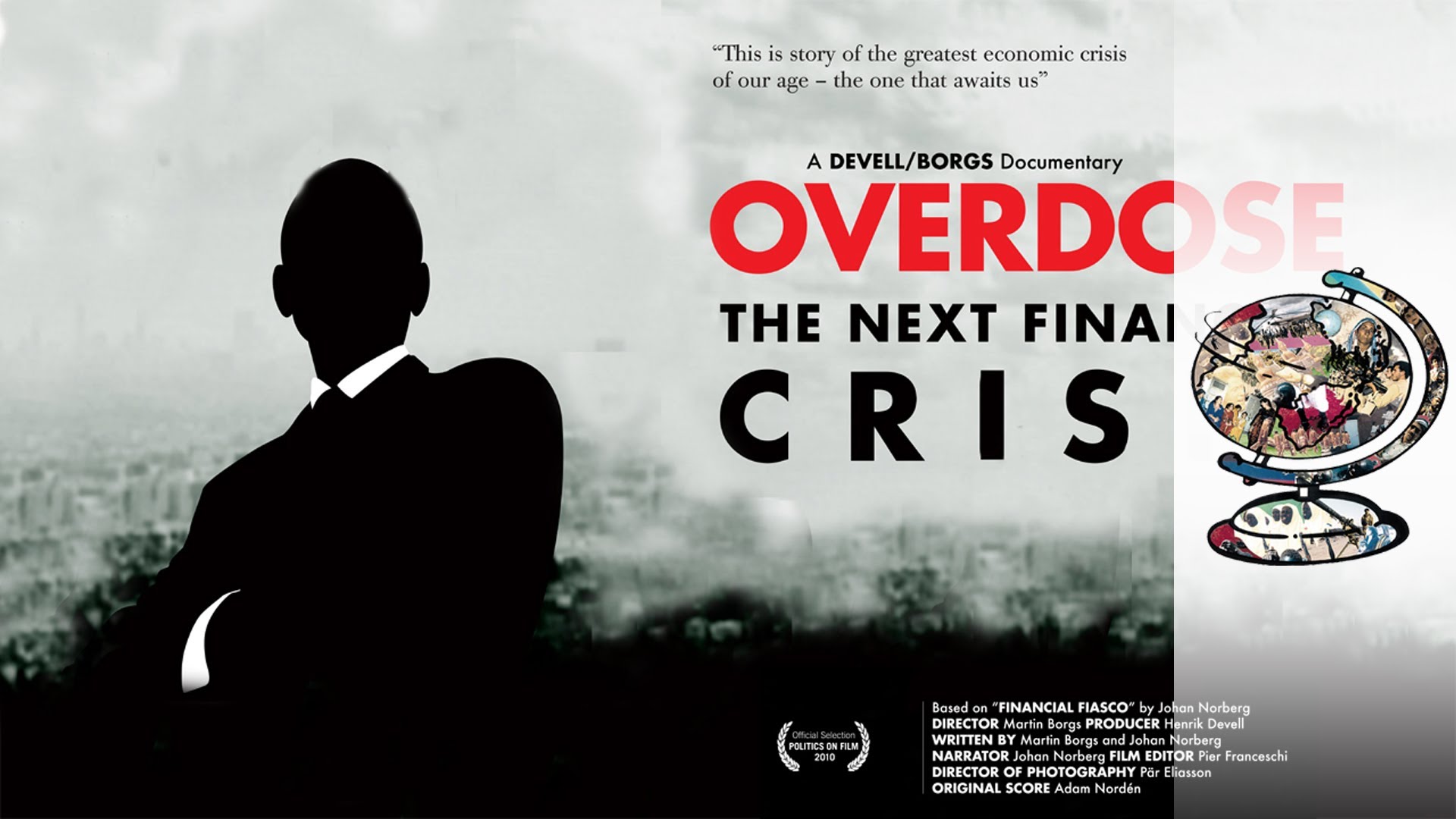
overdose the next financial crisis 2010

تماشای آنلاین مستند اوردوز، بحران مالی پیش رو با زیرنویس فارسی

anatchi's avatarآنارشیست ها

maxresdefault

تماشای آنلاین مستند اوردوز، بحران مالی پیش رو با زیرنویس فارسی

http://vimeo.com/104237045

View original post

The experiment of West Kurdistan (Syrian Kurdistan) has proved that people can make changes

The experiment of West Kurdistan (Syrian Kurdistan) has proved that people can make changes


By Zaher Baher from Haringey Solidarity Group and Kurdistan Anarchists Forum.

July 2014

What you read below is the experience of my visit, for a couple of weeks in May this year, 2014, to North East of Syria or Syrian Kurdistan (West of Kurdistan) with a close friend of mine.

Throughout the visit we had the total freedom and opportunity to see and speak to whoever we wanted to. This includes women, men, youth, and the political parties. There are over 20 parties from Kurdish to Christian, of which some are in the Democratic Self Administration (DSA) or Democratic Self Management (DSM) of the region of Al Jazera. Al Jazera is one of three regions, (cantons) of West Kurdistan. We also met the Kurdish and Christian political parties who are not in the DSA or DSM. In addition, we met the top people from the Democratic Self Administration (DSM), members of the different committees, local groups and communes as well as businesspeople, shopkeepers, workers, people in the market and people who were just walking in the street.

The background:

Kurdistan is a land of around 40 million people that was divided between Iraq, Syria, Iran and Turkey after the First World War. Historically, the Kurds have suffered massacres and genocide at the hands of successive regimes, especially in Iraq and Turkey. Since then they have continuously suffered and been oppressed at the hands of the central governments of the countries Kurdistan was annexed to. In Iraqi Kurdistan, under Saddam Hussein’s regime, the Kurdish people suffered chemical weapon attacks under Operation Anfal [1]. In Turkey, until recently, Kurds did not even have the basic rights of talking in their own language. Historically, they have been recognized as the Turkish who live in the mountains (a reference to the Kurdistan region as there are so many mountains there). In Syria, the Kurds’ situation was little better than Turkey. In Iran they have some basic rights and are recognized as forming a different nation from Persians but have no autonomy.

After the first gulf war in 1991, the Kurdish people in Iraq managed to set up their own regional government, the Kurdistan Regional Government (KRG).   After the invasion and occupation of Iraq in 2003, the Kurdish people took advantage of this to strengthen their local power. They managed to gain the right to having their own self administration, budget, parliaments and army. These have now all been recognized by the central Iraqi Government and, to a certain extent, are supported by the central government. This has encouraged and had a positive impact on the other parts of Kurdistan, especially in Turkey and Syria.

In the same year as the invasion of Iraq (2003), the Kurdish people in Syria set up their own party, the Democratic Union Party (PYD); although there were already a number of other Kurdish parties and organizations that existed in the region. Some of them are so old that they date back to the 1960s, but they were ineffective compared to the PYD which has developed and spread rapidly among the Kurdish people there.

The Arab Spring:

The Arab Spring reached Syria at the beginning of 2011 and, after a short time, spread to the Syrian Kurdistan regions /cantons of: Al Jazera, Kobany and Afrin. The protest among the Kurdish people in those three cantons was very strong and effective. This, to a certain extent, caused the withdrawal of the Syrian army in the Kurdish cantons apart from some areas of Al Jazera which I will explain further on.

In the meantime, the people there, with the support of the PYD & PKK, formed the Tev-Dam, (the Movement of the Democracy Society). This movement quickly became very strong and popular among the region’s population. Once the Syrian army and administration had withdrawn, the situation became very chaotic, (I will explain why). This forced the Tev-Dam to implement its plans and programs without further delay before the situation became worse.

The Tev-Dam’s programme was very inclusive and covered every single issue in society. Many people from the rank and file and from different backgrounds, including Kurdish, Arab, Muslim, Christian, Assyrian and Yazidis, have been involved. The first task was to establish a variety of groups, committees and communes on the streets in neighborhoods, villages, counties and small and big towns everywhere. The role of these groups was to become involved in all the issues facing society. Groups were set up to look at a number of issues including: women’s, economic, environmental, education and health and care issues, support and solidarity, centers for the family martyrs, trade and business, diplomatic relations with foreign countries and many more. There are even groups established to reconcile disputes among different people or factions to try to avoid these disputes going to court unless these groups are incapable of resolving them.

These groups usually have their own meeting every week to talk about the problems people face where they live. They have their own representative in the main group in the villages or towns called the “House of the People”.

The Tev-Dam, in my opinion, is the most successful organ in that society and could achieve all the tasks they have been set. I believe the reasons for its success are:

  1. The will, determination and power of the people who believe that they can change things.
  2. The majority of people believe in working voluntarily at all levels of service to make the event/experiment successful.
  3. They have set up an army of defence consisting of three different parts: the People’s Defence Units (PDU), the Women’s Defence Units (WDU) and the Asaish (a mixed force of men and women that exists in the towns and all the checkpoints outside the towns to protect civilians from any external threat). In addition to these forces, there is a special unit for women only, to deal with issues of rape and domestic violence.

From what I have seen, Syrian Kurdistan has taken a different route (and, in my opinion, the right one) from the “Arab Spring” and the two cannot be compared. There are a couple of major differences between them.

  1. What happened in the countries that were part of the “Arab Spring“were great events and many kicked out tyranny in those countries. The “Arab Spring” in the case of Egypt, produced an Islamic State then a military dictatorship. Other countries fared little better. This shows that people are powerful and can be the heroes of history at a particular time but they were not in a position to achieve what they wanted in the long term. This is one of the major differences between the “Arab Spring” and the “Kurdish Spring” in Syrian Kurdistan where the latter could achieve what they wanted long term – or, at least, so far.
  2. In Syrian Kurdistan the people were prepared and knew what they wanted. They believed that the revolution must start from the bottom of society and not from the top. It must be a social, cultural and educational as well as political revolution. It must be against the state, power and authority. It must be people in the communities who have the final decision-making responsibilities. These are the four principles of the Movement of the Democracy Society (Tev-Dam). Credit needs to be given to whoever is behind these great ideas and the efforts being made to put them into practice, whether it’s Abdulla Ocallan and his comrades or anybody else. In addition, people in Syrian Kurdistan set up many local groups under different names to make their revolution work. In the other “Arab Spring” countries, people were not prepared and knew only that they wanted to get rid of the current government but not the system. Also, the vast majority of the people thought that the only revolution is the revolution from the top. Setting up local groups was not undertaken except by a tiny minority of anarchists and libertarians.

The Democratic Self Administration (DSA):

After a lot of hard work, discussions and thought, the Tev-Dam has reached the conclusion that they need a DSA in all three Cantons of Kurdistan (Al Jazera, Kobany and Afrin). In the middle of January, 2014, the People’s Assembly elected their own DSA, with autonomy, to implement and execute the decisions from the “House of the People” (the main Tev-Dam committee) and to take over some of the administration work in the local authorities, municipalities, education and health departments, trade and business organizations, defence and judiciary systems etc. The DSA is made up of 22 men and women with each of them having two deputies (one a man and the other a woman). Almost half the representatives are women. It is organized so that people from different backgrounds, nationalities, religions and genders can all participate. This has created a very good atmosphere of peace, brother/sisterhood, satisfaction and freedom.

In a short space of time, this administration has done quite a lot of work and issued a Social Contract, Transport Law, Parties Law and a programme or plan for the Tev-Dam. In the Social Contract, the first page states, “the areas of self-management democracy do not accept the concepts of state nationalism, military or religion or of centralized management and central rule but are open to forms compatible with the traditions of democracy and pluralism, to be open to all social groups and cultural identities and Athenian democracy and national expression through their organization …” There are many decrees in the Social Contract. A few are extremely important for society, including:

  1. Separation of state from religion
  2. Banning marriages under the age of 18 years
  3. Women’s and children’s rights must be recognized, protected and implemented
  4. Banning female circumcision
  5. Banning polygamy.
  6. The revolution must take place from the bottom of society and be sustainable
  7. Freedom, equality, equal opportunity and non- discrimination.
  8. Equality between men and women
  9. All languages people speak must be recognized and Arabic, Kurdish and Syrian are the official languages in Al Jazera
  10. To provide a decent life for prisoners and to make prison a place for rehabilitation and reform.
  11. Every human being has the right to seek asylum and refugees may not be returned without his/her consent.

The economic situation in Al Jazera Canton:

The population of Jazera is over one million people. This population consists of Kurds as well as Arabs, Christians, Chechens, Yazidis, Turkmens, Assyrians, Chaldeans and Armenians. 80% percent of the population is Kurdish. There are many Arab and Yazidis villages plus up to 43 Christian villages.

The size of Al Jazera is bigger than Israel and Palestine combined. In the 1960s, the Syrian regime implemented a policy in the Kurdish area called the “Greenbelt” which the Ba’ath party continued when they came to power.  This stated that conditions for Kurds would be worse compared to those for Syrian people with regards to political, economic and social life and also education. The main point of the Greenbelt was to bring Arabs from different areas to settle in Kurdish areas and to confiscate Kurdish lands which were then distributed amongst the recently-arrived Arab people. In short, Kurdish citizens under Assad came third, after Arabs and Christians.

Another policy was that Al Jazera should only produce wheat and oils. This meant that the government made sure that there would be no factories, companies or industry in the area. Al Jazera produces 70% of Syrian wheat and is very rich in oils, gas and phosphates. So the majority of people were involved in agriculture in the small towns and villages, and as traders and shopkeepers in the bigger towns. In addition, many people were employed by the government in education, health and local authorities, in military service as soldiers and as small contractors in municipalities.

From 2008, the situation deteriorated as Assad’s regime issued a special decree to ban construction of any big buildings justified by the situation arising from the war (referring to continuous war in the region) and also because the area is remote and on the border. Currently, the situation is bad. There are sanctions imposed by both Turkey and the Kurdistan Regional Government (KRG) in Iraqi Kurdistan (I will explain this in other sections). Life in Al Jazera is very simple and living standards are very low but they do not have poverty. The people, in general, are happy giving priority to what they have achieved in order to be successful.

Some of the necessities any society needs to survive exist in West Kurdistan which is important, at least for the time being, to avoid starvation, stand on their own two feet and resist the boycotts sanctions by Turkey and KRG . These necessities include having lots of wheat to make bread and pastries. As a result, the price of bread is almost free. The second thing is that oil is also cheap and, as people say,” it’s price is like the price of water”. People use oil for everything; in the home, driving vehicles and making a little equipment needed for a range of industries. To facilitate this dependence on oil, the Tev-Dam reopened some of the oil wells and refining depots. At the moment, they are producing more oil than they need in the region so they are able to export some and also store any excess.

Electricity is a problem because most is produced in the neighboring region under the control of Isis (currently is IS) (The Islamic State of Iraq and Levant) or (The Islamic State). Therefore, people only have electricity for about 6 hours a day. But it’s free as people are not charged for it. This has partly been resolved by the Tev-Dam by selling diesel, at a very low price, to anybody with a private generator on the condition they supply power to local residents at a very cheap rate as well.

In terms of phone communication, all mobile phones are either using the KRG line or Turkey’s line; depending on where you are. Land lines are under the control of the Tev-Dam & DSA and seem to be working well… Again, this is free.

The shops and markets in the towns are normally open from early morning until 11pm at night. Many of the goods from neighboring countries are smuggled into the region. Other goods do come from other parts of Syria but they are expensive due to heavy taxes payable to Syrian forces or terrorist groups who allow goods into the Al Jazera region.

The Political Situation in Al Jazera:

As mentioned, most of Assad’s army withdrew from the region but some still remain in a couple of towns in Al Jazera. The regime still has control over half of the main town (Hassaka) while the other half is in the hands of the PDU (The People’s Defence Units).

Government forces remain in the second town in the region (Qamchlo) where they control a small area in the centre of town. However, in the occupied area, the vast majority of people do not use the offices and services centers. The number of the regime’s force in this town is between 6 and 7,000 and they only have control over the airport and the post office.

Both sides seem to recognize the position, power and authority of one another and refrain from clashes or confrontation. I call this situation, the policy of “no peace, no war”. This does not mean there have not been clashes between them in either Hassaka or Qamchlo. Clashes do happen causing the deaths of many people from both sides but, so far, the head of the Arab tribes makes the two sides coexist.

Both sides have taken advantage of the withdrawal of the Syrian army and not fighting with the Kurdish protesters and its military forces saves a lot of cost and expense.   Further, the government does not have to protect the area from other opposition forces , as the Kurdish forces do this instead. Also, by withdrawing from Kurdish lands, Assad has freed up forces which can be used elsewhere against other opponents. Secondly, with Assad’s forces leaving Kurdistan, it is protected and defended by the Kurdish people. Indeed, the units defending the people and women protect their own people from any attack or any force, including Turkey, much better than the Syrian army.

The Kurdish people have also benefited in the following ways:

  1. They have stopped fighting the government and this has protected their land and property, saving many lives and leaving people in peace and freedom. This has created an opportunity for everybody to live in peace and without fear when running their own business.
  2. The government still pays the wages of its old employees although almost all of them, at present, are working under the control of the DSA. This obviously helps the economic situation there.
  3. This situation has allowed people to manage their own lives and make their own decisions. It also means that people are allowed to live under the authority of the Tev-Dam and DSA. The longer this happens then the more chance they have to firmly settle and make themselves stronger.
  4. This gives the People’s Defence Units and Women’s Defence Units opportunities to fight terrorist groups, especially Isis/IS, as and when necessary.

In Al Jazera, there are more than twenty political parties among the Kurdish and Christian people. The majority of them are in opposition to the PYD, the Tev-Dam and the DSA for their own reasons (a point I will come back to later on) as they do not want to join either Tev-Dam or the DSA. However, they have total freedom to carry out their activities without any restriction. The only thing they cannot have is fighters or militias under their own control.

Women and the Role of Women:

There is no doubt that women and their roles have been greatly accepted and they have filled both high and low positions in the Tev-Dam, PYD and DSA. They have a system called Joint Leaders and Joint Organizers. This means that the head of any office; administration or military section must include women. In addition to this, the women have their own armed forces. There is total equality between women and men. Women are a major force and are heavily involved in every section of the House of the People, committees, groups and communes. Women in West Kurdistan do not form just half of society, but are the most effective and important half of that society to the extent that if women stop working or withdraw from the above groups, Kurdish society may well collapse. There are many professional women in politics and the military who were  with the PKK in the mountains for a long time. They are very tough, very determined, very active, very responsible and extremely brave.

The importance of the equal participation of women in rebuilding society and in all issues/questions has been taken seriously by Abdulla Ocallan and the rest of the PKK / PYD leaders to the extent that women in West Kurdistan (Syrian Kurdistan) are considered sacred. It is part of Ocallan’s idea, dream and belief that if you want to see the best of human nature then society must return to the state of the Maternal Society but, obviously, in an advanced stage.

Although this is the position of women and although they have freedom, love, sex and relationships among the women involved in the struggle are extremely rare. The women and men we spoke to believed that the above (love, sex, relationships) are not appropriate at this stage as they are involved in revolution and have to give everything to the revolution in order to succeed. When I asked, if two people in military service or sensitive positions are in love with each other, what would happen, I was told that, obviously, nobody can prevent this but they must be moved to more suitable positions or sections.

This may be difficult for Europeans to understand. How can people live without  love, sex and relationships? But, for me, it’s perfectly understandable. I believe it is their choice and, if people are free to choose, then it must be respected. However, there is one interesting observation which I made and which was outside military service, the Tev-Dam and other parties. I have not seen a single woman working in a shop, petrol station, market, café or restaurant. But, women and women’s issues in Syrian Kurdistan are miles ahead of those in Iraqi Kurdistan where they have had 22 years of their own Self Rule and so much more opportunity. Saying that, I still cannot say there is a special or independent movement of the women in Syrian Kurdistan.

The Communes:

The Communes were the most active cells in the House of the People, and have been set up everywhere.  They have their own regular weekly meeting to discuss the problems they face. Each Commune has their own representative in the House of the People and in the neighborhood, village or town where they are based.

Below is the definition of the Commune from the Tev-Dam manifesto and translated from Arabic:

Communes are the smallest cells and the most activist in society. They are formed practically in society and there is freedom of women and ecology and the adoption of direct democracy.”

The Communes form on the principle of direct participation of people in the villages, on the street and the neighborhoods and the towns.  These are the places that people willingly organize themselves with their opinion, create their free will and initiate their activities in whole residential areas and open the door for discussion about all the issues and their solution

Communes work on developing and promoting the committees. They talk and search for solutions of social matters, political, education, securities and self- defending & self-protection from its own power, not from the state.  Communes create their own power through building organization in the form of agricultural communes in the villages and also communes, cooperatives and associations in the neighborhoods.

Forming the Communes on the street, villages and towns with participation of all the residents.  Communes have a meeting every week.  In the meeting Communes make all its decisions openly by people who are in the Commune and are older than 16 years-old.

We went to a meeting of one the communes based in the neighborhood of Cornish in the town of Qamchlo. There were 16 to 17 people in the meeting. The majority of them were young women. We engaged in a deep conversation about their activities and their tasks.  They told us that in their neighborhood they have 10 Communes and the membership of each Commune is 16 people.  They told us “We act in the same way as community workers including meeting people, attending the weekly meetings, checking any problems in the places we are based, protecting people in the community and sorting out their problems, collecting the rubbish in the area, protecting the environment and attending the biggest meeting to report back about what happened in the last week”.

In response to one of my questions, they confirmed that nobody, including any of the political parties, intervenes in their decision making and that they make all the decisions collectively.  They mentioned a few things that they had recently made a decision about.  They said “One of them concerned a big piece of land in a residential area we wanted to use for a little park. We went to the Mayor of the town to tell him about our decision and asked for financial help. The Mayor told us that would be fine but they only had $100 to offer us. We took the money and collected another $100 from the local people to build a nice little park”.  They showed us the park and told us “many of us collectively worked on it to finish it without needing more money”.  In another example they told us, “The Mayor wanted to initiate a project in the neighborhood.  We told him we cannot accept it until we get opinions from everybody. We had a meeting where we discussed it. The meeting unanimously rejected it.  There were people that could not make the meeting so we went to see them in their houses to get their opinion. Everybody in the commune said no to the project”

They asked us about local groups and communes in London.  I told them that we have many groups but we are unfortunately not like them- united, progressive and committed.  I told them that they are miles ahead of us. From their faces I could see their surprise, disappointment and frustration to my answer.  I could understand their feelings because they think how, in a very backward world like theirs; can they be ahead of us, while we live in the country that had the industrial revolution centuries ago!!!!!

The Kurdish and Christians opposition parties:

I said before that there are more than 20 Kurdish political parties. A few have joined the DSA but sixteen didn’t. Some have withdrawn from politics while others have joined together to set up a bigger party. There are now twelve parties set up under an umbrella name, The Patriotic Assembly of Kurdistan in Syria. This organization, more or less, shares the same goals and strategies. The majority of the parties under this umbrella support Massoud Barzani, the President of the Kurdistan Regional Government, (KRG), who is also the leader of the Kurdistan Democratic Party (KDP) in Iraqi Kurdistan.

There is a bloody history between the KDP and PKK that dates back to the 1990s. There was heavy fighting between the two groups in Iraqi Kurdistan which left thousands dead on both sides and this is a wound which has yet to heal. I must mention that Turkey’s government had a hand in the fighting as they were close to the KDP and helped attack PKK force on the Iraq/Turkey border for their own reasons.

There is another dispute between Barzani and his family with the former head of the PKK, Abdulla Ocallan, which is about the Kurdish leader’s position as the Kurdish national leader. While the Kurdish people in West Kurdistan (Syrian Kurdistan) have managed to collectively organize their society, protecting it from war and setting up their own DSA, they are still not on very good terms with the KDP.

The PKK and Democratic Union Party (PYD) have been very supportive of the changes happening in Syrian Kurdistan. But, this is certainly not beneficial to either Turkey or the KRG.  Meanwhile Turkey and the KRG remain extremely close.

The above is an explanation as to why the KDP in Iraqi Kurdistan are unhappy about what happened in West Kurdistan and are opposed to both the DSA and Tev-Dam. The KDP looks at what happened there a big business and, either this business should not run at all or, if it does run, then the KDP must have the biggest share of this business. The KDP still helps some Kurdish people in West Kurdistan financially and with weapons training in an attempt to set up militias for some of the political parties in order to destabilize the area and its plans. The Patriotic Assembly of Kurdistan in Syria, set up by the twelve political parties mentioned before, is very close to the KDP.

Our meeting with the opposition parties lasted for over two hours and the majority of them were present. We started by asking them how they got on with the PYD, DSA and Tev-Dam. Do they have freedom? Have any of their members or supporters been followed or arrested by the PDU and WDU? Do they have freedom to organize people, demonstrate and organize other activities? Many more questions were asked. The answer to every single question was positive. No arrests were made, no restrictions on freedom or organizing demonstrations. But all of them shared the point that they do not want to take part in the DSA.

They have three disputes with the PYD and DSA. They believe that the PYD and Tev-Dam have betrayed the Kurdish people. Their reasons for this included the fact that half of Hassaka is under the control of the government and that the government’s forces are still in the town of Qamchlo although they admitted these forces are ineffective and only control a small amount of land. Their view is that this is a big problem and the PYD and Tev-Dam compromised with the Syrian regime badly.

We told them that they should think that the PYD and Tev-Dam’s policy is the policy of “No peace, No war” to balance the situation. It has been successful and benefited everybody in the region including all the opposition parties and because of the other reasons already mentioned above. We also said they should know better than us that kicking out Assad’s army from both towns is easy for the PYD with the sacrifice of a few of their fighters but what will happen after that?!! We told them we know that Assad does not want to give up Hassaka and, therefore, the war will start again with killing, persecution, bombardments and the destruction of towns and villages. Also, this opens a door for Isis/IS and al-Nusra to launch an attack on all of them. There would be the possibility of Assad’s army, the Syrian Free Army and the rest of the terrorist organizations all fighting each other in the region with the consequence of losing everything achieved so far. They had no response to this.

The opposition does not want to join the DSA and the next election of this body will take place in a few months time if the situation remains the same. Their reasons for this are, firstly, that they accuse the PYD of co-operating with the regime, while they did not have any evidence to prove this accusation. Secondly, the next election won’t be a free election as the PYD is not a democratic party, but a bureaucratic party. But we know that the PYD has almost the same numbers and positions as any other party in the DSA so statement is incorrect. We told them that if they believe in the election process they should participate if they want to see an administration with more democracy and less bureaucracy. They said that the PYD had withdrawn from the Kurdish National Conference of the KRG, which took place last year in the town of Irbil, to discuss the Kurdish issue. But when we checked this later on with people in the PYD and Tev-Dam, they told us they have evidence of a written document which shows that they committed to the pact but that the opposition did not commit.

The opposition wants to establish their own army, but they are not allowed to by the PYD. When we took this issue back to the PYD and Tev-Dam we were told the opposition could have their own fighters but they must be under the control of the units of the Defence of the People and Defence of Women.. They told us the situation is very sensitive and very tense. It may cause fighting between one another and that this is our great fear and we cannot afford to let it happen. The PYD simply said they do not want the same failure repeated in West Kurdistan. By failure experiment, they were referring to the experiment of Iraqi Kurdistan in the second half of the 20th century which lasted to the end of the century where there were so many fights between different Kurdish organizations at the time. In the end, the PYD and Tev-Dam asked us to go back to the opposition parties with the authority to offer them, on behalf of the PYD and Tev-Dam, anything except letting them have military forces under their own control.

A few days after that we had another meeting for almost three hours in Qamchlo town with the head of the three Kurdish parties: The Kurdistan Democratic Party in Syria ( Al Party),the Kurdistan Party for Democracy and Equality in Syria and The Kurdish Patriotic Democracy Party in Syria. In the meeting, they more or less repeated the reasons for their colleagues, in the previous meeting, not joining the DSA and Tev-Dam to build and develop Kurdish society. We had a long discussion with them, trying to convince them that, if they wanted the Kurdish issue to be resolved, a powerful force in the country and to avoid war and distraction, then they should be independent from the KRG and KDP and work in the interest of nobody but the people of West Kurdistan. Most of the time they were silent and had no response to our suggestions.

A few days later we also met representatives from a couple of Christian political parties and the Christian Youth Organization in Qamchlo. None of these parties have joined the DSA or Tev-Dam for their own reasons but admitted that they get on well with the DSA and Tev-Dam and are fine with their policies. They also appreciated that their safety, and protection from the Syrian army and terrorist groups was due to the forces of the Defence of the People and Defence of Women who have sacrificed their lives to achieve all of the above for everybody in the region. However, the people from the Christian Youth Organisation in Qamchlo were not happy with the DSA and Tev-Dam. Their complaint was about not having enough electrical power and not much for the youth to do or be involved in within the town. Because of this they said they will seek an alternative to the DSA and Tev-Dam, so that, if the situation remains the same, then they will have no choice but to emigrate to Europe. The head of one of the political parties who was present in the meeting responded to them by saying ”what are you talking about Son? we are in the middle of a war, can you see what happened in the rest of the main towns in Syria?, Can you see how many women, men, elderly and children are killed daily?!!! There is an important issue which is very important in life. Power in this particular situation is not very important; we can use other means instead. What is important right now is: sitting at home with no fear of being killed, leaving our children on the streets, playing with no fear of being kidnapped or killed. We can run our business as usual, nobody restricts us, nobody assaults or insults us…. there is peace, there is freedom, and there is social justice……” The members of the other political parties agreed and acknowledged all these facts.

Before we left the region we decided to speak to shopkeepers, businessmen, stall holders and people on the market to hear their views which were very important to us. Everyone seemed to have a very positive view and opinion of the DSA and Tev-Dam. They were happy about the existence of peace, security and freedom and running their own business without any interference from any parties or sides.

The Shameful Trench:

Last year the KRG and Iraqi government agreed, allegedly for security reasons, to dig a 35-kilometre long trench, over two meters deep and about two meters wide, on the Iraqi/Syrian border of Kurdistan. The Trench separates Al Jazera in West Kurdistan from Iraqi Kurdistan in the south. The Tigris river covers five kilometers of this border so there was no need for a trench there. The next twelve kilometers were constructed by the KRG, with the final eighteen kilometers built by the Iraqi government.

Both the KRG and Iraqi government say that the Trench was a necessary measure because of fears over peace and security within Iraqi lands including the Kurdistan region. But there are big questions people always ask about these fears. What fear? From whom? From Isis/Is? It is impossible for groups like Isis/Is to get into Iraq or KRG through that part of Syria as it has been protected by PDU and WDU forces and also Al Jazera has been cleared of Isis/Is completely. However, the majority of Kurdish people know that there are a couple of reasons for digging the trench.  Firstly, it is to stop Syrians fleeing the war from reaching Iraqi Kurdistan. Also, the head of the KRG, Massoud Barzani, as explained above, is worried about the PKK and PYD and therefore he and the KRG want to stop them or anybody else from the DSA entering this part of Kurdistan. Secondly, the trench will increase the effectiveness of the sanctions used against West Kurdistan in an attempt to strangle and pressurize them to the point of surrender so as to give into KRG conditions. However, given the choice between surrender and starvation for the Kurds in Syrian Kurdistan, I feel they may choose starvation. This is the reason why the majority of Kurds, wherever they live, call the Trench the “shameful trench”…

There is no doubt that the sanctions have crippled Kurdish life in Al Jazera as the people need everything including medicine, money, doctors, nurses, teachers, technicians and expertise in industrial areas, especially in the oilfield and refining industry to make them work. In Al Jazera, they have thousands of tons of wheat which they are happy to sell for $200 to $250 a ton to Iraqi’s government but it pays $600 to $700 for each ton of wheat elsewhere.

There are people in West Kurdistan who do not understand why the KRG, as a Kurdish self rule government, and its President, Massoud Barzani, (who calls himself a great Kurdish leader) want to starve their own people in another part of Kurdistan.

In Qamchlo, the Tev-Dam called a large, peaceful demonstration on Saturday, 9th of May, 2014. A few thousand people took part against those who dug the shameful trench. There were many powerful speeches from different people and organizations, including the House of the People and many other groups and committees. None of their speeches created more tension between them. People mainly concentrated on brotherhood, good relationships and co-operation between both sides of the border, reconciliation between all the disputed parties and peace and freedom in their speeches. In the end it became a street party with people dancing happily and singing, particularly anthems.

Expectation and fears:

It is very difficult to know what direction the mass movement of people in West Kurdistan will take, but that does not mean restricting us from expectation and analyzing what may affect the direction of this movement and its future. The complete victory or defeat of this big event/experiment that the region, at least for a long time, has not seen depends on so many factors that can be divided into internal ( internal issues and problems inside the movement itself and with the KRG ) and external factors.

However, whatever happens in the end we have to face it, but what’s important is: the resistance, defying and challenging, not surrendering, confidence and believing in making changes. Rejecting the current system and grabbing the opportunities are more important, in my opinion, than temporary victory, because all these are the key points needed to reach the final goal.

The external factors

The direction of the war and the balance of the forces inside Syria:

It was quite clear in the beginning of the people’s uprising in Syria, that, if it was to benefit the Syrian people, then the expected ending of Assad’s regime would not take that long when people united with great support both inside and outside the country. However, after a while, the terrorist groups got involved and changed the direction of the people’s uprising as we all have seen and still see this through the media. This happened because Assad was very clever in implementing a couple of policies which directly affected the direction of the people’s uprising and making his regime strong.

Firstly, he withdrew all his forces in the three Kurdish regions/cantons of Afrin, Kobany and Al Jazera except for a few thousand in the Al Jazeera region as I explained previously. Obviously, a part of the reason for withdrawal was due to pressure from the Kurdish protesters.

Secondly, he opened the Syrian border to terrorist organizations to do what they wanted. We all know by now what happened then. By doing this, Assad managed to weaken and isolate the protestors against his regime and also sent a message to the so-called “international community” to tell them that there was no alternative to him and his regime except the terrorist groups. Do the US, UK, Western countries and the rest really want that? Of course, to a certain extent, the answer is No. It all depends on their interests. These policies have worked very well and changed the direction of the battle completely.

So, there was a possibility of Assad remaining in power, at least for a short time after negotiating with the US, UN, UK and their agents until the next election. In that case, he might have learnt a lesson to change his policy towards the Kurdish people but on his own terms and conditions and not in the way the Kurdish people want.

If Assad was defeated in the war by the terrorist groups with the support of the US, UK, EU and the “International Community”, and they came to power, certainly there wouldn’t

be any future for either the DSA or Tev-Dam. If the modern forces, like the parties or organizations making up the Free Syria Army (FSA) are still not in power, then there is very little chance for the Kurdish people as they do not have a positive opinion of or a good solution for the Kurdish question, let alone when it comes to power. Of course, there are other possibilities of ending Assad’s power including assassination or through a military coup…

The role and the influences of neighbouring countries in the region:

It was very clear that ordinary people in Syria started the uprising due to existing suppression, oppression, lack of freedom and social justice, corruption, discrimination, lack of human rights, and no rights for ethnic minorities like Kurdish, Turkmen and others. Life for the majority of people was terrible; low incomes, the cost of living continuously rising, homelessness, and unemployment all served as inspiration for the “Arab Spring”.

However, the protests, demonstrations and uprising on the ground have been diverted by neighbouring rulers into a proxy war between Saudi Arabia, Qatar, and Turkey with the support of the US and Western countries on one side and Assad’s regime, Iran and Hezbollah on the other. The Iraqi government has not announced their support for Assad’s regime but they wanted, and still want, Assad to stay in power because of the close relationship between Shias and Alawites and also because Iran is Iraq’s closest ally, while Iran is also extremely close to Syria. What was left from the neighbouring countries was the KRG’s attitude towards what happens in Syria, due to KRG closeness, and, particularly, its President, Massoud Barzani, to Turkey in every respect. They announced, from the beginning, their support for the Syrian opposition to Assad’s regime.   We must note here the double standards and hypocrisy of the KRG as, on the one hand, they are against Assad whilst supporting the opposition but, on the other hand, against the Kurdish in Syria and their popular mass movement while they are one of the main and constructive forces against Assad.

Obviously each country has a big impact as some of them are supporting Assad’s regime and others support the Syrian opposition. What is important here is to know that none of these countries are friends or close to the Kurdish nation in any part of Kurdistan, whether in Syrian Kurdistan, Iraq, Iran or Turkish Kurdistan. They never had a positive view on the Kurdish question and never,, genuinely,, wanted to resolve this question, but they had a positive view on the Kurdish nationalist political parties when these parties were working and fighting in their interests.

The Role of China and Russia:

Although Russia has become much smaller and less powerful than before, it still has weight and power, in competition with the US and Western countries, over its interests. It is no surprise that we now see that Russia cannot reach agreement with the West over Assad’s regime. There is also the fact that Syria, even when Assad’s father was in power, was always in the Soviet camp. This is in addition to Russia being close to Iran which is the main ally of Syria.

With regards to China, China too has its own interests in the region, especially with Iran. Therefore, China tries to protect that interest as it is not to their benefit to see Assad go because it knows that next it will be Iran. So Russia and China’s interests and support for Syria make the war longer than expected. From the above, we can see how two powerful countries would deal with the Kurdish question in Syria, especially with the DSA and Tev-Dam. In my opinion, business and profits decide, in the end, whether or not they will support the Kurdish people in the future.

At present, there is no support for the DSA and Tev-Dam from China, Russia or from the US and Western countries while the Kurds in Syria are the main opposition and fighters against terrorist forces like Isis/IS, through the forces of the PDU and WDU. These units are constantly fighting these terrorist groups in the Kurdish regions of Al Jazera and Kobney.

We can see here the double standards and hypocrisy of the US, Western countries and the rest. They launched a war on terror while the Kurdish people in Syria are the only ones fighting the terrorist organizations seriously, but the above countries do not support the Kurds there. The major reasons for this, in my opinion, are:

  1. They are not serious in fighting the terrorists and terrorism because they themselves or their alliance created and supported them
  2. They fight the people who believe in Islam rather than fighting the religion itself and its holy book, Quran.
  3. They may need this organization again in the future.
  4. They do not want to alter their foreign policy or review it.
  5. The US and UK support, financially and morally, all reactionary faiths under the name of equal opportunity, freedom and recognizing different cultures. We can already see more than one hundred Sharia Courts in the U.K.
  6. The main point is that the mass democracy movement in Syrian Kurdistan, including the DSA, did not create religions or nationalist or liberal power. They know that people in this part of the world have given birth to people power, that they have proved that they can rule themselves through direct democracy without government and support from the US, Western countries and global financial institutions, like the IMF, WB and CBE (Central Bank of Europe).

The Internal Factors:

By internal factors I mean whatever could happen inside West Kurdistan itself. This includes the following:

The civil war among the Kurdish people. Here I do not mean just a war among the political parties inside West Kurdistan but the war between the KRG in Iraqi Kurdistan and the forces of the PDU, WDU and PKK.

There is a very close relationship between the PKK and PYD who are behind this experiment in West Kurdistan and have been very supportive. I mentioned previously that there has been a history of bloodshed between the PKK and KDP and also a sharp dispute between them over the Kurdish leadership.

However, for some time, Abdulla Ocallan, in recent books and text /messages, has denounced and rejected the state and authority. But until now I have not heard that he has rejected his own authority and denounce those people calling him a great leader and who work hard to give him a sacred position. Ocallan’s attitude cannot be correct unless he also rejects his own authority and leadership.

At the moment, the situation is getting worse and the KRG’s relationship with the PYD and PKK is deteriorating, so there is a possibility of fighting between them especially as the KRG is, day by day, getting closer to Turkey. Once this war starts there is no doubt that Isis/IS and others will take part in fighting on the side of the KRG and Turkey. The only way to stop this happening is through mass protests, demonstrations and mass occupations in Iraqi Kurdistan and by friends of Syrian Kurdish elsewhere.

Tev-Dam becomes weak:

As explained above, it was Tev-Dam that created this situation, with its groups, committees, communes and the House of the People which is the soul and mind of the mass movement. Tev-Dam was the major force in setting up the DSA. In general, it is the existence of Tev-Dam that makes the difference to forcing the outcome of what might happen there and to be the inspiration to the rest of the region.

It is hard for me to see the balance between the power of Tev-Dam and the DSA in the future. I got the impression that as long as the power of the DSA increases the power of Tev-Dam decreases and the opposite could be right too.

I have raised this point with the comrades of Tev-Dam. They disagreed with me as they believe the more powerful the DSA becomes, the more powerful Tev-Dam will be. Their reason for this was that they look at the DSA as the executive body, executing and implementing whole decisions made by Tev-Dam and Tev-Dam organs. However, I cannot agree or disagree with them because the future will show the direction the whole movement and society will take.

The PYD and its party structures:

The PYD , United Democratic Party and PKK are behind the mass democracy movement there and are political parties having all the conditions that a political party needs in that part of the world : hierarchical organization, leaders and lead people, and all orders and commands from the leaders coming down to the bottom of the party. There has not been much consultation with members when it comes to making a decision on big issues.   They are very well-disciplined, have rules and orders to go by, secrets and secret relationships with different parties, either in power or not, in different part of the world.

On the other hand, I can see Tev-Dam as being exactly the opposite. Many people inside this movement have not been members of the PKK or PYD.Tthey believe the revolution must start from the bottom of society and not from the top, they do not believe in state powers and authority and they come together in meetings to make their own decisions about whatever they want and whatever is in the best interests of the people where they are based. After that, they ask the DSA to execute their decisions. There are many more differences between the PYD and PKK and the Movement of Democracy Society, Tev-Dam.

The question here is: While that is the task and the nature of Tev-Dam and that is the structure of the PYD and PKK, how can a compromise happen? Does Tev-Dam follow the PYD and PKK or do they follow the Tev-Dam, or who controls who?

This is the question that I cannot answer and have to wait and see. However, I believe the answer is probably in the near future.

The fear of Ideology and Ideologists that can became sacred:

Ideology is a view. Looking at or seeing anything from the ideological perspective can be a disaster as it gives you a ready solution or answer, but does not connect with the reality of the situation. Most of the time, ideologists are looking at the words of old books that were written a long time ago to find the solution while those books are not relevant to the current problem or situation.

Ideologists can be dangerous when they want to impose their ideas taken from what has been written in the old books, on the present situation or on the rest of us. They are very narrow-minded, very persistent, stick with their ideas and are out of touch. They do not have respect for other people who do not share the same opinion as themselves. ideologists have many common points between them from religious people to Marxists and Communists. In short, the ideologists believe that Ideology, or thought, creates uprising or revolutions but for non-ideologists, people like me, the opposite is true.

It is very unfortunate that I found many ideologists among the PYD and Tev-Dam members, especially when it came to discussions about Abdulla Ocallan’s ideas. These people are very stuck with Ocallan’s principles, making them refer to his speeches and books in our discussions. They have total faith in him and, to a certain extent, he is sacred. If this is the faith that people have and put in their leader and are scared of him, it is very frightening and the consequences will not be good. For me, nothing should be sacred and everything can be criticized and rejected if they need to be. Worse than this, there is the House of Children and Youth Centers.   In the House of Children and Youth Centers, children are taught about new ideas, the revolution and many positive things that children need to be raised with in order to be useful members of society. However, besides, these children are taught the ideology and the ideas and principles of Ocallan and how great he is as the leader of the Kurdish people. In my opinion, children should not be brought up believing in ideology. They should not have teaching on religion, nationality, race or colour. They should be free of them and leave them alone until they become adult when they can decide for themselves.

The Role of the Communes:

In the previous pages I explained the communes and their roles. The communes’ duties have to be changed as they cannot just be involved in the problems where they have been set up and make decisions about the things going on there. The communes must increase their roles, duties and powers. It is true that there are no factories, companies nor industrial sections. But Al Jazera is an agricultural canton involving many people in villages and small towns and wheat is the major product in Al Jazera. This canton is also very rich in oil, gas and phosphates, although many of the oilfields are not in use due to the war and lack of maintenance even before the uprising.

So these are further areas for the communes to involve themselves in by controlling them, using them and distributing produce to the people according to their need for free. Whatever is left, after distribution, the members of the communes can decide and agree to deal with it; sell it, exchange it for necessary materials for the people or just simply store it for later when needed. If the communes do not step up to these tasks and maintain what they do now, obviously, their tasks will be uncompleted.

The Conclusion and my final words:

There are so many different views and opinions from the right wing, left, separatists, Trotskyists, Marxists, communists, socialists, anarchists and libertarians about the future of the experiment in West Kurdistan, and, indeed, more deserves writing about it. For me, as an anarchist, I do not see the events as black or white, I do not have a ready solution for them and I also never go back to the old books to look for the solutions either to the events which, are now taking place or for the outcome of these current events I believe that the realities, the events themselves and the situation create the ideas and thoughts, not the opposite. I look at them with an open mind and connect them to so many, factors and reasons for their happening.

However, I must say a couple of things about every uprising and revolution, as they are very important for me. Firstly, the revolution is not expressing anger, is not created by order or command, is not something that can happen within twenty-four hours and is not a military coup, Bolshevik coup or the conspiracy of politicians.   Also, it is not only the dismantling of society’s economic infrastructure and the abolition of social class. The above are all the views and opinions of lefties, Marxists and communists and their parties. These are their definitions of revolution. They look at the revolution in this way because they are dogmatic and see the relationships of existing classes in a mechanistic way. For them, when the revolution happens and abolishes class society, that is, the end of the story and Socialism can be established. In my opinion, even if the revolution succeeds, there are still possibilities that there will be a desire for authority, with it remaining within families, inside factories and companies, in schools, universities and many other places and institutions. This is in addition to the remaining differences between men and women and the authority of men over women within socialism. Moreover, a selfish and greedy culture will still remain, using violence with many other nasty habits which already exist in capitalist society. They cannot disappear or vanish in a short time. In fact, they are going to stay with us for a long, long time and could threaten the revolution.

So, changing the economic infrastructure of society and achieving victory over class society can neither give any guarantee that the revolution happened nor of maintaining it for a long time. I, therefore, believe that there must be a revolution in social life, in our culture, education, the mentality of individuals and individual behavior and thought. The revolutions in the above areas are not just necessary, but indeed, must happen before or alongside the changing of the economic infrastructure of society. I do not believe we are done, following the revolution in the economic infrastructure of society. It must reflect in all aspects of the life of society and its members. For me, people resent the current system and believe in changing it. They desire the tendency for rebellion, the consciousness of being used and exploited and, in addition, the mentality of resistance are extremely important to maintain the revolution.

How do I connect the above point to the experiment of the people in West Kurdistan?

In reply, I say this experiment has existed for over two years and there are generations who are witness to this. They are rebels or already have the tendency to rebellion, they live in harmony and a free atmosphere and are accustomed to new cultures: a culture of living together in peace and freedom, a culture of tolerance and give not just take, a culture of being very confident and defiant, a culture of belief in working voluntarily and for the benefit of the community, a culture of solidarity and living for each other and a culture of, you are first and I am second. In the meantime, it is true that life there is very difficult, where there is a lack of many basic and necessary resources and the standard of living is low, but people there are pleasant, happy and, at all times, smiling and vigilant, very simple and humble and the gap between rich and poor is small . All these have, firstly, helped people overcome the difficulties in their lives and the hardships. Secondly, the events, their personal history and the present environment in which they currently live has taught people that, in the future, they will not put up with a dictatorship, they will resist suppression and oppression, they will try to maintain what they had before; they have a spirit of defiance and challenge and they will not accept other people making decisions for them any longer. For all of these reasons, people will resist surrender, stand again on their own feet, fight for their rights and resist the return of the culture they used to live with before.

The second point is that some people tell us that while this movement has Abdulla Ocallan, the PKK and PYD behind it, then, if the people try to divert this experiment, the experiment will end or a dictator will take power. Well this is possible and can happen. But even in this situation, I do not think people in Syria or in West Kurdistan can, any longer, tolerate a dictatorship or a Bolshevik-type government. I believe the days have passed when the government in Syria can, as before, massacre 30,000 people in the town of Aleppo in a matter of a few days. Also the world has changed and is not as it was.

All that is left to say here is that what happened in West Kurdistan was not Ocallan’s Idea, as many people want to tell us. In fact this idea is very old and Ocallan developed these thoughts in prison, familiarizing himself with them through reading hundreds and hundreds of books, non-stop thinking and analyzing the experiences of nationalist movements, communist movements and their governments in the region and the world and why all of them failed and could not deliver what they claimed. The basis of all this is that he is convinced that the state, whatever its name and form, is a state and cannot disappear when replaced by another state. For this, Abdulla Ocallan deserves credit.

Xxxxxxxxxxxxxxxxxxxxxxxxx

Footnotes:

[1] Operation Anfal, or simply Anfal, was a genocidal campaign against the Kurdish people in northern Iraq, led by the Ba’athist Iraqi President Saddam Hussein and headed by Ali Hassan al-Majid, in the final stage of the Iran-Iraq war.